How Large FRP Planters Transform Empty Commercial Corners Into Premium Spaces
By Frp Planters
149 Views
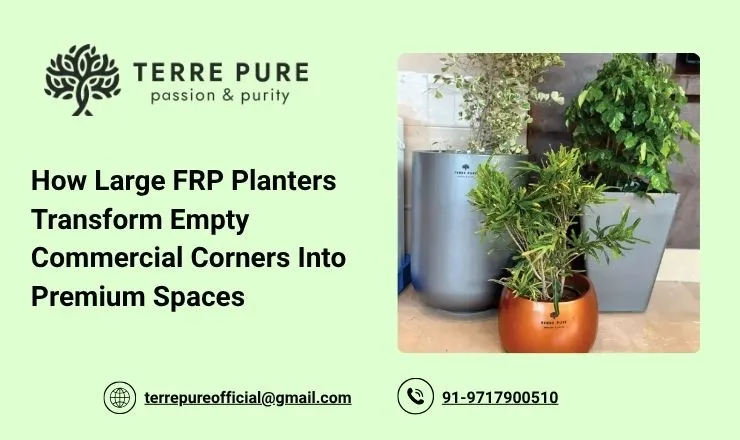
A dead corner in a hotel lobby usually stays dead for one reason: nobody planned for scale. Small décor disappears in large commercial environments. That is exactly why demand for FRP Planters, oversized FRP Pot designs, and custom Large FRP Planter installations has climbed sharply across Indian commercial projects since 2022. Architects are no longer treating planters as decorative extras. They are using them to divide spaces, soften concrete-heavy layouts, and increase perceived property value without structural renovation costs.
And yet, buyers still make the same mistake. They spend ₹18–22 lakh on lobby interiors, then source low-grade planters from traders who cannot even confirm resin composition or wall thickness. Six months later, the finish fades, hairline cracks appear, and the “premium” corner starts looking like a neglected waiting area.
That gap is why Premium FRP Planters are becoming a serious procurement category rather than a last-minute purchase.
The Spec Detail Most Buyers Skip Before Ordering FRP Planters
Commercial buyers usually ask about colour, shape, and delivery timelines first.
Wrong priority.
A planter sitting inside an air-conditioned office has completely different stress conditions compared to one installed outside a mall entrance in Gurgaon heat where surface temperatures regularly cross 48°C during May.
Wall Thickness Changes Everything
Most quality FRP Planters Manufacturers in India produce commercial-grade planters with wall thickness between 4mm and 8mm depending on planter height.
Here’s what inexperienced suppliers do: they increase height without reinforcing the base. A 4-foot planter looks fine during dispatch photographs, but after soil load and watering cycles, the structure bows slightly from the middle. Buyers usually notice this after 7–9 months.
Which means the planter did not technically “break.” It simply lost its shape slowly enough that the supplier avoids liability.
UV Protection Is Harder Than Buyers Expect
Outdoor Large FRP Planter installations need UV-stable coatings. Not paint. Coating.
There is a difference.
Cheap coatings start chalking under Indian sunlight surprisingly fast, especially in NCR pollution conditions. According to material testing references from the composites industry, prolonged UV exposure can reduce surface gloss retention by over 35% within the first year if inferior gel coats are used.
Nobody tells buyers that darker matte shades absorb more heat and expand faster during peak summer exposure.
Drainage Design Is Usually an Afterthought
Most procurement teams inspect finish quality but ignore drainage engineering completely.
That becomes expensive later.
Poor drainage increases root rot risk, causes water staining on commercial flooring, and adds maintenance complaints from facility teams. Experienced FRP Pot Manufacturers normally design concealed drainage channels or elevated internal bases for high-footfall commercial spaces.
One overlooked drainage flaw can damage flooring worth far more than the planter itself.
Five Supplier Evaluation Checks That Actually Matter
1. Ask for Raw Material Details, Not Marketing Brochures
A good supplier can specify resin type, reinforcement method, and coating structure immediately.
A bad answer sounds like this: “Don’t worry, sir, export quality hai.”
That sentence has destroyed more procurement budgets than most buyers realise.
2. Check Dimensional Consistency Across Bulk Orders
Commercial projects rarely buy one planter. They buy 18, 40, sometimes 120 pieces.
If planter height varies even by 12–15mm across batches, lobby symmetry gets affected visually. Experienced architects notice instantly.
3. Inspect Packaging Standards
Large commercial planters crack most often during logistics handling, not production.
Suppliers who wrap oversized units only with thin bubble sheet are cutting corners already.
4. Verify Lead Times During Peak Construction Months
Between September and February, factory schedules tighten heavily across NCR manufacturing clusters.
A supplier promising “7-day dispatch” for custom moulded units during peak season is probably lying or outsourcing production.
5. Demand Written Replacement Policies
A supplier saying “we handle defects case by case” does not have a policy.
That negotiation becomes painful after delivery.
Why Commercial Buyers Are Shifting Toward Premium FRP Planters
Reduced Structural Load
Traditional concrete planters can weigh 70–110 kg before soil filling. FRP alternatives reduce dead load dramatically while maintaining large-format dimensions.
That matters in terrace cafés, rooftop lounges, and elevated commercial decks.
Faster Installation Cycles
Large commercial projects run on contractor coordination. Delays create penalty exposure.
Lightweight FRP Pot installations reduce labour handling time and speed up final finishing work. Some hospitality projects reduce planter installation timelines by nearly 40% compared to stone alternatives.
Better Long-Term Appearance Retention
Low-quality metal planters start showing corrosion near weld joints surprisingly early in humid environments.
FRP handles moisture differently. That matters in poolside resorts, entrance landscaping, and semi-open commercial corridors.
Easier Replacement and Relocation
Retail layouts change constantly.
A heavy concrete planter becomes a permanent obstacle during redesign projects. Lightweight Premium FRP Planters can be repositioned without specialised lifting equipment.
Customisation Without Structural Complexity
Large curves, tapered geometries, textured finishes, and oversized entrance pieces are significantly easier to manufacture in FRP compared to stone or ceramic.
That design flexibility is one reason architects increasingly prefer working with established Large FRP Planter Manufacturers.
Lower Lifecycle Maintenance Costs
Commercial buyers often underestimate repainting and replacement expenses over five years.
A slightly higher upfront investment in quality FRP usually reduces recurring maintenance interruptions later.
Where Buyers Source FRP Planters Manufacturers in India
Most serious commercial sourcing happens through manufacturing clusters around NCR, Gujarat, Maharashtra, and parts of South India.
Greater Noida has become particularly active because logistics connectivity supports faster movement toward Delhi, Jaipur, Chandigarh, and Lucknow commercial projects. That supply chain advantage matters more than many buyers think. A damaged oversized planter shipped across 1,800 km becomes a replacement headache immediately.
That is one reason many developers now prefer working directly with FRP Planters Manufacturers in India rather than local resellers.
And yes, there is a difference.
Resellers usually cannot modify mould dimensions, customise wall thickness, or adjust drainage systems for project-specific requirements. Actual FRP Pot Manufacturers in India can.
Several hospitality groups sourcing Premium FRP Planters Manufacturers in India now specifically request anti-fade coatings because replacement cycles were becoming too frequent in outdoor properties.
Why We Build FRP Planters the Way We Do
At Terre Pure, we manufacture commercial-grade FRP planters for architects, developers, hospitality projects, and institutional buyers who care about durability beyond catalogue photos.
We learned early that glossy showroom samples mean nothing if the planter fails after one monsoon cycle.
Back in 2021, we stopped using one polyester blend after repeated UV fading feedback from two outdoor hospitality projects in Rajasthan. We changed the formulation, adjusted coating layers, and revised curing timings inside production. That decision increased production cost slightly. It also reduced repeat complaints sharply.
Most buyers never see that side of manufacturing.
We do.
Our facility in Greater Noida handles customised dimensions, large-format moulding, textured finishes, and commercial bulk production for projects across India.
Send Us the Details Before You Request Pricing
If you are comparing Large FRP Planter Manufacturers in India, send actual project details first.
We need:
- Required dimensions
- Indoor or outdoor usage
- Quantity
- Preferred finish
- Delivery location
- Expected installation timeline
Our team usually responds within one business day for standard enquiries.
MOQ for customised commercial production typically starts from 10 units depending on size and mould requirements.
You can contact us here:
📞 +91-9717900510
📧 terrepureofficial@gmail.com
🌐 https://www.frpplanters.com/
Commercial Spaces No Longer Ignore Corners
Empty corners change how people judge an entire property. A properly designed FRP Planters installation creates visual balance without expensive reconstruction work. More architects and developers are now treating the Large FRP Planter category as part of core spatial planning rather than decorative afterthoughts. The next phase of commercial landscaping in India will favour lighter, longer-lasting, and design-flexible materials — and FRP is already moving into that role.
FAQs
Are FRP planters suitable for outdoor commercial projects in India?
Yes, but coating quality matters more than most buyers expect. Experienced FRP Planters Manufacturers in India use UV-resistant gel coatings for outdoor installations.Without that layer, the fading begins early, particularly in NCR and in coastal climates.
What is the reason for preference for large FRP planters over concrete planters?
Weight reduction is the key reason. A large FRP Planter is comparatively much easier to move and install and is user friendly in times of maintenance as well, especially with the rooftop projects which require a lower structural load.
What is the process to assess the FRP Pot Manufacturers before placing bulk orders?
Get the expert opinion on the wall thickness, type of resin used, which kind of drainage is designed or is it even designed and what is the packing style used. It is likely that the Indian FRP Pot Manufacturers will answer your queries but the sellers will shun the queries directly as it involves a technical aspect.
Will high-end FRP planters fade away and develop cracks over a period of time?
It is possible if the company you deal with carries out the process of poor manufacturing. Long term issues develop in the form of thin walls coupled with hasty process of curing and these walls followed with weak reinforcements.
Even some so-called Premium FRP Planters Manufacturers in India cut corners during peak production seasons.
What sizes are available from Large FRP Planter Manufacturers?
Most custom manufacturers produce planters ranging from 18 inches up to 6 feet or more. Oversized commercial units usually require reinforced bases and thicker laminate layers.
Are FRP planters expensive compared to metal or concrete?
Initial pricing can be higher than basic low-grade alternatives. But lifecycle cost is often lower because repainting, corrosion repair, and replacement frequency reduce substantially.
How long do commercial FRP planters usually last?
Properly manufactured units from established Premium FRP Planters Manufacturers can last several years under commercial usage conditions. Outdoor lifespan depends heavily on UV exposure, maintenance quality, and installation environment.
Related Reading
Top 10 Hidden Secrets About Business & Finance You Need to Know
Welcome to our in-depth exploration of Business & Finance. In an era defined...
Why Business & Finance is Transforming the Global Industry Landscape
Welcome to our in-depth exploration of Business & Finance. In an era defined...