How Hotels and Malls Benefit from Installing X-ray Baggage Scanners
By Krunal
82 Views
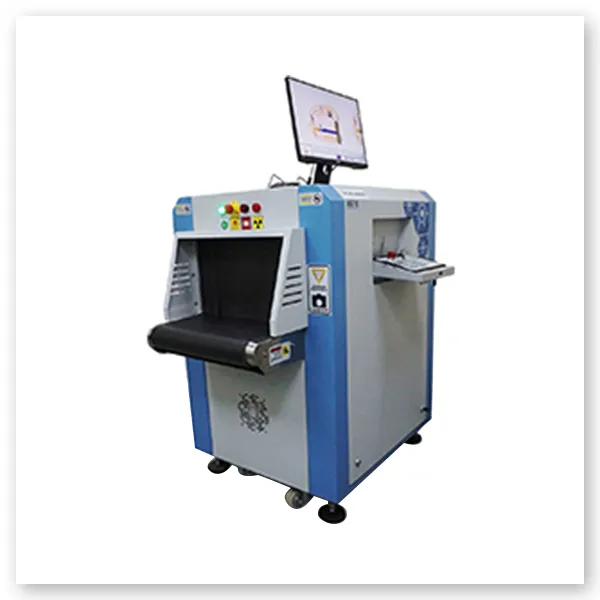
Walk into any major hotel lobby or shopping mall today, and you'll likely pass through a security checkpoint before you reach the lift or the first storefront. This wasn't always the norm. Over the past decade, high-footfall public spaces have steadily adopted the kind of screening infrastructure once reserved for airports. At the centre of this shift sits one piece of equipment: the x-ray baggage scanner.
Installing a baggage screening system for hotels or a security screening solution for shopping centers is more than just checking a compliance box for hotel owners and mall managers. The goal is to safeguard visitors, employees, and the property while maintaining a seamless experience so that guests hardly notice the checkpoint. This book explains through why that decision matters, what to look for in a system, and how the appropriate equipment pays for itself in safety and operational efficiency.
Why Hotels and Shopping Malls Need Advanced Security Screening
A common feature of both hotels and shopping centers is the high number of strangers passing through the same area on a daily basis, frequently with bags, baggage, or packages that no one has had a chance to inspect. These venues have been designated as priority areas for entrance security screening technology due to their heavy foot traffic and poor visibility of what is being carried in.
Growing Security Concerns
Compared to office buildings or residential complexes, hotels and malls are more difficult to secure because they are open to the public by design. Security teams need a system that examines each bag equally, consistently, and impartially because they cannot rely on knowing every visitor.
Increasing Visitor Traffic
The number of people visiting malls and hotels has only increased as cities and the retail and hospitality industries grow. There are more bags, luggage carts, and deliveries passing through the same entry points every day when there are more guests. At this level, manual checking just isn't scalable.
Risk Management
Owners of real estate are accountable for events on their property both legally and in terms of their reputation. One of the most obvious methods to prove due diligence to insurers, regulators, and the general public is through a recorded, technologically supported screening process.
Public Safety Expectations
In upscale hotels and shopping centers, guests are expecting more and more obvious security measures. A property's commitment to safety is demonstrated by a manned checkpoint equipped with a luggage scanning system, which enhances the visitor experience.
Major Benefits of Installing Baggage Screening Systems
A well-implemented baggage inspection machine does more than detect threats. It reshapes how a front-of-house security operation runs day to day.
Enhanced Visitor Safety
The most significant advantage is also the most immediate. The likelihood of hazardous or forbidden objects entering dining halls, retail floors, or guest spaces is greatly decreased by screening every bag that enters the property.
Faster Entry Without Manual Bag Checks
Both employees and guests find manual checks to be uncomfortable, slow, and uneven. Even during weekend mall surges or peak check-in hours, lines are kept low by an automated visitor baggage screening mechanism that processes bags in a matter of seconds.
Detection of Prohibited Items
Without having to physically examine each bag, security personnel can use a non-invasive baggage inspection procedure to identify guns, combustible materials, or other prohibited items on screen. This preserves a high level of monitoring while safeguarding visitor privacy.
Reduced Human Error
The alertness of the individual conducting the manual search is the only factor that matters. Repetition, fatigue, and distraction all raise the possibility of missing something. Hour after hour, an x-ray machine applies the same degree of detail to each and every bag.
Better Crowd Management
Instead of dealing with a disorganized mob at the door, security teams can regulate the pace and flow of people entering the facility by using a dedicated checkpoint with clear lanes and an X-ray security screening system.
Professional Brand Image
Visible, well-managed security is a component of the brand experience for five-star hotels and upscale shopping centers. A state-of-the-art checkpoint manned by skilled personnel with dependable equipment gives the impression that a property is well-managed.
Compliance with Security Protocols
Nowadays, a lot of towns want high-traffic events to have commercial security screening systems in place, especially in areas with enhanced security alerts. Establishing an appropriate baggage screening device aids establishments in adhering to municipal and local police regulations.
A Quick Reality Check
No single piece of equipment replaces good security planning. An x-ray baggage scanner is most effective when it's paired with trained operators, a sensible checkpoint layout, and a clear response protocol for flagged items.
Features to Consider Before Choosing a Baggage Screening System
Not every property is a good fit for every baggage screening device. It is vital to comprehend the technological aspects that genuinely impact daily performance prior to shortlisting suppliers.
Feature: Tunnel Size
Why It Matters: Determines the maximum bag, suitcase, or parcel size the machine can accommodate without bottlenecks.
Feature: Image Quality
Why It Matters: Sharper, high-resolution imaging makes it easier for operators to identify small or layered objects.
Feature: Material Discrimination
Why It Matters: Dual-energy X-ray helps separate organic, inorganic, and mixed materials by colour, speeding up decisions.
Feature: User-Friendly Interface
Why It Matters: An intuitive console reduces training time and helps operators stay focused during long shifts.
Feature: Conveyor Capacity
Why It Matters: Affects how many bags can be processed per minute, which matters most at peak hours.
Feature: AI-Assisted Detection
Why It Matters: Automated alerts for specific shapes (such as firearms or sharp objects) act as a second layer of support for the operator.
Feature: Maintenance Support
Why It Matters: Local servicing, spare parts availability, and response times directly affect long-term uptime.
Instead of depending solely on specification documents, it is worthwhile for properties considering purchasing modern baggage screening technology to ask for a live demonstration. A brochure will never teach you as much as seeing how the system manages actual bags under actual lighting and queue circumstances.
Industries Beyond Hotels and Malls
Although the focus of this tutorial is on mall and hotel entrance security systems, many other industries that face the same high-traffic, public-access problem use the same fundamental technology:
- Airports: where baggage and cargo screening is foundational to aviation security.
- Railroad stations: handling a high volume of quickly moving passengers.
- Hospitals: safeguarding patients, employees, and delicate areas such as ICU wings and maternity.
- Government Offices: safeguarding structures that manage private documents and public access.
- Educational Institutions: screening bags at school and campus entry points.
- Corporate Offices: safeguarding workers and private property in huge business parks.
- Exhibition centers: handling brief spikes in visitor numbers.
- Stadiums: swiftly screening sizable people prior to important events.
All of these have one thing in common: a baggage scanner for commercial buildings must strike a balance between rigorous screening and a quick, dependable visitor experience.
Why Choose Krystalvision?
For years, Krystalvision has worked exclusively in the security screening equipment industry, developing systems for customers who require dependable performance at access points with heavy traffic. The company's approach to this task is shaped by a few factors.
- Engineering based on actual circumstances. The fact that a hotel lobby or mall entrance is not a controlled laboratory setting is taken into consideration while designing equipment. It must function reliably throughout extended operating hours, fluctuating foot traffic, and daily use.
- Standard technology for the industry. Instead of using short cuts that reduce detection accuracy, Krystalvision systems are based on established X-ray screening principles, such as dual-energy imaging and material discrimination.
- Many setups. Every property has a different foot traffic pattern and entry layout. Instead of requiring a one-size-fits-all setup, Krystalvision, a producer of x-ray luggage scanners, offers a variety of tunnel diameters and conveyor speeds so the equipment matches the actual space and traffic flow.
- Post-purchase assistance. The uptime of a scanner determines its usefulness. Since unplanned downtime at a busy mall entrance is rarely acceptable, Krystalvision lays a strong focus on service response and spare parts availability.
- Personalized security measures. Many properties require a scanner that is integrated with access control, CCTV, and metal detectors. Krystalvision collaborates with facility teams to create checkpoints that operate as a cohesive system rather than a collection of disparate devices.
You can explore the full range of x-ray baggage scanner products or browse industry-specific security solutions to see configurations built for hospitality, retail, and other high-footfall sectors.
Frequently Asked Questions
Q: Are x-ray baggage scanners safe for daily use in hotels and malls?
Answer: Indeed. International radiation safety regulations are followed in the construction of commercial baggage scanners. During regular operation, the X-ray beam is completely confined within the tunnel and shielded chamber, protecting surrounding operators and visitors from radiation exposure.
Q: How long does it take to screen a bag with an x-ray baggage scanner?
Answer: The majority of commercial-grade devices screen a bag in a matter of seconds. A single scanner can handle a constant flow of customers without causing long lines if it has a skilled operator and a well-thought-out checkpoint structure.
Q: What is the difference between a walk-through metal detector and an x-ray baggage scanner?
Answer: While a baggage screening machine checks the contents of bags, packages, and luggage, a walk-through metal detector looks for metallic objects on people's bodies. For full coverage, hotels and shopping centers usually deploy both at entry points.
Q: Can a baggage screening system distinguish between organic and inorganic materials?
Answer: Dual-energy X-ray technology, which is used in modern systems, gives organic, inorganic, and mixed materials on screen distinct colors. Operators can swiftly select objects that require a closer examination thanks to this material distinction.
Q: How much space does an x-ray baggage scanner need at an entrance?
Answer: The size of the tunnel and the length of the conveyor determine how much room is needed, however most commercial models are made to fit easily into hotel lobbies and mall entrances without interfering with the aesthetics or visitor flow.
Q: What maintenance does a baggage inspection machine require?
Answer: Software upgrades, conveyor belt inspections, and recurring calibration checks are examples of routine maintenance. Reducing downtime is facilitated by working with a manufacturer that provides organized after-sales assistance.
Q: Is it mandatory for malls and hotels in India to install baggage scanners?
Answer: State and property security classification requirements differ, and big hotels and shopping centers are increasingly compelled to abide by local police and municipal security advisory. It's best to ask a security specialist or local authorities about the most recent standards.
Q: How do I choose the right baggage screening system manufacturer?
Answer: Choose a manufacturer who can customize configurations for your foot traffic and entrance layout, has a network of after-sales services, transparent technical specifications, and a track record of engineering success.
Conclusion
Visitor screening is no longer an optional extra for high-traffic establishments, and security standards for hotels and shopping centers have evolved. Facility managers and security chiefs can enhance security, expedite entrance, and lower the possibility of human error by installing an x-ray luggage scanner without interfering with the visitor or customer experience.
Whether you're upgrading an existing checkpoint or planning security infrastructure for a new site, the appropriate equipment, along with the right manufacturer assistance, makes a significant impact. Krystalvision designs screening systems for hotels, shopping centers, and other commercial facilities based on their unique foot traffic, layout, and risk profile
Related Reading
Top 10 Hidden Secrets About Business & Finance You Need to Know
Welcome to our in-depth exploration of Business & Finance. In an era defined...
Why Business & Finance is Transforming the Global Industry Landscape
Welcome to our in-depth exploration of Business & Finance. In an era defined...