How Hospital Scribes Reduce Physician Documentation Work
By Joshua Wilson
4 Views
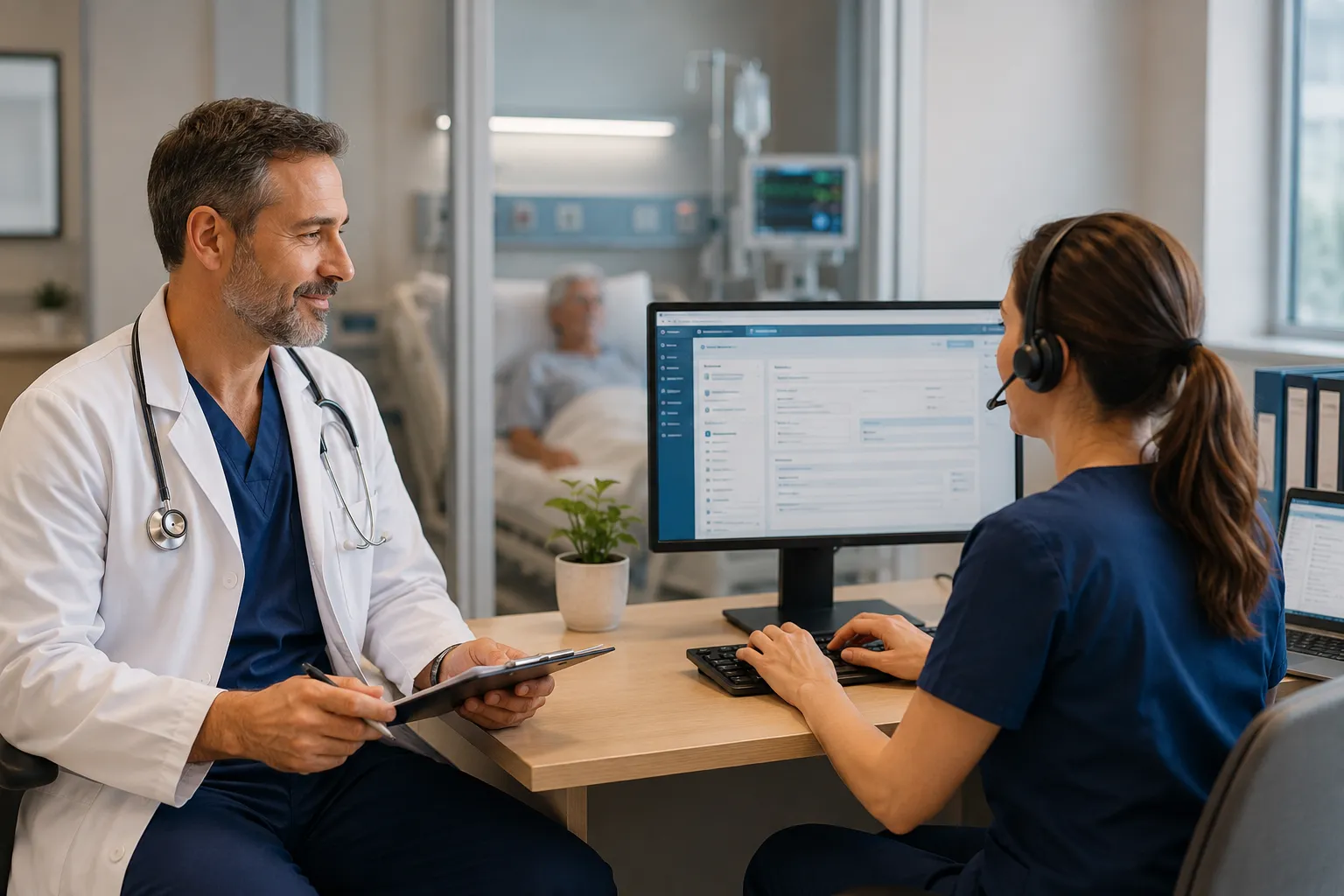
Physicians manage many responsibilities during a hospital shift. In addition to examining patients and making clinical decisions, they must record medical histories, document examinations, update electronic health records, enter orders, and complete notes.
This documentation is essential for patient care, communication, billing, and compliance. However, it can also take significant time and contribute to administrative pressure.
Hospital scribes help reduce this burden by documenting clinical encounters on behalf of physicians. By recording relevant information during or immediately after a visit, scribes allow doctors to spend more time focusing on patients and clinical decisions.
What is a hospital scribe?
A hospital scribe is a trained professional who assists a physician with clinical documentation. The scribe follows the physician during patient encounters, listens to the conversation, and records appropriate information in the electronic health record.
Depending on the hospital and department, a scribe may help document:
- Patient histories
- Symptoms and chief complaints
- Physical examination findings
- Diagnoses
- Treatment plans
- Medication information
- Test and imaging results
- Procedures
- Follow-up instructions
- Referral information
- Discharge details
The physician remains responsible for reviewing and approving the final documentation.
1. Documents information during patient encounters
Without a scribe, physicians may need to divide their attention between the patient and the computer. They may type notes during the consultation, write information down for later, or complete documentation after the shift.
A hospital scribe records relevant details as the encounter takes place. This can help the physician maintain better engagement with the patient while ensuring that important information is captured in the record.
The scribe may document the patient’s:
- Reason for the visit
- Relevant medical history
- Reported symptoms
- Examination findings
- Diagnostic results
- Physician’s assessment
- Recommended treatment
This approach reduces the amount of documentation the physician must complete independently.
2. Reduces after-hours charting
Many physicians complete unfinished notes after their scheduled shifts. This can extend working hours and make it more difficult to maintain a healthy work-life balance.
When scribes assist with documentation during the shift, physicians may have fewer unfinished records at the end of the day. They can review completed notes, make any necessary changes, and approve them rather than starting each note from the beginning.
Reducing after-hours charting may help lower administrative pressure and support physician well-being.
3. Helps physicians focus on patient care
Direct interaction is an important part of hospital care. Patients may feel more comfortable when physicians listen attentively and communicate without repeatedly looking at a screen.
With a scribe managing documentation, physicians can focus more closely on:
- Listening to patient concerns
- Asking follow-up questions
- Explaining diagnoses
- Discussing treatment options
- Answering questions
- Coordinating care
- Communicating with family members
The scribe supports documentation, while the physician remains focused on clinical responsibilities.
4. Supports more complete clinical notes
Time pressure can make it difficult for physicians to produce detailed documentation. Important information may be recorded later from memory or entered in a brief format.
A scribe can capture relevant details as they are discussed. This may help create more complete notes that support:
- Continuity of care
- Communication between providers
- Clinical decision-making
- Follow-up treatment
- Medical billing
- Compliance requirements
- Patient record accuracy
Physicians still review the documentation to confirm that it is correct and appropriate.
5. Helps physicians work more efficiently in busy departments
Hospital departments may manage a high volume of patients, especially emergency departments, urgent care units, and outpatient clinics. Frequent interruptions and changing priorities can make documentation difficult to manage.
Hospital scribes help organize the documentation process by recording information as encounters occur. This allows physicians to move more efficiently from one patient to the next while keeping records up to date.
Improved documentation flow can support better use of the physician’s time during busy shifts.
6. Assists with electronic health record documentation
Electronic health records provide important clinical and operational benefits, but they can also require extensive data entry. Physicians may need to navigate multiple screens, select codes, enter orders, and update patient information.
Hospital scribes who understand the organization’s EHR workflows can assist with appropriate documentation tasks, such as:
- Entering clinical notes
- Recording test results
- Updating patient histories
- Documenting treatment plans
- Preparing discharge information
- Organizing information in the correct sections
The exact responsibilities depend on hospital policy, system access, and the physician’s instructions.
7. Helps maintain documentation consistency
Hospitals often use specific formats, templates, and documentation standards. Scribes trained in these processes can help physicians follow established workflows.
Consistent documentation can make records easier for other healthcare professionals to review. It can also support more efficient handoffs between physicians, nurses, specialists, and other care team members.
A consistent process may include:
- Following approved note templates
- Recording information in the correct EHR fields
- Using accepted medical terminology
- Documenting care in a logical sequence
- Including relevant follow-up instructions
Scribes should follow hospital guidelines and avoid adding information that was not provided or confirmed by the physician.
8. Supports patient flow
Documentation delays can affect more than the physician. They may also slow down orders, referrals, discharges, and communication with other departments.
By helping keep records current, hospital scribes may support smoother patient flow. For example, completed documentation can help the care team:
- Review the physician’s assessment
- Follow the treatment plan
- Process orders
- Coordinate consultations
- Prepare discharge information
- Communicate updates to patients and families
Scribes do not replace clinical staff, but their documentation support can help reduce administrative delays.
9. Reduces repetitive administrative tasks
Physicians often spend time on documentation activities that must be completed for every patient encounter. While these tasks are necessary, they may not require the physician to perform every data-entry step personally.
A scribe can assist with repetitive documentation tasks under appropriate supervision. This may include recording routine encounter details, updating relevant sections of the medical record, and preparing notes for physician review.
Reducing repetitive work allows physicians to direct more attention toward activities that require their clinical knowledge and judgment.
10. Supports remote and virtual scribing
Some hospitals use remote medical scribes who document encounters through secure technology. A remote scribe may work from another location while listening to the encounter and entering information into the approved EHR system.
Remote scribing can provide:
- Flexible staffing
- Access to a wider talent pool
- Support across different shifts
- Documentation assistance for multiple locations
- Reduced need for on-site workspace
Hospitals using remote scribes should ensure that the service follows appropriate privacy, security, access-control, and communication procedures.
11. Helps reduce physician frustration
Complex documentation systems and large workloads can contribute to physician frustration. Repeated data entry may take time away from patient care and create pressure during already demanding shifts.
Hospital scribes can help by taking responsibility for much of the documentation process. Physicians can then review and approve notes rather than managing every step themselves.
This support may improve the working experience for physicians, particularly in departments with high patient volume.
12. Supports accurate billing documentation
Complete clinical documentation can help hospitals support appropriate billing and reimbursement processes. Notes may need to include details about the services provided, the patient’s condition, and the physician’s decisions.
A scribe can help record information during the encounter, giving the physician a more complete draft to review. However, documentation must always reflect the actual care provided, and the physician must remain responsible for confirming its accuracy.
Scribes should follow hospital policies and should not select or add information simply to influence billing.
How hospital scribes work with physicians
An effective scribe-physician relationship depends on clear communication and defined responsibilities. A typical process may include:
- The physician begins the patient encounter.
- The scribe records relevant clinical information.
- The physician communicates the assessment and care plan.
- The scribe prepares or updates the documentation.
- The physician reviews the note.
- The physician makes corrections or additions.
- The physician approves and signs the record.
This workflow allows the scribe to support documentation while keeping clinical authority with the physician.
What hospital scribes do not do
Hospital scribes support documentation, but they do not independently provide medical care. They generally do not:
- Diagnose patients
- Make treatment decisions
- Prescribe medication
- Interpret results independently
- Give clinical advice
- Replace physicians or nurses
- Sign notes on behalf of physicians
- Add unverified information to patient records
Their role is to document information accurately under the physician’s direction.
Choosing a hospital scribe service
Hospitals considering scribing support should evaluate:
- Training and experience
- Knowledge of hospital workflows
- EHR familiarity
- Understanding of privacy requirements
- Quality-control procedures
- Physician feedback processes
- On-site or remote support options
- Scheduling and coverage
- Performance reporting
- Escalation procedures
The service should provide clear training, supervision, and quality checks. It should also be able to adapt to the requirements of different departments and specialties.
Measuring the impact of hospital scribes
Hospitals can assess the value of scribing services by tracking:
- Physician documentation time
- Completion time for clinical notes
- After-hours charting
- Physician productivity
- Patient throughput
- Documentation quality
- Physician satisfaction
- Note correction rates
- Patient experience
- Time spent on EHR tasks
These measures can help hospitals determine whether the scribe service is improving workflow and reducing documentation pressure.
Conclusion
Hospital scribes reduce physician documentation work by recording clinical information during patient encounters, preparing notes, assisting with EHR updates, and helping maintain consistent records.
This support allows physicians to spend less time on data entry and more time with patients, clinical decision-making, and care coordination. When implemented with proper training, supervision, privacy controls, and physician review, hospital scribing can improve documentation efficiency and support smoother hospital operations.