How Hospital Management Systems Improve Administrative Efficiency
By Khoka King
26 Views
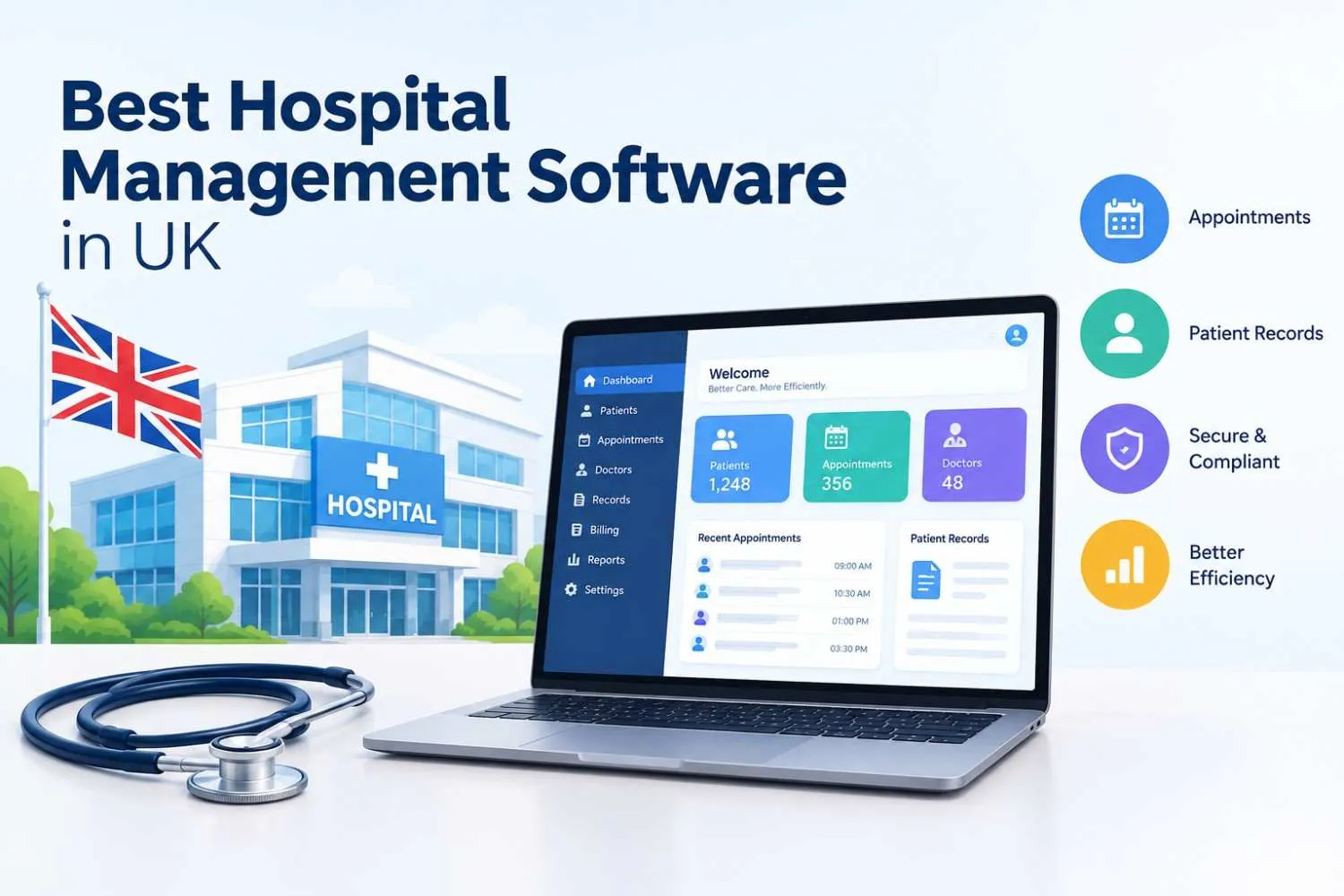
Hospitals manage numerous administrative activities every day, including patient registration, appointment scheduling, billing, staff coordination, medical record management, and inventory control. When these tasks are handled manually or through disconnected systems, they can consume valuable time and create unnecessary delays.
Digital healthcare technology helps hospitals organise these activities more efficiently. A hospital management system brings essential administrative processes together, allowing staff to access information, coordinate responsibilities, and complete routine tasks with less manual effort.
For healthcare providers across the United Kingdom, improving administrative efficiency is important for managing resources and supporting a better patient experience. This article explores how hospital management systems simplify daily operations and how artificial intelligence can support further improvements.
1. Automating Patient Registration
Patient registration is one of the first administrative steps in a hospital visit. Staff need to collect patient details, verify information, create records, and update relevant systems.
Manual registration can involve repetitive data entry and paperwork. A digital hospital management system allows authorised staff to record patient details electronically and retrieve existing information when appropriate.
Online registration and digital forms may also help patients provide necessary information before arriving at the hospital. This can reduce some reception tasks and make the registration process more organised.
Centralised records help administrative teams maintain consistent information across relevant departments. However, hospitals must establish appropriate procedures for verifying patient identities, correcting errors, and protecting confidential information.
By simplifying registration, healthcare organisations can reduce repetitive work and help staff focus on other essential responsibilities.
2. Improving Appointment Scheduling
Appointment scheduling can become complicated when hospitals manage multiple departments, clinicians, and patient waiting lists.
Hospital management software provides tools for booking appointments, checking availability, recording cancellations, and rescheduling consultations. Staff can use a centralised calendar to coordinate appointments and reduce scheduling conflicts.
Automated reminders can notify patients about upcoming consultations through supported communication channels. This may help reduce missed appointments and improve the use of available clinical time.
Scheduling reports can also help administrators identify periods of high demand and understand appointment utilisation.
For hospitals with complex scheduling requirements, these features make it easier to organise daily activities and respond to changes. The result can be a more predictable administrative workflow and a smoother experience for patients.
3. Simplifying Billing and Financial Management
Billing is another important administrative function within healthcare organisations. Hospitals may need to manage invoices, payment records, service charges, outstanding balances, and financial reports.
Manual financial processes can increase the risk of calculation errors and make it difficult to track transactions efficiently.
A hospital management system can automate parts of billing and financial documentation. It may generate invoices, maintain payment histories, record outstanding balances, and produce reports for authorised administrators.
Private healthcare providers may also require insurance related workflows, depending on their services and payment arrangements. NHS organisations have different financial and commissioning requirements that should be considered during software selection.
Accurate digital records help finance teams review transactions and identify discrepancies. Automation can reduce repetitive work while improving the consistency of financial administration.
4. Managing Electronic Patient Records
Paper records can be difficult to organise, retrieve, and share between departments. Electronic patient records provide a structured way to store and access relevant patient information.
Authorised healthcare professionals can review medical histories, diagnoses, prescriptions, allergies, and investigation results through connected digital workflows.
This reduces dependence on physical files and may limit duplicate data entry. Administrative employees can also spend less time searching for documents and more time supporting patient services.
In the UK, NHS England's frontline digitisation programme has highlighted electronic patient records as an important foundation for efficient, effective, and safe care. Hospitals can read more through the NHS England digital technology programme.
To achieve these benefits, organisations must maintain accurate records, implement appropriate access controls, and ensure that digital systems integrate effectively with existing applications.
5. Supporting Staff Scheduling and Workforce Management
Hospitals depend on doctors, nurses, administrative employees, and support teams working together. Managing shifts and staff availability manually can create additional work for managers.
Hospital management systems may include tools for preparing staff schedules, recording attendance, managing leave, and reviewing workforce requirements.
Managers can use these features to identify scheduling conflicts and monitor staffing arrangements across departments. Integration with existing human resource or payroll software may also reduce duplicate data entry.
Some advanced platforms can use data analysis to support workforce planning by identifying demand patterns and highlighting potential staffing gaps.
These tools do not replace managerial decisions, but they can provide useful information for planning and coordination. Better organised schedules can help hospitals use available resources more effectively.
6. Using Artificial Intelligence to Reduce Administrative Work
Artificial intelligence is creating new opportunities to improve hospital administration. AI tools can analyse information, identify patterns, assist with documentation, and support selected planning activities.
An AI Based Hospital Management System may offer features such as intelligent appointment scheduling, automated administrative assistance, operational forecasting, and analysis of resource utilisation, depending on the product.
For example, AI supported scheduling tools may help administrators evaluate appointment demand and identify opportunities to use available slots more efficiently. Document processing tools may also assist with extracting information from forms and organising administrative records.
AI can support decision making by presenting useful information, but its outputs require appropriate review. Hospitals should assess accuracy, data privacy, potential bias, and human oversight before introducing these tools.
The most useful applications are those that solve specific administrative problems and fit naturally into existing workflows.
7. Improving Inventory and Pharmacy Management
Hospitals require reliable supplies of medicines, medical equipment, and everyday clinical materials. Poor inventory management can lead to shortages, expired products, unnecessary purchases, and avoidable administrative work.
Digital inventory systems help staff track stock levels, record purchases, monitor expiry dates, and manage supplier information.
Automated alerts can notify authorised employees when stock reaches a defined minimum level. Reports can also help purchasing teams understand usage patterns and plan future orders.
Pharmacy management features may support prescription records, dispensing workflows, and medicine stock tracking where these functions are included in the platform.
These capabilities can reduce manual stock checks and improve record keeping. Hospitals should ensure that inventory tools meet their operational requirements and support suitable medication safety procedures.
8. Connecting Departments Through Integration
Hospitals often use separate applications for laboratory services, radiology, pharmacy, finance, and patient records. When these systems do not communicate effectively, staff may need to enter the same information repeatedly.
Integration allows compatible systems to exchange relevant information and support connected workflows.
For example, linking patient records with laboratory systems can help authorised staff access test results without manually transferring information between applications. Connections with finance or inventory platforms may also simplify administrative reporting.
Healthcare organisations should assess available integration options, data standards, security controls, and ongoing maintenance requirements before implementation.
A connected digital environment can reduce duplication and improve information flow between departments.
9. Strengthening Reporting and Decision Making
Hospital administrators need accurate information to understand operational performance and plan resources.
Reporting tools can provide information about appointment activity, patient waiting times, bed occupancy, staffing, billing, and inventory levels.
Instead of preparing every report manually, staff can generate relevant summaries from available system data. Managers can then identify recurring problems and determine which processes may require improvement.
For example, appointment reports may highlight departments with frequent cancellations, while inventory reports may identify supplies that are regularly overstocked.
Reports are most useful when the underlying data is accurate and the selected measures reflect organisational priorities. Administrators should also protect patient confidentiality when accessing and sharing reports.
10. Choosing the Right Software for UK Hospitals
Selecting suitable software requires hospitals to consider their operational needs, existing technology, budget, security requirements, and long term plans.
When evaluating Hospital Management Software UK solutions, healthcare organisations should consider:
-
Essential features: Confirm support for registration, appointments, records, billing, and other required workflows.
-
Ease of use: Choose a system that staff can learn and operate efficiently.
-
Integration: Check compatibility with existing clinical and administrative applications.
-
Data protection: Review security controls and applicable UK data protection obligations.
-
Scalability: Ensure the platform can support additional departments and users.
-
Training and support: Assess implementation assistance, ongoing maintenance, and staff training.
Healthcare providers can explore digital healthcare solutions through The Meditale. Before choosing a platform, hospitals should evaluate its functionality, integration capabilities, security arrangements, and suitability for their specific requirements.
Successful implementation also requires staff involvement, clear procedures, and regular performance reviews.
Conclusion
Hospital management systems help improve administrative efficiency by simplifying registration, automating appointments, organising financial records, managing inventory, and connecting departmental workflows.
Artificial intelligence can provide additional support through intelligent scheduling, document processing, and operational analysis when these tools are appropriate and properly supervised.
However, technology alone does not guarantee better performance. Hospitals need accurate data, secure systems, suitable staff training, and effective implementation plans.
By selecting the right software and continuously reviewing its impact, UK healthcare organisations can reduce unnecessary administrative work, use resources more effectively, and give staff more time to support patient care.