How Does a Water Sealed Vacuum System Run So Reliably?
By Rill Anthony
17 Views
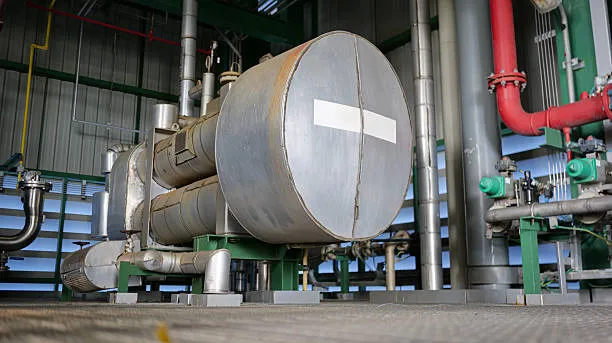
Walk into a paper mill, a chemical plant or a food processing line and somewhere in the back there's a machine humming away, pulling vacuum all day without much fuss. Chances are good it's a liquid ring vacuum pump. Operators love them because they're tough and forgiving. They'll swallow wet gas, a bit of carryover and the occasional upset that would kill other pump types. But there's a catch nobody mentions at the start. They make heat, and that heat has to go somewhere. That's where a decent cooling arrangement comes in, and why the choice of heat exchanger suppliers is a bigger deal than people think. At Courtney & Nye we see this combo all the time, so here's how the pump really works, why cooling matters, and what to ask before you buy.
The Basic Idea Behind a Liquid Ring Pump
Picture a round casing with an impeller sitting off centre inside it. Fill the casing partly with a liquid, usually water. Spin the impeller and centrifugal force throws that liquid out against the casing wall, forming a ring. Because the impeller is off centre, the spaces between the blades grow as they pass one side and shrink on the other. Gas gets drawn in where the spaces grow and squeezed out where they shrink. That's the compression. The liquid acts as the piston and the seal at the same time, which is neat. There are no metal parts rubbing against each other in the compression zone, so wear stays low. It's simple, honest engineering, and that's a big reason these pumps last for decades when treated properly.
Why Plants Pick This Type of Pump
Reliability, mostly. A liquid ring vacuum pump handles saturated gas and small amounts of liquid without drama, which is the stuff that wrecks dry running pumps. It copes with vapours that would condense and foul other designs, and it can run in dirty, humid environments. Since compression is nearly isothermal, meaning the heat is taken up by the sealing liquid rather than the gas, it's also good for gases that are sensitive to temperature or are flammable. Sure, the efficiency isn't amazing compared to some alternatives, and you can't push to extremely deep vacuum with water as the seal. But for many process jobs like filtration, drying, degassing, distillation and priming, it's a solid, sensible workhorse that rarely lets you down.

Where the Heat Goes
Here's the bit that surprises people. All the energy the motor puts in ends up as heat, mostly absorbed by the sealing liquid. That liquid warms up with every pass. And as it warms, the pump performance falls, because warmer water has a higher vapour pressure. In plain terms, the water starts to boil off at lower pressure and the pump can't reach as deep a vacuum. Push it far enough and you get cavitation, with that gravelly noise and damage to the impeller. So the sealing liquid has to be kept cool. Plants do this in a few ways. Some run once through and dump the liquid, a total loss setup. Others recirculate it and cool it through a heat exchanger. The second approach saves a lot of water and is now far more common.
Total Loss Versus Recirculation
Total loss is easy. Fresh water goes in, hot water goes out, no extra equipment. It also uses a lot of water, and where water is expensive or restricted that gets painful quickly. Recirculation cuts consumption dramatically. The warm seal liquid leaves the pump, passes through a cooler, and returns at a lower temperature. A small amount of make-up water tops up what's lost to evaporation and carryover. But now you've got a heat exchanger in the loop, and it needs to be sized properly, built from the right material and kept clean. Partial recirculation sits in the middle, with some liquid reused and some replaced. Which one makes sense depends on water cost, discharge rules, gas contamination and how much you care about running costs over ten years.
Choosing the Right Cooler for the Seal Loop
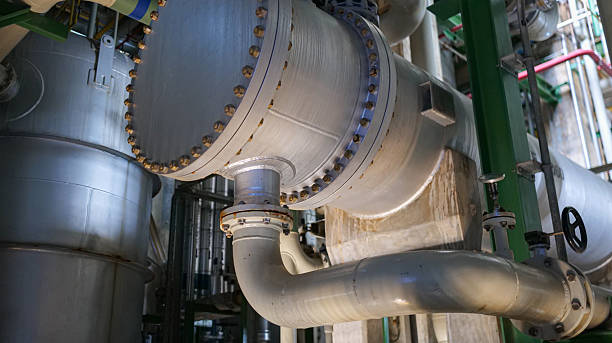
Common choices are plate heat exchangers and shell & tube units, and sometimes air cooled coolers where water is scarce. Plate units are compact and give tight temperature approach, which is useful because every degree you shave off the seal liquid temperature improves the vacuum you can pull. But narrow channels and dirty seal liquid don't mix. If your gas stream carries solids, fibres or sticky stuff, that liquid will carry it too, and plates clog. Shell & tube is more forgiving and easier to clean mechanically. Material matters too, because seal liquid can be acidic, salty or loaded with chlorides. Stainless steel isn't always enough. Titanium, graphite or special alloys may be needed in tough services. Think about the liquid, not just the pump.
Picking Among Heat Exchanger Suppliers
Right, suppliers. Not all of them are equal, and you'll know within one phone call. A good supplier asks about your seal liquid, its temperature in and out, flow rate, pressure drop limits, gas contaminants and cleaning access. A lazy one sends a price. Ask for a thermal calculation and a proper datasheet with materials. Ask how the unit will handle fouling and what the cleaning method is. Ask about lead times, spares and warranty in plain language. Courtney & Nye treats this as a conversation, not a catalogue exercise, because the cooler for a vacuum pump isn't an off the shelf commodity even if it looks like one. A mismatched cooler quietly cuts pump capacity and nobody notices until production slows.
Common Mistakes We Keep Running Into
The usual suspects. Undersized coolers, because someone sized for the average summer day instead of the worst one. Ignoring seal liquid contamination, so the exchanger fouls in months. Using the wrong material for corrosive liquids. Forgetting strainers, which lets debris into narrow passages. Poor piping with air pockets that choke flow. Letting the seal liquid run too warm for years because "it still works", then wondering why vacuum levels dropped. Skipping instrumentation, so nobody can see temperatures or pressures to spot trends. And treating the pump and cooler as separate purchases from separate teams who never talk. They are one system. A pump rated for a certain vacuum only delivers it if the seal liquid is cool enough, full stop.
Maintenance and Keeping It Running
Maintenance is refreshingly simple. Watch seal liquid temperature, pump current, vacuum level and the cooler's pressure drop. A slow rise in temperature or pressure drop usually means fouling in the heat exchanger. Clean it on a schedule instead of waiting for trouble. Check for scale buildup inside the pump casing too, especially in hard water areas, since scale cuts clearances and eats efficiency. Inspect bearings and mechanical seals regularly. Keep records. A simple log of readings turns guesswork into a clear picture when something goes wrong. And if the seal liquid quality drifts, deal with it quickly, because contamination is the root of most long term problems with these systems.
Conclusion
A liquid ring vacuum pump is a dependable, forgiving machine, but it only performs as well as its cooling. Keep the seal liquid cool, pick the right recirculation setup, and choose a cooler built for your actual liquid and contaminants. Take time over heat exchanger suppliers, ask the awkward questions, and demand real calculations instead of a quick price. Do that and your vacuum system should run steadily for years without drama. If you're sizing a new setup or trying to figure out why an existing one has lost performance, Courtney & Nye is happy to look at the numbers and tell you straight what we think.
FAQs
How does a liquid ring vacuum pump work?
An off-centre impeller spins inside a casing partly filled with liquid, usually water. The liquid forms a ring that seals and compresses the gas as the spaces between blades grow and shrink.
Why does a liquid ring vacuum pump need cooling?
The motor energy turns into heat in the sealing liquid. Warmer liquid has a higher vapour pressure, which limits the vacuum the pump can reach and can cause cavitation.
What type of heat exchanger is used with a liquid ring vacuum pump?
Plate heat exchangers and shell & tube units are common, with air cooled options in water-scarce sites. The right choice depends on the cleanliness and chemistry of the seal liquid.
How do I choose between heat exchanger suppliers?
Look for suppliers who ask about your fluids, temperatures, flow rates and contaminants, provide thermal calculations and full datasheets, and are honest about lead times and warranty.
Can a liquid ring vacuum pump handle wet gas?
Yes, that's one of its strengths. It tolerates saturated gas and small amounts of liquid far better than most dry running vacuum pumps.
What is the difference between total loss and recirculated seal liquid?
Total loss uses fresh water once and discards it. Recirculation cools and reuses the liquid through a heat exchanger, saving water but adding equipment that needs proper sizing and cleaning.
How often should the cooler on a vacuum pump be cleaned?
It depends on how contaminated the seal liquid is. Watch pressure drop and seal liquid temperature, and clean when either begins to drift upward.
Related Reading
Top 10 Hidden Secrets About Business & Finance You Need to Know
Welcome to our in-depth exploration of Business & Finance. In an era defined...
Why Business & Finance is Transforming the Global Industry Landscape
Welcome to our in-depth exploration of Business & Finance. In an era defined...