How Can CIP Equipment Reduce Water Consumption Without Compromising Cleaning Performance?
By Cedar stone Industry
4 Views
Quick Answer
A well-designed CIP system can reduce water consumption by optimizing flow rates, controlling rinse endpoints, recovering suitable cleaning solutions, improving spray coverage, and automating cleaning stages. The goal is not simply to use less water. It is to use the right amount of water at the right point in the cleaning cycle without weakening mechanical action or leaving product residues behind.
Why Water Consumption Varies During CIP
Water use can add up quickly in a processing plant. Every pre-rinse, chemical rinse, intermediate rinse, and final rinse contributes to the total.
The problem is that some facilities use fixed cleaning times for every batch. That sounds simple, but it is not always efficient.
A lightly soiled tank may not need the same rinse duration as equipment handling a sticky or high-protein product. Yet both may receive the same treatment.
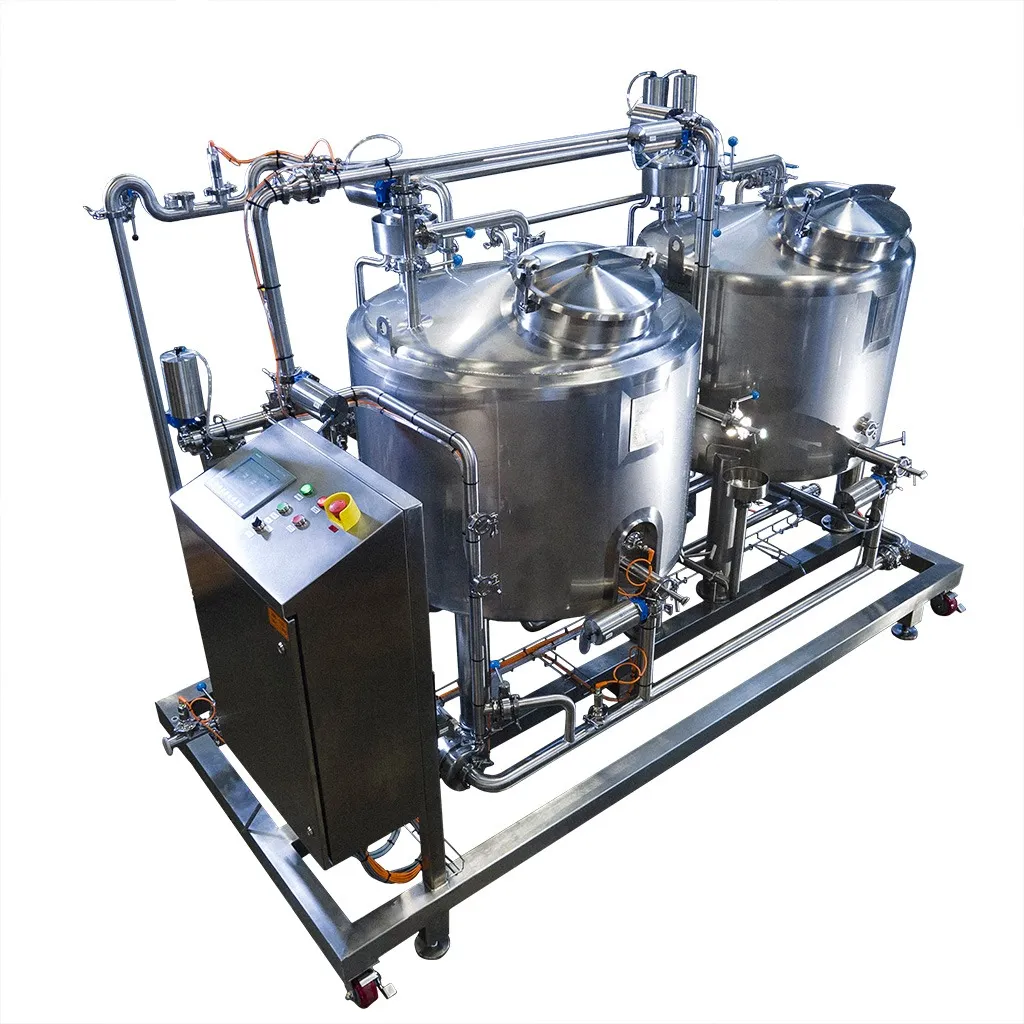
That is where a properly engineered CIP System makes a difference.
Instead of treating every cleaning cycle the same, the system can use process data to determine when a cleaning stage has done its job.
Optimize Flow Instead of Simply Reducing It
It may seem tempting to reduce water use by simply lowering the flow rate. However, that can backfire.
Cleaning depends partly on mechanical action. In process piping, sufficient velocity helps create turbulent flow and provides the force needed to remove residues from internal surfaces.
So, the target should not be "minimum flow." It should be the correct flow.
Pipe diameter, line length, fittings, valves, elevation changes, and equipment resistance all affect the actual flow delivered through the circuit.
A pump that looks adequate based on its nameplate rating may not provide enough flow once the complete system is considered.
Good hydraulic design helps avoid that headache.
Use Conductivity to Control Rinsing
Fixed-time rinsing is one of the easiest places to waste water.
For example, imagine a rinse programmed for 15 minutes. The cleaning chemical may already be flushed from the system after 10 minutes. The remaining five minutes simply sends more water down the drain.
Conductivity monitoring provides a smarter way to handle this.
Cleaning chemicals typically change the conductivity of the circulating fluid. Sensors can monitor that change and provide an indication of when the solution has reached the required rinse endpoint.
The controller can then move to the next stage.
This approach helps avoid over-rinsing while keeping the cleaning recipe consistent from batch to batch.
Recover Water and Cleaning Solutions
Not every cleaning fluid needs to go straight to the drain.
Depending on the process, suitable rinse water or cleaning solutions can sometimes be collected for reuse. This can reduce both water and chemical consumption.
A recovery setup may include:
- Recovery tanks
- Automated valves
- Conductivity sensors
- Level sensors
- Dedicated return lines
- Automated fluid routing
However, recovery must be carefully engineered. You do not want a fluid from one cleaning stage ending up where it can contaminate another.
The system needs clear separation and reliable controls.
Done properly, recovery can turn what was once waste into a useful process resource.
Improve Spray Device Efficiency
Tank cleaning is another area worth a closer look.
Spray balls and rotary spray devices need enough flow and pressure to reach the required surfaces. But bigger flow does not automatically mean better cleaning.
The spray device should match the tank's size, shape, internal components, and cleaning requirements.
Agitators, coils, baffles, probes, and other internals can create areas where cleaning coverage is weaker.
Rather than simply increasing water volume, engineers can look at spray pattern, device location, pressure, and flow.
That is a much more targeted approach.
Improve Equipment Drainability
Poor drainage can quietly drive water consumption upward.
Consider a process line with low points or poorly positioned valves. Cleaning solution may remain trapped after the main flow stops. Operators may then add extra rinse water to flush it out.
That is not an efficient fix.
Proper sanitary design should encourage drainage wherever practical. Suitable pipe slopes, minimized dead legs, correctly positioned valves, and appropriate vessel geometry can all help.
The cleaner the system drains, the less water is needed to chase leftover fluid through the line.
Automate Cleaning Transitions
Manual cleaning can be inconsistent. One operator may stop a rinse as soon as the system reaches the required endpoint. Another may let it run longer just to be safe.
That difference adds up over time.
Automation removes much of that guesswork.
A modern system can monitor:
- Flow rate
- Pressure
- Temperature
- Conductivity
- Tank level
- Cycle time
The controls can then move between stages once the defined conditions are met.
This makes Clean in place processing more repeatable. It also helps reduce unnecessary operator intervention.
Control Water During Pre-Rinsing
The pre-rinse removes loose product before chemical cleaning begins. It is an important step, but it can also consume a surprising amount of water.
The trick is to remove the bulk of the soil without continuing the rinse longer than necessary.
Product characteristics matter here.
A low-viscosity beverage may rinse away quickly. A thick sauce or sticky formulation may require a different approach.
Temperature, spray pattern, flow rate, and residue characteristics should therefore be considered together.
A process-specific recipe usually makes more sense than using one rinse setting for every product.
Monitor Cleaning Performance, Not Just Water Use
There is a catch to aggressive water reduction.
If the cleaning cycle becomes too short and leaves residue behind, the equipment may need to be cleaned again. Now the facility has used even more water.
So, water consumption should never be the only metric.
Track factors such as:
- Water used per cycle
- Cleaning time
- Chemical consumption
- Rinse endpoint
- Cleaning failures
- Repeat cleaning cycles
- Equipment downtime
These numbers tell the real story.
The goal is not the shortest cycle. It is the most efficient cycle that consistently achieves the required cleaning result.
Match Cleaning Parameters to the Soil
Different products leave different residues.
Sugars, fats, proteins, starches, minerals, and other soils do not respond to cleaning conditions in exactly the same way.
That matters because temperature, chemical concentration, flow, and contact time all interact.
Using excessive water to compensate for a poorly matched cleaning recipe is a bit like using a bigger hammer to fix the wrong problem.
Instead, cleaning conditions should be developed around the actual soil.
When chemistry and mechanical action are properly balanced, there may be less need for extended rinsing.
Build a Smarter CIP Strategy
Water savings rarely come from one magic adjustment.
The strongest results usually come from several improvements working together.
For example, a facility could combine:
- Properly sized CIP pumps
- Optimized flow velocities
- Efficient spray devices
- Conductivity-based rinse control
- Recovery systems
- Automated valve sequencing
- Improved equipment drainage
- Soil-specific cleaning recipes
Each change may save a modest amount of water. Together, the impact can be substantial.
Just as importantly, these improvements can make cleaning more repeatable.
Final Thoughts
Reducing water consumption does not mean taking shortcuts with sanitation.
The smarter approach is to understand what the cleaning process actually needs and eliminate the waste around it.
A properly engineered CIP system can control flow, monitor conductivity, improve spray coverage, recover suitable solutions, and automate cleaning transitions. These features help ensure that water is used where it provides real cleaning value.
In the end, the goal is simple: use enough water to achieve reliable cleaning, but not a drop more than the process requires.
FAQs
Can reducing CIP flow reduce cleaning effectiveness?
Yes, if flow falls below the level required for adequate mechanical action. Flow should be optimized based on piping geometry, soil characteristics, and cleaning requirements.
How does conductivity help save CIP water?
Conductivity monitoring can identify when cleaning chemicals have been sufficiently removed during rinsing, allowing the system to advance without relying solely on fixed rinse times.
Can rinse water be recovered and reused?
In suitable applications, recovery systems can collect and reuse certain rinse streams. Proper separation and monitoring are essential to prevent cross-contamination.
Does higher water flow always provide better cleaning?
No. Excessive flow can increase water consumption without providing proportional cleaning benefits. Properly engineered flow and spray coverage are more important than simply maximizing water volume.
What is the best way to reduce CIP water consumption?
Start by evaluating the complete cleaning circuit. Pump sizing, flow, spray coverage, conductivity control, drainage, recovery, automation, and cleaning chemistry should be considered together.
Related Reading
Top 10 Hidden Secrets About Business & Finance You Need to Know
Welcome to our in-depth exploration of Business & Finance. In an era defined...
Why Business & Finance is Transforming the Global Industry Landscape
Welcome to our in-depth exploration of Business & Finance. In an era defined...