How Automation Is Changing Steel Manufacturing Plants
By Sahil Parekh
72 Views
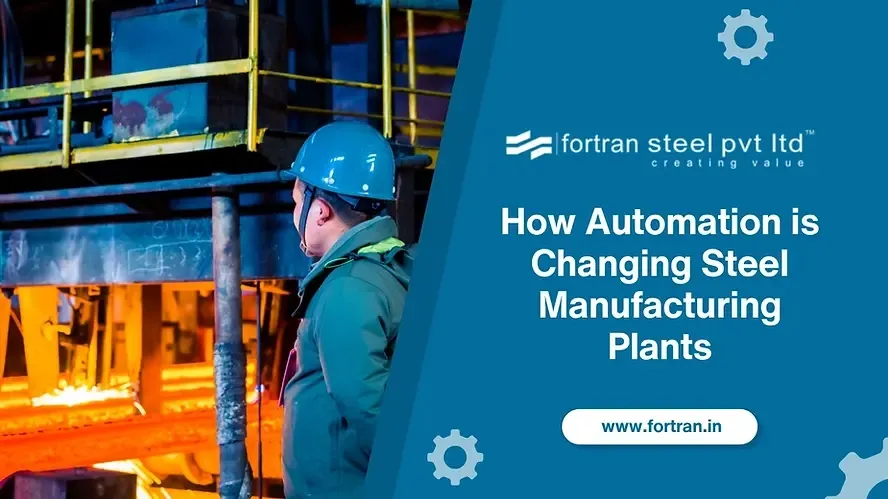
Modern steel plants operate under constant pressure to increase output, maintain consistent quality, control operating costs, and reduce unplanned downtime. As production requirements become more complex, many top steel manufacturers are adopting steel plant automation to improve control, visibility, and reliability across manufacturing operations.
Automation in steel manufacturing now extends far beyond basic machine control. PLC systems, SCADA platforms, robotics, industrial sensors, and connected monitoring technologies are helping create smart steel manufacturing environments where production decisions are supported by real-time data.
Why Are Steel Plants Moving Toward Automation?
Steel manufacturing involves multiple continuous and interconnected processes. Furnaces, rolling mills, material handling systems, cooling stages, and finishing operations must work together efficiently.
Even a small equipment failure can affect production schedules, operating costs, and delivery commitments.
Automation helps plants continuously monitor operating conditions, identify abnormal behaviour earlier, and reduce unnecessary manual intervention. Centralized information also enables operators to respond faster when process conditions change.
For manufacturers looking to increase capacity without losing control over quality, industrial automation for the steel industry offers a practical way to manage higher production volumes with greater consistency.
Key Technologies Used in Steel Plant Automation
PLC Systems
Programmable Logic Controllers, or PLCs, are at the core of many automated steel operations.
PLC in steel plants can control rolling sequences, conveyors, material feeders, furnaces, cooling systems, and safety interlocks based on predefined process conditions.
They help maintain repeatable operations and reduce dependence on constant manual control.
SCADA Systems
Supervisory Control and Data Acquisition systems provide operators with a centralized view of plant activities.
SCADA in steel manufacturing can support production monitoring, alarm management, data logging, energy tracking, and remote supervision.
Real-time process information helps teams identify changes quickly and take corrective action before small issues develop into production disruptions.
Robotics
Robotics in steel manufacturing is increasingly used for material loading and unloading, welding, packaging, inspection, and hazardous operations.
Automating repetitive or high-risk activities can improve process consistency while reducing worker exposure to heat, heavy materials, and potentially dangerous operating environments.
IoT Sensors and Equipment Monitoring
Industrial sensors continuously collect information related to vibration, temperature, pressure, and machine performance.
This data allows production and maintenance teams to monitor equipment condition, identify unusual patterns, and make decisions based on actual operating performance rather than assumptions.
Together, these technologies are making steel plants more connected, responsive, and data-driven.
Benefits of Automation in Steel Manufacturing
- Automation can improve several areas of plant performance simultaneously.
- Continuous monitoring helps detect equipment problems earlier and reduce unexpected downtime. Better process control also limits variations, supporting more consistent product quality.
- Automation can further improve worker safety by reducing manual involvement in hazardous tasks. Real-time production information supports better scheduling, maintenance planning, energy monitoring, and resource utilization.
- For steel plants planning future expansion, automated infrastructure also provides a stronger foundation for integrating new machinery, increasing capacity, and adopting advanced digital technologies.
Role of Predictive Maintenance in Steel Plants
Traditional maintenance often depends on fixed service schedules or repairs after equipment failure.
Predictive maintenance in steel plants takes a different approach by using actual equipment condition to determine when maintenance may be required.
Sensors monitor parameters such as vibration, temperature, pressure, and operating performance. Engineers can analyze these patterns to identify early signs of wear or abnormal behaviour before a breakdown interrupts production.
Predictive maintenance can help:
- Reduce unexpected equipment failures
- Minimize production interruptions
- Improve spare-parts planning
- Extend equipment life
- Schedule maintenance more effectively
For leading steel manufacturers, condition-based maintenance is becoming an important part of improving plant reliability and production continuity.
The Future of Smart Steel Manufacturing
The next phase of steel plant automation is increasingly focused on connected equipment, real-time data, artificial intelligence, and Industry 4.0 technologies.
AI-Driven Process Optimization
Artificial intelligence can analyze large volumes of production data, identify process variations, and highlight opportunities for improvement.
In steel plants, AI can support production planning, quality control, maintenance analysis, and operational decision-making.
As more production information becomes available digitally, these systems can help manufacturers identify patterns that may be difficult to recognize through manual monitoring alone.
Industry 4.0 in Steel Manufacturing
Industry 4.0 in the steel industry connects equipment, sensors, control systems, production data, maintenance teams, and quality processes within a more integrated manufacturing environment.
This improves operational visibility and enables faster communication between different departments.
Energy and Resource Efficiency
Automation also helps manufacturers monitor energy consumption and resource utilization more closely.
Data-driven process control can highlight areas where energy, raw materials, and equipment are being used inefficiently, helping plants improve productivity while managing resources more responsibly.
Conclusion
Steel plant automation is changing how manufacturers control production, monitor machinery, plan maintenance, and prepare for future growth.
PLCs, SCADA systems, robotics, IoT sensors, predictive maintenance, AI, and Industry 4.0 technologies are helping steel plants create more connected, reliable, and efficient manufacturing operations.
As steel manufacturing becomes increasingly data-driven, automation will continue to play an important role in improving process stability, safety, operational visibility, and long-term competitiveness.
Need a manufacturing partner that combines quality control, production capability, and global supply experience? Contact Fortran Steel today.
Related Reading
Top 10 Hidden Secrets About Business & Finance You Need to Know
Welcome to our in-depth exploration of Business & Finance. In an era defined...
Why Business & Finance is Transforming the Global Industry Landscape
Welcome to our in-depth exploration of Business & Finance. In an era defined...