How AI Call Quality Monitoring Improves Contact Center Quality Management
By Allan Dermot
79 Views
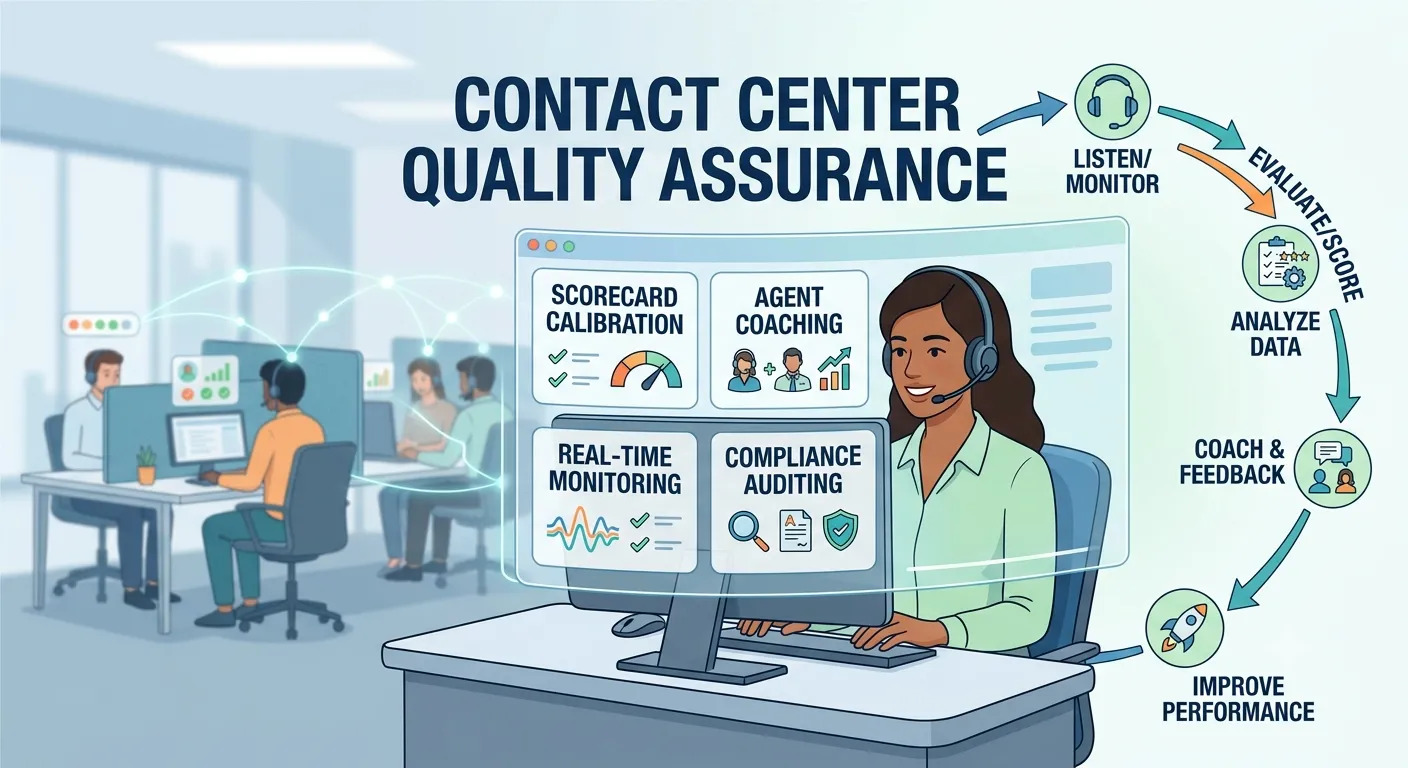
In the fast-paced world of customer service, maintaining high standards can feel like trying to hit a moving target. Traditionally, Contact Center Quality Management relied on supervisors manually reviewing a tiny fraction of total customer interactions—often as little as 1% to 2%.
This archaic approach meant that 98% of customer conversations went unanalyzed, leaving blind spots in agent performance, emerging product issues, and customer sentiment trends. Fortunately, the landscape is shifting. Enter AI Call Quality Monitoring. By harnessing the power of artificial intelligence, contact centers are transforming how they measure, evaluate, and elevate customer experience (CX).
Here is a look at how AI call quality monitoring is revolutionizing contact center quality management and why it’s time for your organization to make the switch.
The Limitations of Manual Quality Assurance (QA)
Before diving into the benefits of AI, it’s worth examining why traditional QA falls short:
- Sample Bias: Reviewing just a handful of calls per agent per month doesn’t provide an accurate picture of their overall performance.
- Human Bias and Inconsistency: Different supervisors grade differently. What one manager considers a minor infraction, another might penalize heavily.
- Time-Consuming Processes: Manual scorecard completion, listening to recorded calls at 1x speed, and compiling data takes managers away from high-value coaching and strategy.
- Reactive, Not Proactive: By the time a bad customer interaction is discovered during a manual review days or weeks later, the damage to the customer relationship is already done.
How AI Call Quality Monitoring Changes the Game
AI-powered QA tools use Natural Language Processing (NLP), speech-to-text transcription, and sentiment analysis to evaluate 100% of customer interactions. Here is how this technology elevates quality management:
1. 100% Coverage and Visibility
Instead of guessing what happened in that tiny 2% sample, AI analyzes every single call, chat, and email. This exhaustive coverage ensures that outliers—such as a compliance violation, a breakthrough upsell technique, or a deeply frustrated customer—are never missed.
2. Objective, Consistent Scoring
AI doesn't have bad days, implicit biases, or fatigue. It evaluates agents against a standardized set of criteria programmed into the system. Whether it’s verifying that required disclosures were read, tracking the use of positive language, or measuring polite interruptions, AI scores every interaction fairly and consistently.
3. Real-Time Sentiment Analysis
Beyond just listening to what is said, modern AI detects how it is said. By analyzing vocal tones, pacing, and keyword choices, AI can gauge customer sentiment in real time. If a customer’s frustration level spikes, the system can alert a supervisor to step in or provide immediate, on-screen prompts to the agent to de-escalate the situation.
4. Automated Compliance and Risk Mitigation
In industries like finance, healthcare, and telecommunications, missing a compliance disclosure can result in hefty fines. AI call quality monitoring can automatically scan 100% of calls for mandatory phrases (e.g., "This call may be recorded for quality purposes") and flag non-compliant agents instantly, drastically reducing regulatory risk.
The Bridge to Performance: AI-Powered Coaching
Data is only as valuable as the actions you take with it. This is where AI-Powered Coaching bridges the gap between insights and results.
In the past, supervisors would deliver generic feedback during monthly reviews, often relying on hazy memories of specific calls. With AI, coaching sessions become hyper-targeted and data-driven:
- Pinpoint Skill Gaps: AI can automatically generate reports highlighting specific areas where an agent struggles—such as handling billing disputes or navigating a specific software tool.
- Self-Coaching Opportunities: Agents can access their own AI-generated dashboards, allowing them to review their strengths and weaknesses independently. This fosters a culture of accountability and continuous improvement.
- Best-Practice Sharing: AI can identify calls where agents successfully turned an angry customer into a brand advocate. These calls can be tagged and used as positive training examples for the rest of the team.
The Bottom Line: Better CX and Agent Retention
Implementing AI call quality monitoring isn’t just about operational efficiency; it’s about people.For customers, AI ensures shorter wait times, more empathetic agents, and consistent service quality across the board. For agents, it eliminates the fear of being unfairly evaluated based on a single bad call. Instead, they receive objective feedback and targeted AI-powered coaching that helps them grow, advance their careers, and reduce burnout.
Contact center quality management is no longer about catching agents making mistakes—it’s about empowering them to succeed. By integrating AI into your QA workflow, you unlock unprecedented visibility, drive meaningful coaching conversations, and ultimately deliver a superior customer experience.