Homeopathy Doctor for Skin Treatment in Mumbai: What Patients Should Know
10 Views

If you are searching for a Homeopathy Doctor for Skin Treatment in Mumbai, you may be looking for an approach to managing recurring skin concerns such as acne, eczema, psoriasis, urticaria, or vitiligo.
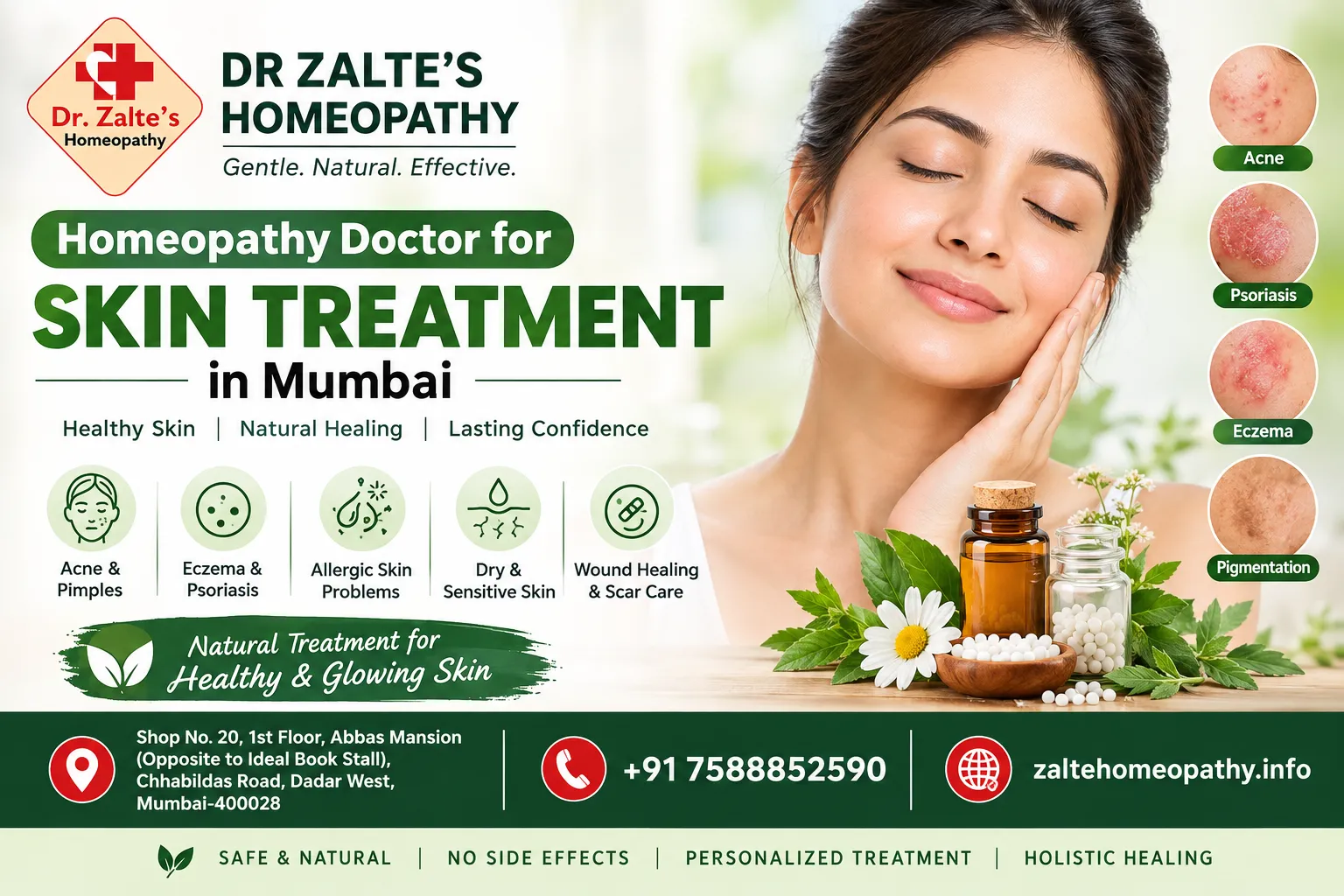
Homeopathy is a complementary healthcare approach that uses individualized remedies based on a person's symptoms and overall health history. People considering homeopathy for skin problems should understand that evidence for its effectiveness varies by condition, and it should not replace proven medical treatment when a skin condition requires conventional care.
ZALTE HOMEOPATHY provides individualized consultations for people seeking homeopathic care for various skin concerns in Mumbai.
What Does a Homeopathy Doctor Do for Skin Problems?
A homeopathy consultation generally involves discussing more than the visible skin symptoms.
A practitioner may ask about:
- How and when the symptoms started
- Frequency and severity of flare-ups
- Itching, dryness, redness, or irritation
- Previous treatments and their response
- Family and medical history
- Sleep patterns
- Stress and lifestyle factors
- Dietary habits
- Other associated symptoms
This information helps the practitioner understand the individual's overall symptom pattern before recommending an appropriate homeopathic approach.
However, persistent or unexplained skin symptoms should be properly diagnosed. Several skin conditions can look similar but require very different treatments.
Which Skin Conditions May Lead Patients to Seek Homeopathy?
People may search for a Homeopathy Doctor for Skin Treatment in Mumbai for a range of recurring skin concerns.
Acne and Acne-Prone Skin
Acne can affect teenagers as well as adults. Hormonal changes, genetics, skin-care products, medications, and other factors may contribute to breakouts.
Treatment depends on the severity and type of acne. People with painful, widespread, or scarring acne should consider professional dermatological evaluation rather than relying solely on self-treatment.
Eczema and Atopic Dermatitis
Eczema can cause dry, itchy, irritated, or inflamed skin. Symptoms may come and go and can be influenced by environmental and individual triggers.
Identifying triggers and maintaining an appropriate skin-care routine are important parts of managing eczema.
Psoriasis
Psoriasis is a chronic inflammatory skin condition that can cause raised, scaly patches. It may involve different parts of the body and can vary considerably from one person to another.
Because psoriasis can sometimes be confused with other skin conditions, proper diagnosis is important before beginning any treatment.
Urticaria
Urticaria, commonly called hives, can cause raised, itchy welts that appear suddenly. Triggers can include infections, medications, foods, environmental factors, or other causes.
Recurring or severe hives should be evaluated by a qualified healthcare professional to identify possible causes and appropriate management.
Vitiligo
Vitiligo causes areas of the skin to lose pigment. It can affect people of different ages and may progress differently from person to person.
Anyone experiencing new or spreading areas of depigmentation should obtain an appropriate medical assessment before selecting a treatment approach.
Fungal Skin Infections
Fungal infections can cause itching, scaling, redness, or changes in the affected skin. They generally require accurate identification because several conditions can produce similar symptoms.
Self-treating a suspected fungal infection with inappropriate medication may sometimes make the condition more difficult to manage.
Why Individualized Consultation Matters?
Skin symptoms do not always tell the complete story.
For example, two people may both experience itching but have completely different underlying conditions. One may have eczema, while another may have a fungal infection, allergy, psoriasis, or another dermatological problem.
An individualized consultation can help organize the patient's symptoms and medical history before a treatment plan is considered.
At ZALTE HOMEOPATHY, consultations are focused on understanding the individual's concerns rather than treating every patient with the same approach.
Homeopathy for Skin Problems: What Should Patients Expect?
One of the most important things to understand about homeopathic treatment is that results cannot be guaranteed within a fixed number of days or weeks.
The response to any treatment depends on the specific condition, its severity, duration, previous treatment, and individual circumstances.
Patients should therefore be cautious about providers who promise:
- Guaranteed cures
- Permanent results within a specific number of days
- Complete removal of every skin condition
- Immediate results for chronic conditions
- Guaranteed treatment without the possibility of medical review
A responsible healthcare approach should include realistic expectations and appropriate follow-up.
Homeopathy and Conventional Dermatology: Can They Be Combined?
This depends on the individual's condition and treatment plan.
Some people may explore complementary approaches while continuing care recommended by their dermatologist or physician. However, patients should tell their healthcare providers about all medicines, supplements, and alternative treatments they are using.
Do not stop prescribed medication, particularly steroids or other medically necessary treatments, without discussing it with the prescribing doctor.
For severe, rapidly worsening, infected, painful, or unexplained skin conditions, timely medical evaluation is important.
Choosing a Homeopathy Doctor for Skin Treatment in Mumbai
If you are comparing providers, look beyond online claims and promotional offers.
Consider the following factors:
Qualified Practitioner
Check the practitioner's professional qualifications and registration where applicable.
Detailed Consultation
A meaningful consultation should give you enough time to explain your symptoms, history, and previous treatment.
Clear Treatment Information
Ask what treatment is being recommended, how it is expected to be used, and what follow-up will involve.
Realistic Expectations
Avoid providers who guarantee results for chronic or complex skin conditions.
Appropriate Referral
A responsible practitioner should recommend conventional medical or dermatological evaluation when a condition requires further diagnosis or treatment.
Why Patients Consider ZALTE HOMEOPATHY?
ZALTE HOMEOPATHY offers individualized consultations for people seeking homeopathic care for skin-related concerns in Mumbai.
The consultation focuses on understanding the patient's symptoms, health history, lifestyle factors, and previous treatment experience before discussing an appropriate approach.
Patients can discuss concerns related to conditions such as acne, eczema, psoriasis, urticaria, vitiligo, and other recurring skin problems.
The goal is to provide a structured consultation rather than a one-size-fits-all recommendation.
Mumbai's Climate and Skin Health
Mumbai's humid climate can make some skin concerns feel more uncomfortable. Heat, sweating, humidity, pollution, personal-care products, and individual sensitivities may all affect how the skin feels.
However, environmental factors should not automatically be considered the cause of a chronic skin condition.
If symptoms continue despite basic skin-care measures, professional assessment can help determine what may be happening and whether additional treatment is needed.
When Should You See a Dermatologist?
Homeopathic or complementary care should not delay medical attention when symptoms may indicate a more serious problem.
Seek prompt medical evaluation if you experience:
- Rapidly spreading skin changes
- Severe swelling
- Significant pain
- Pus or signs of infection
- Fever with a skin rash
- Sudden widespread hives
- Difficulty breathing with an allergic reaction
- Rapidly developing or unexplained pigmentation changes
- A new or changing mole or skin lesion
Emergency symptoms such as difficulty breathing or swelling of the face, lips, or throat require urgent medical attention.
Frequently Asked Questions
What does a Homeopathy Doctor for Skin Treatment in Mumbai treat?
People may seek homeopathic consultations for concerns such as acne, eczema, psoriasis, urticaria, vitiligo, and other recurring skin symptoms. The appropriate treatment depends on the individual condition and diagnosis.
Is homeopathy effective for every skin condition?
No treatment works equally for every person or condition. Evidence supporting homeopathy varies, so patients should discuss appropriate treatment options with a qualified healthcare professional.
Can I stop my dermatology medicines when starting homeopathy?
Do not stop prescribed medication without speaking to the doctor who prescribed it. This is particularly important for medicines being used to control significant inflammation or other chronic conditions.
How long does homeopathic skin treatment take?
There is no reliable universal timeline. Treatment response varies according to the condition, severity, duration, previous treatment, and individual factors.
Is a consultation necessary before starting treatment?
A proper consultation is important for understanding the symptoms, medical history, previous treatments, and individual requirements before any treatment approach is considered.
Should I consult a dermatologist for persistent skin problems?
Yes. Persistent, worsening, painful, infected, or unexplained skin symptoms should be evaluated by a qualified dermatologist or other appropriate medical professional.
Final Thoughts
Choosing a Homeopathy Doctor for Skin Treatment in Mumbai should involve more than looking for promises of quick or permanent results. Patients should consider the practitioner's qualifications, consultation process, treatment explanation, follow-up approach, and willingness to recommend appropriate medical care when necessary.
ZALTE HOMEOPATHY provides individualized consultations for people exploring homeopathic care for skin-related concerns in Mumbai. Before starting any treatment, make sure you understand the approach and discuss other treatments you are currently using with your healthcare providers.