High Speed Hydraulic Press: Principle and Overview
3 Views
Summary
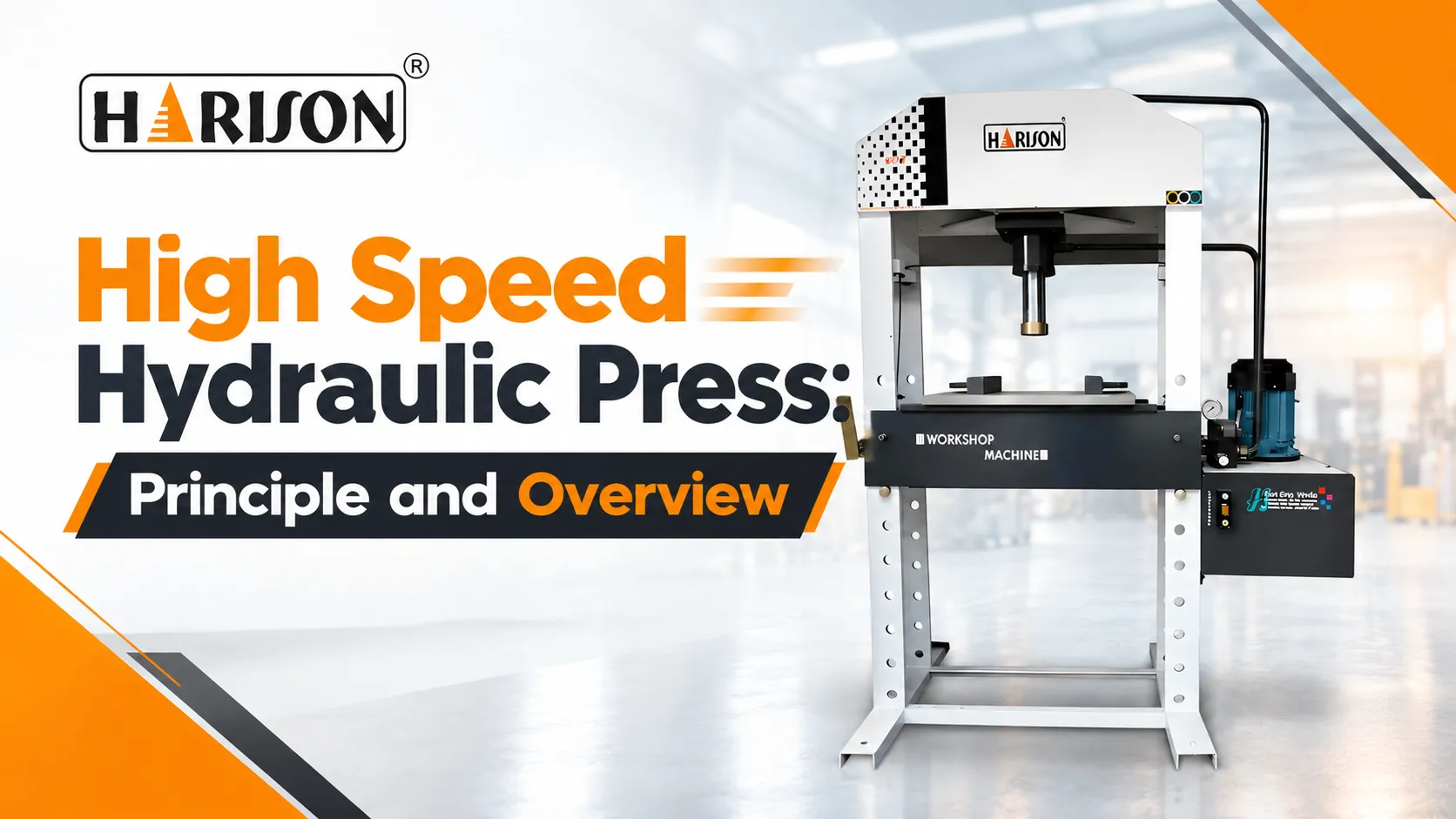
A high speed hydraulic press uses oil pressure to push a ram with great force, and it is built to move quickly between strokes. It works on Pascal's law, and it follows a simple cycle of fast approach, pressing and fast return. This saves time without losing the full force that hydraulic presses are known for. This article explains the working principle, main parts, applications and buying points in plain words.
What Is a High Speed Hydraulic Press?
A high speed hydraulic press is a press that uses hydraulic fluid to create force, and it is designed to complete its stroke cycle quickly. It is used to shape, cut, form or assemble materials such as metal, plastic and composites.
The word "high speed" does not mean that the whole stroke is fast. It mostly means that the ram moves quickly while approaching the workpiece and while returning. The pressing part, where the force is needed, stays under careful control.
The Working Principle
The high speed hydraulic press works on Pascal's law. It says that when pressure is applied to a liquid in a closed system, the pressure travels equally in all directions.
Here is the idea in simple steps.
-
A motor drives a hydraulic pump.
-
The pump pushes oil from a tank into a cylinder.
-
The oil pressure acts on the large piston inside the cylinder, and pushes the ram down.
-
The ram presses the workpiece against the die or the bed.
-
When the work is done, valves redirect the oil, and the ram returns.
The force depends on pressure and area. As a quick estimate, force in kilonewtons is the pressure in the bar multiplied by the piston area in square centimetres, divided by 100. For example, a pressure of 200 bar on a piston area of 500 square centimetres gives about 1,000 kN, which is around 100 tonnes.
This is why a hydraulic press can create very high force with a fairly compact machine.
How a Hydraulic Press Gets Its Speed
Speed comes from smart design of the cycle, not from ignoring the physics. A common cycle has three stages.
-
Fast approach: the ram comes down quickly until it nearly touches the workpiece. Little force is needed here, so the oil can flow freely at high volume.
-
Pressing stroke: the ram slows down and applies full force. Pressure and speed are controlled for good quality.
-
Fast return: the ram retracts quickly, ready for the next part.
Designers use several methods to achieve this.
-
High-flow pumps or two pumps: one gives large flow at low pressure for fast movement, and the other gives high pressure for pressing.
-
Prefill valves: these let the cylinder fill quickly from a tank during the fast approach.
-
Accumulators: they store pressurised oil and release it quickly when needed.
-
Proportional or servo valves: they give smooth, precise control of speed and position.
-
Adjustable oil pressure and ram positioning: the operator can set the pressure and the stroke for each job.
Main Parts of the High Speed Hydraulic Press
-
Frame: the strong steel structure that takes the load.
-
Main cylinder and ram: they create and transfer the force.
-
Bed or bolster: the table that holds the die and the workpiece.
-
Hydraulic power pack: the motor, pump, oil tank and filters that supply the pressure.
-
Valves: direct the oil and control pressure, speed and direction.
-
Relief valve and pressure gauge: protect the system from overload and show the working pressure.
-
Control panel: buttons, switches or a PLC for operation, with limit switches to set the stroke.
-
Safety devices: guards, two-hand controls or light curtains, and an emergency stop.
Common Frame Types
-
C-frame press: open on three sides, so it is easy to load and unload. A good fit for lighter work and quick access.
-
H-frame press: a stiff frame with a bed on both sides. Good for heavier tonnage and general fabrication.
-
Four-pillar (four-column) press: the ram runs on four columns, giving even force over a large bed. Suited to deep drawing, moulding and large dies.
Where High Speed Hydraulic Press Is Used
These presses are found anywhere that repeated, accurate pressing is needed.
-
Metal forming and stamping: shaping sheet and plate parts.
-
Punching and blanking: cutting shapes from sheets.
-
Deep drawing: making cups, tanks and utensils.
-
Forging: shaping heated metal.
-
Compression moulding: forming rubber, plastic and composite parts.
-
Die casting and extrusion support: handling and shaping tasks.
-
Assembly work: pressing in bearings, bushes and fittings.
Industries include automotive, aerospace, electronics, appliances, utensils and general engineering.
Benefits of High Speed Hydraulic Press
Benefits:
-
Full force through the stroke: a hydraulic press can deliver its rated force at any point of the stroke.
-
Adjustable force and stroke: easy to set for different jobs and dies.
-
Built-in overload protection: the relief valve limits the maximum pressure.
-
Smooth operation: less shock than many mechanical presses.
-
Flexible: works with many die sizes and materials.
-
Faster cycles than a standard hydraulic press: thanks to fast approach and return.
How to Choose the Right Hydraulic Press
Give the manufacturer clear information about your work, and check these points.
-
Tonnage: the force the job needs, with a safe margin, often 20 to 30 per cent above the calculated figure.
-
Bed size: it must hold your die with room to clamp it.
-
Stroke and daylight: the ram travels and the opening between the ram and the bed.
-
Speeds: approach, pressing and return speeds.
-
Motor power: it should match the pump and the cycle.
-
Frame type: C, H or four-pillar, based on the job.
-
Controls: manual, semi-automatic or PLC-based, with programmable pressure and position.
-
Safety features: guards, two-hand controls and an emergency stop.
-
Customisation: special bed sizes, cushions, ejectors or tooling.
-
Support: spares, installation, training and service.
Safety and Maintenance Tips
-
Never exceed the rated tonnage.
-
Use the right dies, and clamp them firmly.
-
Keep hands out of the die area, and use the safety devices every time.
-
Check the oil level, and change the oil and filters as the maker advises.
-
Look for leaks in hoses, fittings and seals.
-
Keep the oil cool and clean.
-
Grease the guides and moving parts.
-
Test the relief valve, pressure gauge and limit switches regularly.
-
Train every operator, and keep a log of servicing.
Final Thoughts
A high speed hydraulic press combines two things that plants want: strong, controlled force and a short cycle. Understanding the principle makes it easier to choose, run and maintain one. Start with your parts, your tonnage and your output target, and then match the machine to them.
If you are comparing options, you can look at the hydraulic press range from Hari Engineering Works, which manufactures and offers customized models according to customer requirements.
Frequently Asked Questions
What is a high speed hydraulic press?
It is a hydraulic press designed to move its ram quickly during approach and return, which shortens the cycle time while still delivering strong pressing force.
How does a hydraulic press work?
A pump pushes oil into a cylinder, and the pressure moves a piston and ram. Because pressure acts on a large area, the press can create a very high force.
What principle does a hydraulic press use?
It uses Pascal's law, which says that pressure applied to a confined liquid is transmitted equally in all directions.
How is a high speed hydraulic press different from a normal hydraulic press?
It has a faster approach and return, often using larger pumps, prefill valves or accumulators. The pressing stroke itself remains controlled.
What are the main applications of a high speed hydraulic press?
Metal forming, stamping, punching, forging, deep drawing, compression moulding and assembly work are common applications.
How do I choose the right tonnage for a hydraulic press?
Calculate the force your job needs, and add a safety margin. Then choose a press with matching bed size, stroke and speed.
What is the difference between a hydraulic press and a mechanical press?
A hydraulic press gives full force at any point of the stroke and has adjustable stroke and pressure. A mechanical press is often faster for thin sheet stamping, but its force is tied to the stroke position.
How often should hydraulic press oil be changed?
Follow the maker's schedule, which depends on working hours and operating conditions. Keep the oil clean, cool and at the right level.