HEPA Filter Full Form: High-Efficiency Particulate Air Filter: Why Is A High-Efficiency Filter Necessary?
24 Views
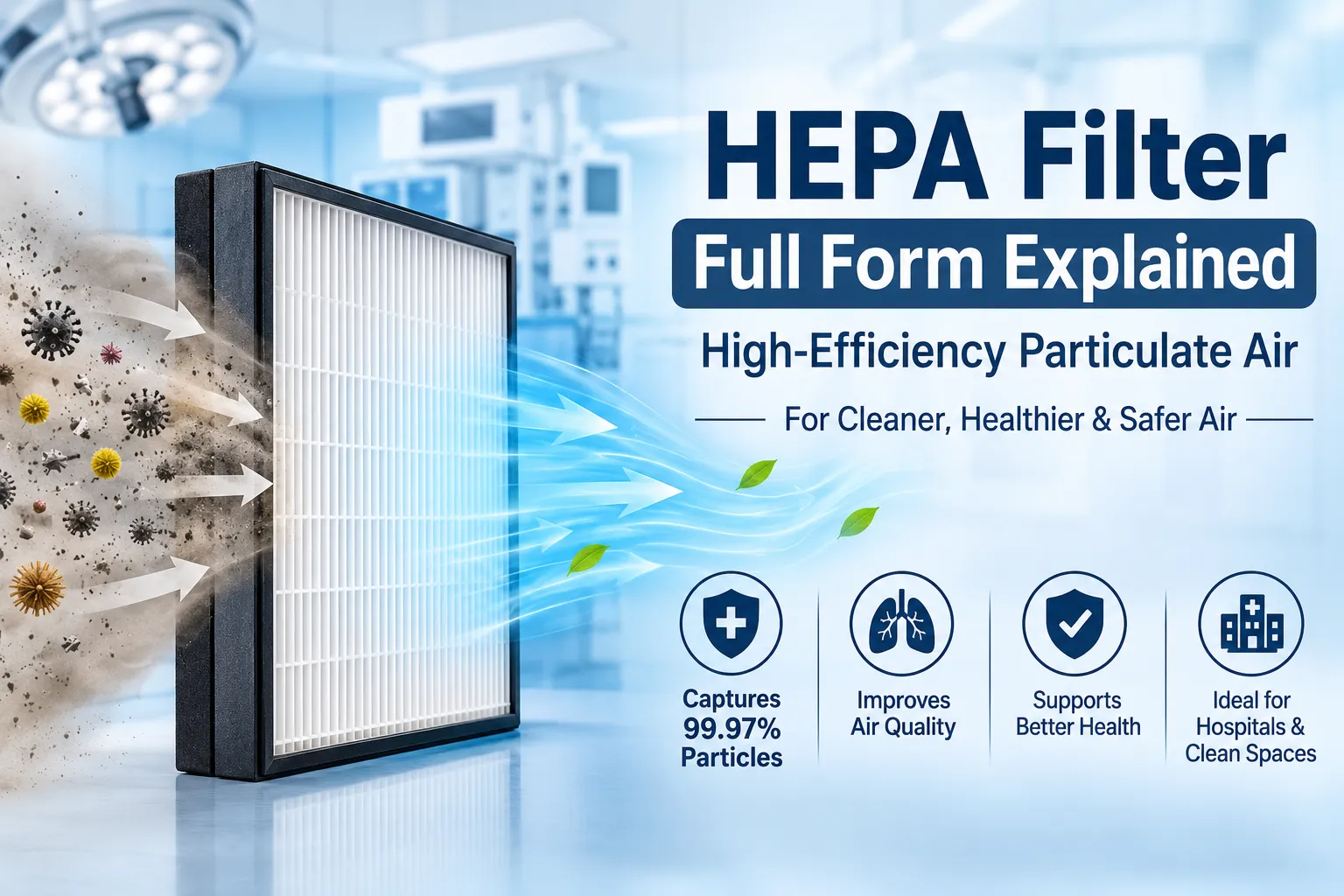
Dust, suspended solids, and other airborne contaminants can be a concern in some environments, affecting air quality. Hospitals, laboratories, pharmaceutical production, and specialised manufacturing facilities often use higher-spec filter systems.
It is a term used frequently in these environments. Learning the HEPA filter full form can be a good first step in understanding how high-filtration product specifications and selection are determined. But the abbreviation itself will not be enough.
What Is the HEPA Filter Full Form?
HEPA is an acronym for High - Efficiency Particulate Air. The HEPA filter full form is a specialised mechanical air filter that works by trapping very small airborne particles in the porous medium when air is drawn through it.
The US Environmental Protection Agency (EPA) states that a typical HEPA filter removes at least 99.97% of particles 0.3 microns or larger, according to the specified test conditions.
Therefore, this performance relates HEPA filtration to a situation when controlling airborne particulates is essential. However, whether a filter is appropriate in a given situation depends on the filter’s certified efficiency, construction, and the installation/operating conditions.
Why Does HEPA Classification Matter?
Not all air filters can do the same job. Standard filters are generally good for general dust, but demanding situations may necessitate a filter that can go above and beyond.
HEPA classification gives buyers a recognised standard of performance. It enables engineers and purchasing managers to differentiate high-efficiency filters from ordinary filtration products.
What to keep in mind when studying a filter:
- Filtration efficiency: The percentage of particles captured at the designated test particle size.
- Filter classification: The current grade for which the filter is rated (e.g. H13/ H14 under EN 1822).
- Airflow capacity: Volume of air passing through the filter in the operational environment.
- Pressure drop: The resistance to airflow that develops when air flows through a filter.
- Construction quality: The strength of the frame, media and seal pack.
These considerations should be considered in aggregate, rather than using a more efficient efficiency percentage as the sole determinant.
Where Is High-Efficiency Filtration Required?
Industries have a variety of reasons for regulating the quality of the air they use. HEPA can be used as part of the environmental management plan in many applications.
1. Healthcare Facilities
Special Ventilation arrangements are provided in certain areas of hospitals where control of airborne particles is necessary. The air-handling system may include some form of HEPA filtration, depending on the nature of the room and the design standards.
2. Pharmaceutical Manufacturing
In production areas that process sensitive material, air could need regulation. Proper filtration allows the plant to achieve its cleanliness target.
3. Research Laboratories
Some laboratories require negative or positive pressure environments to contain experiments, research materials, and delicate instrumentation.
4. Electronics and Precision Manufacturing
Dust can sabotage sensitive manufacturing. HEPA filtration can help maintain the environmental conditions necessary in the designated manufacturing areas.
How to Choose the Correct HEPA Filter for a Job
The right filter selection involves input from the equipment manufacturer, HVAC system designer and plant manager. An item that is right in one application may not be a good fit in another.
Consider these important selection factors:
- Learn about the application: Check room classification, purpose of use, and air cleanliness level to select the correct filter.
- Ensure it is certified: Only consider filters for which the filtration efficiency classification and testing data are available rather than those with just product descriptions.
- Match the airflow requirement: Establish the volume of air needed. Ensure the filtering media can be used with the volume of air and conditions found in the ventilation system.
- Check pressure resistance: Resistance of filters directly influences the fan performance and energy consumption of the whole system. This should be taken into account when designing a system.
- Check measurements and sealing: Either inappropriate sizes or poor sealing lets air flow past the filter medium, which will lower the performance of the entire installation.
Mistakes to Avoid When Buying HEPA Filters
The decisions made when selecting purchases for an air filtration system may impact its future performance. Examples of errors made:
- Choosing a filter solely on its price.
- Ignoring compatibility with existing ventilation equipment.
- Assuming all filters of the same HEPA dimension have the same efficiency.
- Overlooking certification and testing records.
- Failure to do qualitative installation and regular follow-up checks of performance.
An effectively suitable product, properly and appropriately installed and maintained, is more important than selecting a filter on the basis of specifications.
Selecting a Trusted Hospital Infrastructure Partner
HEPA filtration is one element of an integrated approach to environmental controls. Healthcare facilities require vendors that are familiar with the interactions between various elements of their infrastructure.
Gaddiel Industries is a company that provides hospital infrastructure solutions such as hospital modular operation theatres, medical gas pipeline systems, and hospital furniture. Since this company specialises in medical infrastructure, you can look to it for the execution of specialised hospital projects.
Conclusion
Understanding the HEPA filter full form is the first step towards making informed decisions about advanced air filtration. High-Efficiency Particulate Air filters provide a recognised level of particle removal, but their actual performance depends on correct classification, airflow compatibility, sealing, and installation.
By considering these technical elements, you can design a more reliable filtration process, no matter what type of healthcare, research or manufacturing environment you’re designing. A smart choice in the end benefits production and environmental performance.