Healthcare Market Research in 2027: Methods, Challenges and How Expert Networks Help
5 Views
A new cancer drug can look strong in trial data and still struggle at launch because oncologists prefer an existing regimen, hospital formularies push back on price, or payers ask for evidence the manufacturer does not have. A medical device can win on specifications and lose on how nurses actually use it on a busy ward.
Healthcare decisions carry high stakes, long timelines and strict rules, and published data rarely tells the whole story. Healthcare market research fills that gap by going straight to the people who prescribe, buy, use and pay for medical products.
This guide explains what healthcare market research is, who it serves, which audiences and methods matter most, the compliance rules that make healthcare different from any other sector, and how expert networks help research teams get answers faster.
What Is Healthcare Market Research?
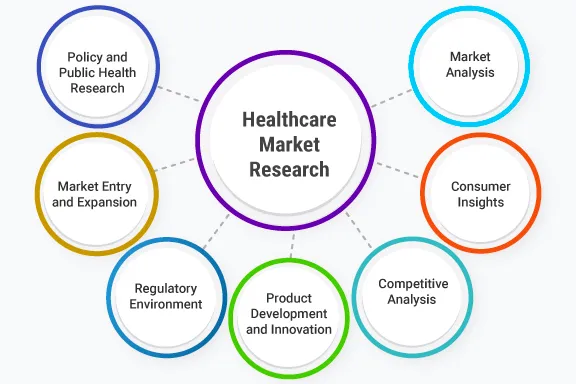
Healthcare market research is the study of how medical products and services are chosen, used, bought and paid for. It gathers evidence from healthcare professionals, patients, hospital buyers, payers and industry insiders to answer commercial questions that clinical data cannot.
Clinical trials tell you whether a treatment works. Healthcare market research tells you whether it will be adopted: who will prescribe it, which patients they will choose, what will stop a hospital from buying it, and what price a payer will accept.
Who Uses Healthcare Market Research?
- Pharmaceutical and biotech companies use it to plan launches, position brands against competitors, test messages and prepare for pricing and market-access negotiations.
- Medical device and diagnostics companies use it to shape product design around real clinical workflows and to understand how hospital purchasing committees make decisions.
- Digital health companies use it to learn whether clinicians will actually change their routines for a new tool, and who inside a health system holds the budget.
- Private equity firms and consultants use it for commercial due diligence on healthcare assets, from specialty pharmacies to device makers and clinic groups.
- Hospitals, providers and payers use it to understand patient needs, referral patterns and the real-world value of new treatments.
Across all of these, the common thread is a need for specific, current and credible answers from people inside the healthcare system.
The Key Audiences in Healthcare Research
The most common mistake in healthcare research is talking to the wrong person. A cardiologist, a hospital procurement manager and a payer will give three different, equally valid answers to the same question. Choosing the right audience is half the work.
|
Audience |
What they can tell you |
|---|---|
|
Physicians and specialists |
Prescribing habits, treatment choices, unmet clinical needs, reactions to new data |
|
Key opinion leaders (KOLs) |
Where clinical practice is heading, how guidelines may change, how peers will react to a new product |
|
Nurses, pharmacists and allied health staff |
How products are used day to day, practical barriers, training and workflow issues |
|
Hospital procurement and value-analysis teams |
How purchasing decisions are made, budget cycles, what evidence a tender requires |
|
Payers and market-access specialists |
Reimbursement criteria, pricing thresholds, evidence needed for coverage |
|
Patients and caregivers |
Experience of a condition, treatment burden, adherence and unmet needs |
|
Former industry executives |
How competitors launch, price and sell, and what makes a commercial strategy work |
Healthcare Market Research Methods
Most healthcare studies combine several methods, because depth and scale answer different questions.
- In-depth interviews and expert calls. One-to-one conversations with physicians, KOLs or former executives. Best for understanding why decisions are made.
- HCP surveys. Structured questionnaires sent to verified healthcare professionals. Best for measuring how many prescribe, prefer or plan to adopt something.
- Focus groups. Moderated group discussions, useful for testing concepts, messages or packaging with peers reacting to each other.
- Observational and workflow research. Watching how a product is used in a clinic or hospital, which often reveals problems nobody mentions in an interview.
- Patient research. Interviews, diaries or surveys with patients and caregivers, handled with extra care for privacy and wellbeing.
- Secondary and real-world data. Claims data, prescription data and published studies, used to size markets and check what people say against what they do.
A typical launch study might start with ten to fifteen expert interviews to build hypotheses, then test them in a survey of a few hundred specialists.
The Biggest Challenges in Healthcare Market Research
Healthcare is one of the hardest sectors to research well. Three challenges come up on almost every project.
1. Reaching the right healthcare professionals
Physicians are busy, heavily surveyed and protective of their time. Specialists in narrow fields, such as rare diseases or specific surgical procedures, may number only a few hundred in a country. Every respondent also needs to be verified, because a survey answered by someone who only claims to be an oncologist is worse than no data at all.
2. Adverse event reporting
Healthcare research has a safety duty that other sectors do not. If a respondent mentions a side effect, product complaint or other safety issue linked to the sponsor's product, it usually has to be reported.
In Europe, the EPHMRA guidelines, revised in July 2026, say research agencies must report any adverse event that arises during the research, whether or not it is serious, and that the report is completed at the end of the interview rather than by interrupting it. The same guidelines ask sponsors and agencies to agree the reporting process and pharmacovigilance training before fieldwork starts. In the UK, the ABPI and BHBIA publish joint guidance on collecting adverse events during market research, and in the US the Insights Association generally refers members to the EPHMRA guidelines.
3. Privacy, payments and transparency rules
Health information is among the most sensitive data there is. Patient research must follow privacy rules such as HIPAA in the US and GDPR in the UK and EU, where health data is a special category with stricter protection.
Payments to doctors bring their own rules. In the US, the Sunshine Act requires manufacturers to publicly report many payments to physicians. According to the Insights Association, market research payments are excluded when the research firm pays the physician and the manufacturer does not know who took part. That is one reason most healthcare studies are blinded, with neither the respondent nor the sponsor knowing the other's identity.
Honoraria should also reflect fair market value for the professional's time, and the research must never become a disguised form of promotion.
Different codes in the US, UK and Europe
If your study covers several countries, plan for several rulebooks. The main reference points are the Insights Association in the US, the BHBIA and the Market Research Society in the UK, and EPHMRA across Europe and global studies. A good research partner will know which code applies in each market before the first respondent is contacted.
How Expert Networks Support Healthcare Research
Expert networks solve the hardest part of healthcare research: finding the right professional, quickly, and making sure the conversation follows the rules. Instead of waiting weeks for a panel to fill, research teams can speak with a screened specialist within days.
In healthcare, a good expert network gives you access to:
- Practising clinicians and KOLs for treatment patterns, unmet needs and reactions to new evidence.
- Former pharma, biotech and medtech executives who understand launch strategy, pricing and market access from the inside.
- Hospital buyers, pharmacists and value-analysis staff who decide what actually gets purchased.
- Payer and reimbursement specialists who know what evidence unlocks coverage.
Common healthcare use cases
- Drug launch planning: test positioning and patient selection with specialists before committing a launch budget.
- Medical device adoption: learn how procurement committees compare devices and what clinical staff need to switch.
- Digital health validation: find out whether a tool fits real clinical workflows and who signs off the budget.
- Commercial due diligence: check a healthcare company's growth story with its customers, competitors and former staff.
- Competitive intelligence: understand how rival products are perceived and how competitors sell and price.
Many projects start with expert calls to build hypotheses, then use B2B surveys of verified professionals to test them at scale. Specialist partners such as The Insights Desk run both for healthcare research projects across the US, UK and Europe.
A checklist for your next healthcare research project
- Define the profile precisely. Specialty, practice setting, years in practice, patient volume and country, not just "a cardiologist".
- Screen properly. Use screening questions that only a genuine specialist can answer, and verify credentials.
- Agree adverse event reporting before fieldwork. Decide who reports, how fast, and who has completed pharmacovigilance training.
- Keep the study blinded where needed. Protect respondent and sponsor identities, especially for US physician payments.
- Pay fair market value. Set honoraria that reflect the professional's time without becoming an inducement.
- Protect health data. Collect only what you need, and follow HIPAA, GDPR and local rules for any patient information.
- Combine depth and scale. Use interviews to understand the why, and surveys to measure how many.
Final Thoughts
Healthcare market research is where clinical evidence meets commercial reality. The products that succeed are rarely just the ones with the best data. They are the ones whose makers understood how doctors decide, how hospitals buy and what payers need to see.
Getting there means talking to the right professionals, asking the right questions and following the rules that protect patients and respondents. With a clear brief, a compliant process and a research partner that can reach verified specialists quickly, healthcare teams can make launch, investment and product decisions with far more confidence.