Handmade Soap Packaging for UK CLP Compliance
By Logan Smith
135 Views
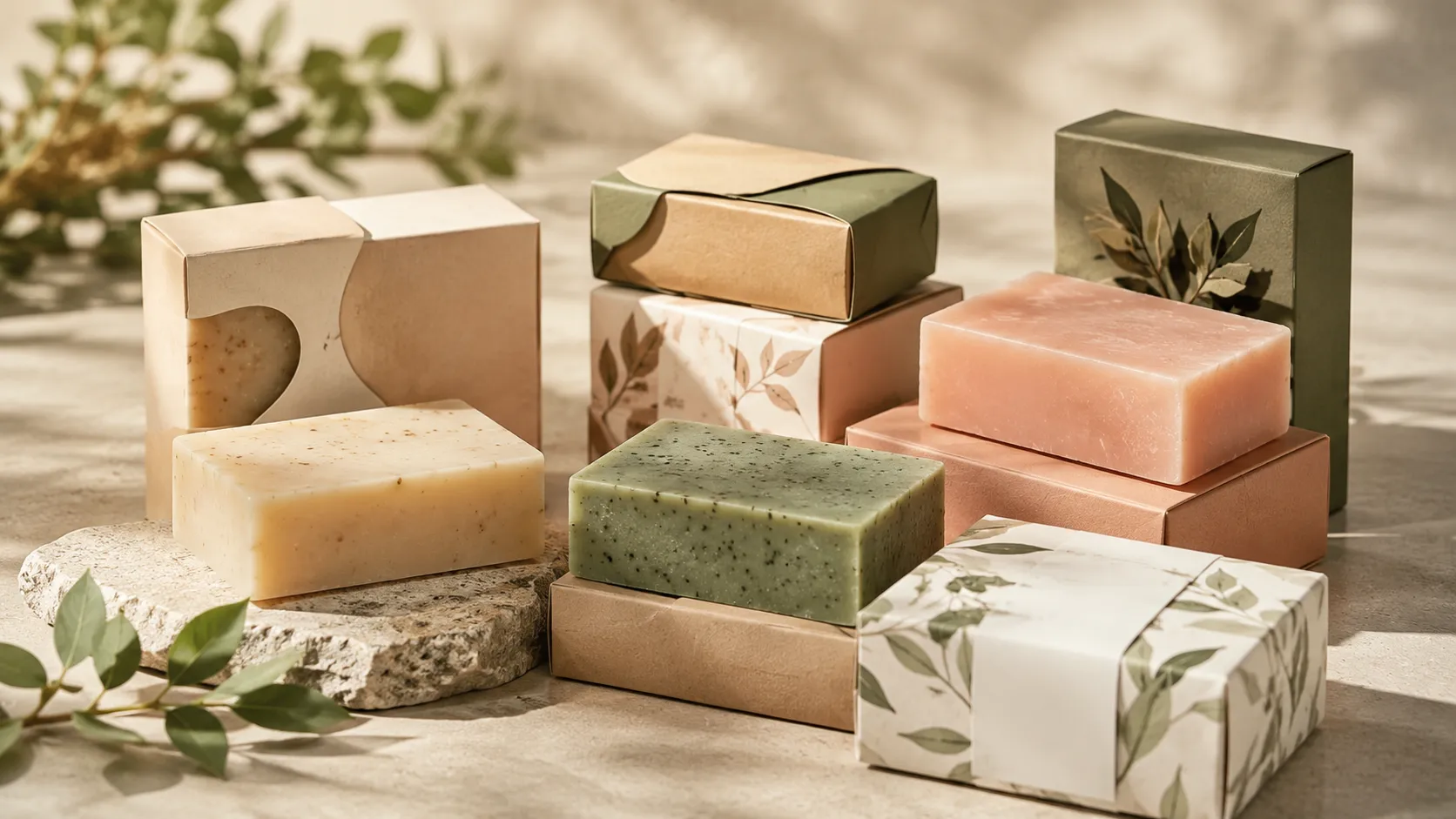
Handmade soap is one of the most welcoming product categories for new makers in the UK. The barriers to entry are low, the margin profile is attractive, and the customer base is loyal. The compliance landscape, on the other hand, is one of the strictest in personal care. Soap is regulated under the UK Cosmetic Regulation (the post-Brexit retained version of EU 1223/2009) and, more specifically, under the Classification, Labelling and Packaging (CLP) Regulation for hazardous substances.
Most new soap makers learn about CLP after their first market stall when a curious customer (often another soap maker) points out something missing from the label. Custom soap boxes UK clients we work with at the very beginning of their journey rarely know about CLP at all. By the time they have done 500 bars, they all know, usually after a near-miss with Trading Standards. This guide is the version of the conversation that gets you compliant without the near-miss.
Why SOAP is Treated Differently From Other Cosmetics
Soap counts as a cosmetic product in the UK, which means it must satisfy the same INCI labelling, responsible person, batch number, and PAO requirements as any other cosmetic. But because soap typically contains ingredients classified as hazardous in concentrated form (sodium hydroxide, for example, before saponification), the finished product is also assessed under CLP.
Handmade soap packaging boxes therefore have to carry two sets of information: cosmetic labelling under the UK Cosmetic Regulation and CLP hazard information where applicable. For most cold-process and melt-and-pour soaps where saponification is complete, no hazard symbols are required. For soaps containing essential oils above certain thresholds (citrus oils, lavender, tea tree, eucalyptus, etc.), CLP hazard symbols and statements may be required depending on concentration.
The Essential Oil Concentration Trap
Many natural soap boxes UK orders fall foul of the essential oil concentration rules. Several common essential oils are classified as skin sensitisers under CLP, which means a soap containing them above the relevant threshold (typically 1% for most oils, lower for some) must carry the corresponding hazard pictogram (GHS07) and warning statements.
The thresholds change as the UK regulatory regime diverges from EU. Rather than memorising them, the practical approach is to keep a current Safety Data Sheet (SDS) for every essential oil you use, calculate the concentration in the finished bar, and check the result against the most recent UK CLP guidance.
Cosmetic Product Safety Report and the Responsible Person
Before selling a single bar, every soap maker in the UK needs a Cosmetic Product Safety Report (CPSR) for each formulation, signed off by a qualified safety assessor. They also need to register the product on the UK Submit Cosmetic Product Notifications portal (SCPN) and, if also selling into the EU, on the EU CPNP.
The responsible person field on the packaging must show the UK responsible person's name and address (this can be the maker themselves if UK-based, or a contracted regulatory consultancy). Luxury soap packaging UK orders from indie brands routinely show this field on the back panel of the outer carton in small but legible type.
Print Formats That Work for SOAP
Soap packaging splits roughly into three formats: full enclosure (a folded carton or rigid box that fully contains the bar), sleeve packaging (a printed sleeve that wraps the centre of the bar leaving the ends exposed), and tag-only packaging (a small printed tag affixed with twine or paper band).
Soap sleeve packaging UK has become the dominant format for artisan brands because it presents the bar visually (customers can see and smell the product) while still carrying all required labelling. The sleeve typically wraps a third to half the bar and leaves the rest exposed.
Eco soap boxes UK orders in 2026 lean heavily into uncoated recycled stocks, soy-based inks, and minimal print finishes. Brands that lead with sustainability messaging in this category often pair a kraft or recycled-flecked stock with single-colour print to reinforce the visual cue of "natural".
Custom Printing Economics for SOAP Brands
Realistic numbers for a new soap brand: 500 custom printed soap boxes in a standard folded format with single-colour print on uncoated kraft lands around £0.32 to £0.58 per piece. The same boxes with two-colour print and basic foil accents land between £0.55 and £0.95. Rigid soap presentation boxes (for gift sets or premium SKUs) start at roughly £1.40 per piece at 500 units.
Most artisan soap makers begin with simple sleeves at £0.18 to £0.35 per piece for 500 units, then graduate to fuller packaging as price points rise. Soap boxes wholesale UK orders at 2,000+ units bring per-unit pricing down significantly across all formats.
Gift Sets, Multi-bar Formats, and Seasonal Skus
Most artisan soap brands eventually launch gift sets, which create new packaging questions. A box of three soap bars needs to satisfy the same labelling requirements as a single bar, but the labelling can sometimes be consolidated onto the outer gift box rather than printed on each individual sleeve. This depends on whether the inner bars are also marketed individually; if they are, individual labels are required regardless.
Seasonal SKUs (Christmas, Valentine's, Mother's Day) face the same compliance rules with shorter production windows. Soap makers running seasonal lines should batch their CPSR submissions for the season's full SKU set in a single regulatory cycle to amortise the assessment cost.
Selling Abroad: The Surprise Complications
UK soap makers selling into the EU after Brexit need an EU responsible person and EU CPNP registration in addition to their UK arrangements. This typically costs £400 to £800 per year through a regulatory consultancy and adds two to four weeks to new product launch timelines.
Selling into the US requires no equivalent registration for true soap (FDA exemption applies if the product is marketed only for cleansing), but any moisturising, antibacterial, or therapeutic claim shifts the product into FDA-regulated cosmetics territory with significant additional requirements.
A Starter Compliance Checklist for New SOAP Makers
Before selling your first bar at a market stall or online, work through this minimum checklist. Have you secured a Cosmetic Product Safety Report for every formulation, signed by a qualified safety assessor? Have you registered each product on the UK SCPN portal and, if relevant, the EU CPNP?
Does every bar carry a label or sleeve with the INCI list, allergens above threshold, responsible person address, batch number, weight, and PAO or best-before date? Have you checked essential oil concentrations against the latest UK CLP thresholds, and added any required hazard symbols and statements?
Have you retained your Product Information File (PIF) with all formulation, manufacturing, and stability data? Have you set up batch records for traceability in case of complaint or recall? Working through this list before launch saves the painful version of the conversation later.
The Bottom Line
CLP and cosmetic compliance is not the romantic part of being a soap maker. It is, however, the part that determines whether your brand exists in three years or not. The Trading Standards officer who finds an unlabelled sensitiser at your market stall does not care that you spent months perfecting the lavender note in your formulation. They care that the label is right. Get the labelling right first, get the bar right second, and you will outlast most of the makers who do it the other way around.
Related Reading
Top 10 Hidden Secrets About Business & Finance You Need to Know
Welcome to our in-depth exploration of Business & Finance. In an era defined...
Why Business & Finance is Transforming the Global Industry Landscape
Welcome to our in-depth exploration of Business & Finance. In an era defined...