Google Adds Local Business Queries to EEA Search Result Units
36 Views
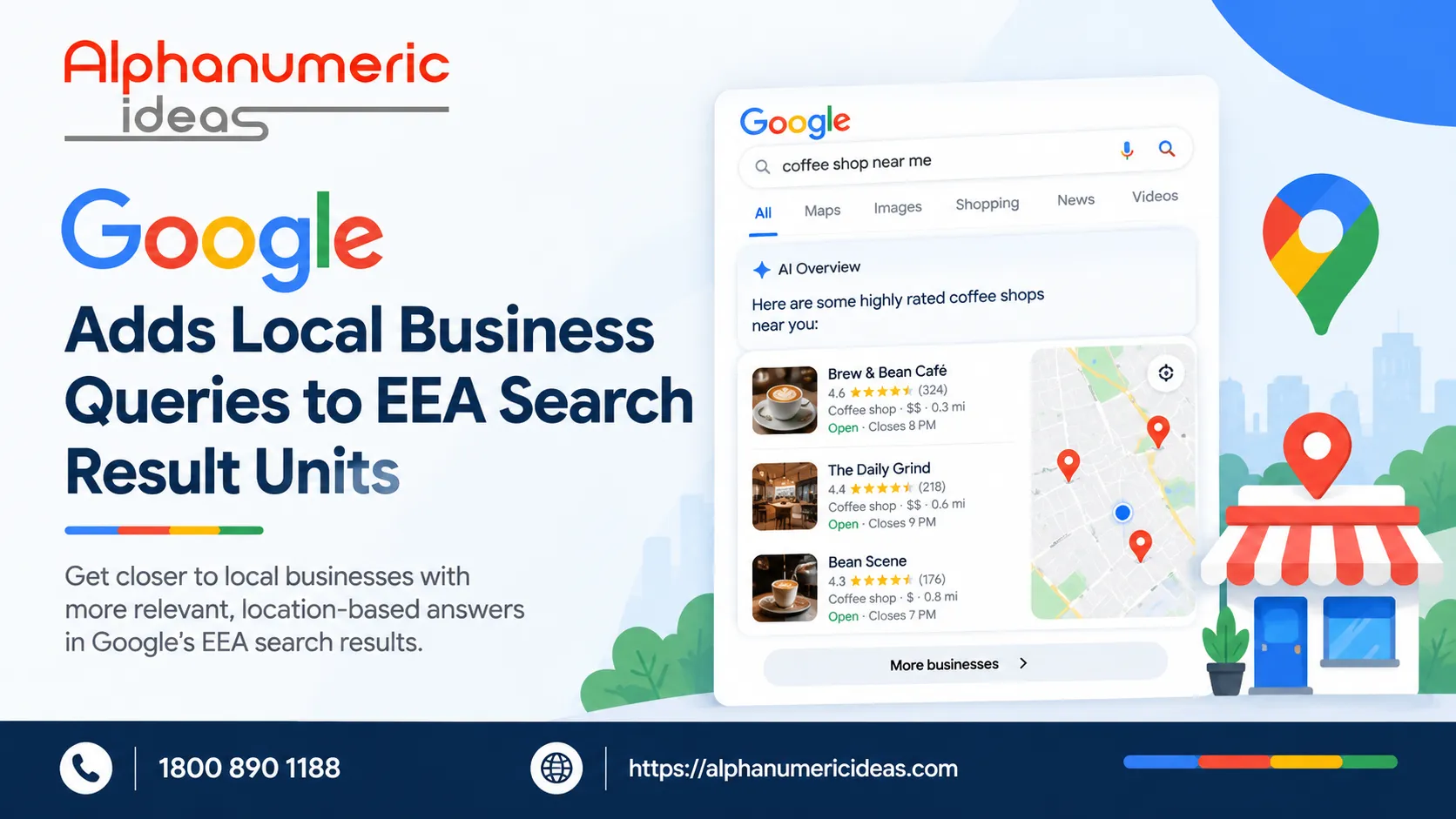
Google has expanded its redesigned European Economic Area (EEA) search experience to include local business queries in its newly introduced Aggregator and Supplier result units.
The update was documented by Google on September 18, 2026, adding local businesses to the types of searches supported by both features. Previously, the units covered areas such as hotels, flights, long-distance trains or buses, and products.
What Has Google Changed?
Google's latest documentation confirms that both the Aggregator Unit and Supplier Unit now support searches involving local businesses.
This means searches for businesses and local services in EEA countries may now display these specialised result units alongside the traditional Google Search results. Google describes local searches as queries involving areas such as dining, services and attractions.
The change is particularly relevant to businesses such as:
- Restaurants and dining establishments
- Local shops and physical businesses
- Plumbers and other service providers
- Beauty and personal-care businesses
- Attractions and things to do
- Other businesses serving customers locally
How the Aggregator Unit Works
The Aggregator Unit is designed for approved Vertical Search Services (VSS), including directories, comparison services and metasearch platforms.
For eligible local searches, approved providers can supply business listings to Google. The provider's results can then appear within the Aggregator Unit, with the top-ranked provider expanded by default. Users may also be able to select another available provider. Google says only one Aggregator Unit appears at a time.
For local businesses, the system is powered by a Point of Interest (POI) feed. This feed can contain information such as a business name, address, telephone number, category and photographs.
What Is the Supplier Unit?
The Supplier Unit is designed for businesses that directly provide the products or services being searched for.
Google's examples include individual hotels, airlines, brick-and-mortar businesses and service providers such as plumbers. The Supplier Unit appears alongside the Aggregator Unit and only appears when the Aggregator Unit is present.
Importantly, businesses don't have to submit an additional data feed simply to qualify for the Supplier Unit. Google says websites serving users in the EEA can participate using information available through normal web crawling, although additional feeds can enhance supplier results.
What Does This Mean for Local Businesses?
The update creates another potential layer of visibility for local businesses in EEA Google searches.
A local search could potentially contain:
- An Aggregator Unit featuring results from an approved directory or vertical search service.
- A Supplier Unit featuring businesses that directly provide the searched-for service.
- Other Google Search results and features available for the particular query.
Google's documentation does not state that these units will appear for every local search. Their availability depends on the query and Google's systems.
What Do Directories Need to Do?
Directories and other Vertical Search Services interested in participating must first meet Google's eligibility requirements.
For local business queries, Google says participating aggregators need to provide relevant business data through the appropriate Local Point of Interest Feed. They must also be approved as a Vertical Search Service and comply with Google's Search content policies.
The POI information can include:
- Business name
- Physical address
- Phone number
- Business category
- Photos
- Other relevant business information
Google says data submitted through the local POI feed is used to populate the partner's own unit and is not used to enrich Google's own services or competitors' units.
Do Local Businesses Need to Submit a New Feed?
Not necessarily.
Google's current Supplier Unit documentation states that direct providers do not need to provide additional data beyond information accessible through web crawling to appear in the feature. However, supplier results may be enhanced when suitable data feeds are available.
For local businesses, this makes the quality and accessibility of their existing website information particularly important.
Clear business information—including services, location, contact details and other crawlable information—can help Google understand what a business offers and where it operates.
Why This Matters for Local SEO
The change is significant for businesses targeting customers in the European Economic Area because Google is introducing a different Search experience for certain query categories in that region.
Google's regional Search documentation now specifically lists both Aggregator and Supplier Units for:
- Hotels
- Flights
- Ground transportation
- Products
- Local businesses
As a result, SEO teams working with businesses in EEA markets should pay attention to how local search visibility changes across different locations.
Rank tracking may also become more complicated because the Search experience in an EEA country may differ from the experience for the same query outside the EEA.
The Connection With the EU Digital Markets Act
The changes form part of Google's broader adjustments to Search in Europe amid enforcement of the European Union's Digital Markets Act (DMA).
On July 23, 2026, the European Commission announced decisions finding Google non-compliant with the DMA in relation to self-preferencing in Google Search and steering restrictions in Google Play. The Commission imposed fines totalling €890 million and ordered Google to bring the identified non-compliance to an end.
The Commission stated that Google had 60 days to comply with its decisions, with potential periodic penalty payments of up to 5% of worldwide daily turnover if it failed to do so.
Google's redesigned EEA Search features therefore need to be viewed within this wider regulatory context.
What Local SEO Professionals Should Watch
For agencies and businesses operating in Europe, several areas deserve attention:
1. Local Search Visibility
Monitor important local queries in EEA markets to identify whether new Aggregator or Supplier Units appear.
2. Website Crawlability
Because Google says direct suppliers can participate using information available through crawling, businesses should ensure important business and service information is accessible on their websites.
3. Business Information Consistency
Keep core information such as business name, address, telephone number, services and locations accurate and consistent.
4. Search Console and Rank Tracking
SEO teams should compare Search performance across markets because Google explicitly documents regional differences in Search features.
5. Directory Strategy
Directories and local platforms serving EEA users may have a new opportunity to participate in Google's Aggregator Unit if they meet Google's requirements and provide the required data.
What Happens Next?
Google's addition of local business queries expands the scope of the EEA Aggregator and Supplier Units beyond travel, transportation and product-related searches.
For local businesses, the most important point is that the Supplier Unit can provide an additional Search visibility opportunity without requiring businesses to submit a new feed simply to participate. For directories and other Vertical Search Services, participation involves additional eligibility and data-feed requirements.
The practical impact will become clearer as these features appear across more local searches and as Google provides more information about their rollout and participation.
For now, businesses serving EEA customers should pay attention to local Search results, maintain strong crawlable business information and watch how these new Search units affect their visibility and traffic.