Go-to-Market Strategy Consulting: A Complete Guide for Businesses
By Eyal
19 Views
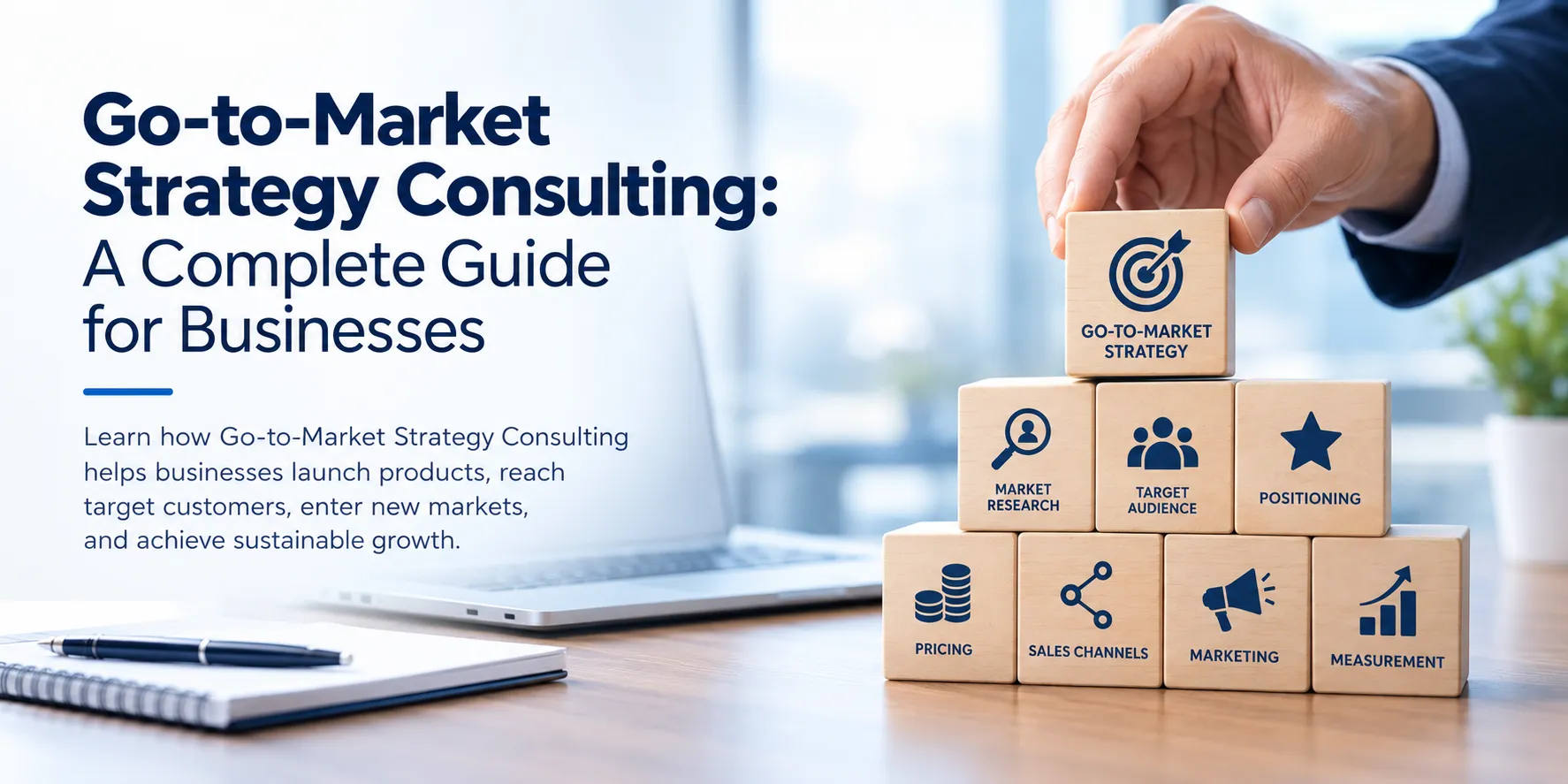
Launching a product or entering a new market requires more than a great idea. Businesses need to understand their customers, communicate their value clearly, choose the right sales channels, and coordinate marketing and sales activities. Without a clear plan, even promising products can struggle to attract customers and generate revenue.
Go-to-Market Strategy Consulting helps businesses develop a structured approach to bringing products or services to market. It connects market research, positioning, pricing, distribution, and customer acquisition into a coordinated plan aligned with business objectives.
For startups, SaaS companies, and established businesses expanding into new markets, a well-designed go-to-market strategy can clarify priorities, improve resource allocation, and help teams make informed decisions. This guide explains the essential components of a go-to-market strategy, seven practical steps for building one, and common mistakes businesses should avoid.
What Is Go-to-Market Strategy Consulting?
Go-to-Market Strategy Consulting helps businesses determine how to introduce a product or service to a specific audience and compete effectively in their chosen market.
A consultant evaluates the business model, market conditions, customer needs, competitive landscape, and available resources to develop a practical go-to-market plan.
The objective is to answer several important questions:
-
Who are the ideal customers?
-
What problems does the product solve?
-
How should the product be positioned against competitors?
-
What pricing model will appeal to customers and support business objectives?
-
Which sales and marketing channels should the business prioritize?
-
How will the company measure launch performance?
For example, a B2B software company launching a new analytics platform may need to identify its most promising customer segments, define its value proposition, select appropriate sales channels, and develop a strategy for generating qualified leads.
Go-to-Market Strategy Consulting brings these decisions together so that product development, marketing, and sales support a common commercial objective.
Why Is a Go-to-Market Strategy Important?
A clear Go-to-Market Strategy helps businesses turn product ideas into coordinated market activities. Instead of relying on assumptions, teams can use customer research, competitive analysis, and measurable objectives to guide decisions.
Key benefits include:
-
Clearer customer targeting: Focus resources on audiences most likely to benefit from the product.
-
Stronger market positioning: Communicate how the offering differs from available alternatives.
-
Better resource allocation: Prioritize channels and activities that fit the business model.
-
Improved team coordination: Align product, marketing, sales, and customer success around shared goals.
-
More measurable launches: Track results and identify areas that need adjustment.
A strategy cannot guarantee product-market fit or commercial success. However, it can help businesses identify risks earlier, make better-informed decisions, and respond more effectively to market feedback.
What Are the Key Components of a Go-to-Market Strategy?
An effective go-to-market plan connects several essential business decisions.
1. Market Research and Competitive Analysis
Market research helps businesses understand customer demand, industry trends, buying behavior, and potential competitors. It provides the evidence needed to evaluate whether an opportunity is worth pursuing.
Businesses should examine market size, customer problems, competitor offerings, pricing approaches, and barriers to adoption.
2. Target Audience Research
Target Audience Research identifies the customers most likely to need and purchase the product.
This may involve developing ideal customer profiles, analyzing customer interviews, studying purchasing behavior, and identifying decision-makers.
For B2B businesses, it is important to understand both the organization that may buy the product and the individuals involved in the purchasing decision.
3. Product Positioning and Value Proposition
Positioning explains how a product fits into the market and why customers should consider it.
A strong value proposition connects a specific customer problem with a relevant solution and a clear benefit. It should be understandable, credible, and supported by the product's actual capabilities.
4. Pricing and Packaging
Pricing influences customer perception, purchasing decisions, and revenue potential.
Businesses should evaluate customer willingness to pay, competitor pricing, delivery costs, and the value customers receive. SaaS companies may also need to decide between subscription tiers, usage-based pricing, or enterprise packages.
5. Sales and Distribution Channels
The right channels depend on customer preferences, product complexity, and the sales model.
Options include direct sales, digital commerce, channel partners, resellers, and product-led acquisition. Businesses should prioritize channels they can support effectively rather than attempting to use every available option.
6. Marketing and Customer Acquisition
Marketing activities create awareness, communicate value, and generate demand. These may include search engine optimization, paid advertising, content marketing, email campaigns, webinars, and targeted outreach.
The selected channels should reflect where the target audience researches solutions and makes purchasing decisions.
7. Performance Measurement
A go-to-market plan needs measurable objectives. Common indicators include qualified leads, conversion rates, customer acquisition cost, sales cycle length, revenue, and customer retention.
Tracking these metrics helps teams evaluate results and refine their approach over time.
7 Steps to Develop an Effective Go-to-Market Strategy
Businesses can use the following seven steps to turn market insights into an actionable launch plan.
Step 1: Define Your Business Objectives
Start by identifying what the launch needs to achieve. Objectives might include acquiring initial customers, entering a new geographic market, reaching a specific customer segment, or introducing an additional product.
Set measurable goals and establish a realistic timeline.
For example, a SaaS company might prioritize validating demand among small and midsize businesses before investing heavily in a larger enterprise sales operation.
Best practice: Connect every major go-to-market activity to a clear business objective.
Step 2: Research the Market and Validate Demand
Examine the market opportunity before committing significant resources. Research customer needs, purchasing behavior, competitor offerings, and potential barriers to adoption.
Use customer interviews, surveys, competitor analysis, and product testing where appropriate.
For example, a company developing cybersecurity software might interview IT leaders to understand their security priorities, budget limitations, and existing technology requirements.
Best practice: Validate important assumptions with real customer evidence instead of relying entirely on internal opinions.
Step 3: Identify Your Ideal Customer Profile
Define the customers who are most likely to benefit from the product and have a reason to purchase it.
For B2B businesses, consider company size, industry, budget, technology requirements, business challenges, and purchasing authority. For consumer products, demographic characteristics, behaviors, needs, and preferences may be more relevant.
Create customer segments and prioritize those with the strongest combination of need, suitability, and commercial potential.
Best practice: Begin with a focused audience rather than targeting an entire market at once.
Step 4: Develop Your Positioning and Messaging
Explain what the product does, whom it serves, and why it is relevant to those customers.
Your messaging should address the customer's main problem, communicate the product's value, and distinguish it from competing solutions.
For example, an analytics platform might emphasize helping operations teams consolidate business data and improve reporting workflows, provided those capabilities accurately describe the product.
Best practice: Test messaging with potential customers and refine it according to their questions, objections, and feedback.
Step 5: Choose Pricing, Sales Channels, and Distribution
Determine how customers will purchase the product and what pricing approach best fits their needs.
Consider the complexity of the buying process, customer expectations, competitive alternatives, and the resources available to support sales.
A straightforward software product might be suitable for self-service purchasing, while a complex enterprise solution may require demonstrations, consultations, and longer sales cycles.
Best practice: Match your distribution model to how your target customers prefer to evaluate and buy solutions.
Step 6: Build and Execute Your Launch Plan
Translate the strategy into a coordinated schedule of marketing, sales, and customer-facing activities.
Define responsibilities, deadlines, budgets, and the assets required for launch. These may include landing pages, product demonstrations, sales materials, email campaigns, and customer onboarding resources.
Ensure sales representatives understand the value proposition, qualification criteria, pricing, and common customer objections before launch activities begin.
Best practice: Use a shared launch calendar and assign a clear owner to each important activity.
Step 7: Measure Results and Optimize Performance
After launch, compare actual results with your original objectives. Identify which customer segments respond, which channels generate qualified opportunities, and where prospects leave the buying process.
Monitor indicators such as lead conversion, sales cycle length, acquisition cost, revenue, and customer feedback.
For example, if a campaign generates many leads but few qualified opportunities, review audience targeting and messaging before increasing the budget.
Best practice: Schedule regular performance reviews and use the findings to adjust targeting, messaging, channels, or pricing where appropriate.
Common Go-to-Market Mistakes to Avoid
Even a carefully planned launch can encounter problems. Recognizing common mistakes can help businesses prepare more effectively.
Targeting Too Broad an Audience
Trying to appeal to everyone can make positioning unclear and marketing resources less effective. Start with a well-defined customer segment and expand when evidence supports doing so.
Ignoring Competitors
Failing to understand alternatives can lead to weak positioning or unrealistic pricing. Research how customers currently solve the problem and identify meaningful differences in your offering.
Using Unclear Messaging
Technical features alone may not explain why customers should buy. Connect product capabilities to relevant customer problems and benefits.
Choosing Channels Without Evidence
A popular marketing channel is not necessarily the right one for every business. Evaluate customer behavior, channel costs, and the quality of opportunities generated.
Failing to Measure Performance
Without clear metrics, teams may continue investing in activities that are not meeting their objectives. Define success criteria before launch and review results consistently.
Treating the Plan as Permanent
Market conditions, customer expectations, and competitive dynamics can change. Treat your go-to-market plan as a framework that can evolve as new evidence becomes available.
How Go-to-Market Strategy Consulting Supports Business Growth
Developing a go-to-market plan requires coordination across research, positioning, pricing, marketing, sales, and performance measurement. Businesses may benefit from external expertise when entering unfamiliar markets, launching complex products, or aligning teams around a new growth initiative.
Go-to-Market Strategy Consulting can help evaluate market opportunities, clarify target customers, refine commercial positioning, and establish an implementation roadmap.
Eyal Dror provides go-to-market strategy consulting for businesses seeking to connect strategic planning with practical execution. The right approach should reflect each company's market, resources, objectives, and customer needs.
Conclusion
A successful go-to-market strategy begins with understanding the market and the customers a business intends to serve. From there, companies can develop clear positioning, establish appropriate pricing, select suitable sales channels, coordinate launch activities, and measure performance.
The seven-step process provides a practical starting point: define objectives, validate demand, identify the ideal customer, refine messaging, select channels, execute the launch, and optimize using real results.
Businesses do not need to perfect every detail before taking action. They need a clear direction, measurable priorities, and a willingness to learn from customer feedback. With disciplined planning and continuous improvement, a go-to-market strategy can help businesses approach product launches and market expansion with greater clarity and confidence.
Frequently Asked Questions
1. What is Go-to-Market Strategy Consulting?
Go-to-Market Strategy Consulting helps businesses plan how to introduce products or services to target customers. It covers market research, customer segmentation, positioning, pricing, distribution, marketing, sales, and performance measurement.
2. What is included in a go-to-market plan?
A go-to-market plan typically includes business objectives, target audience research, competitive analysis, value proposition, pricing, sales and marketing channels, launch activities, budgets, responsibilities, and success metrics.
3. When should a business hire a go-to-market consultant?
Businesses may consider consulting support when launching a new product, entering a new market, repositioning an existing offering, or addressing weak customer acquisition. A consultant can help identify gaps and create a structured plan based on business priorities.
4. How long does it take to develop a go-to-market strategy?
The timeline depends on product complexity, market familiarity, customer research requirements, and internal resources. A focused plan for a familiar market may take less time than a strategy involving a new industry, geography, or complex enterprise product.
5. How do you measure go-to-market strategy success?
Businesses can measure success using qualified leads, conversion rates, customer acquisition cost, sales cycle length, revenue, and retention. The most useful indicators depend on the launch objectives and business model.