Ganga Metals: Trusted Brass Products Manufacturers and Suppliers in India
By Ganga Metals
134 Views
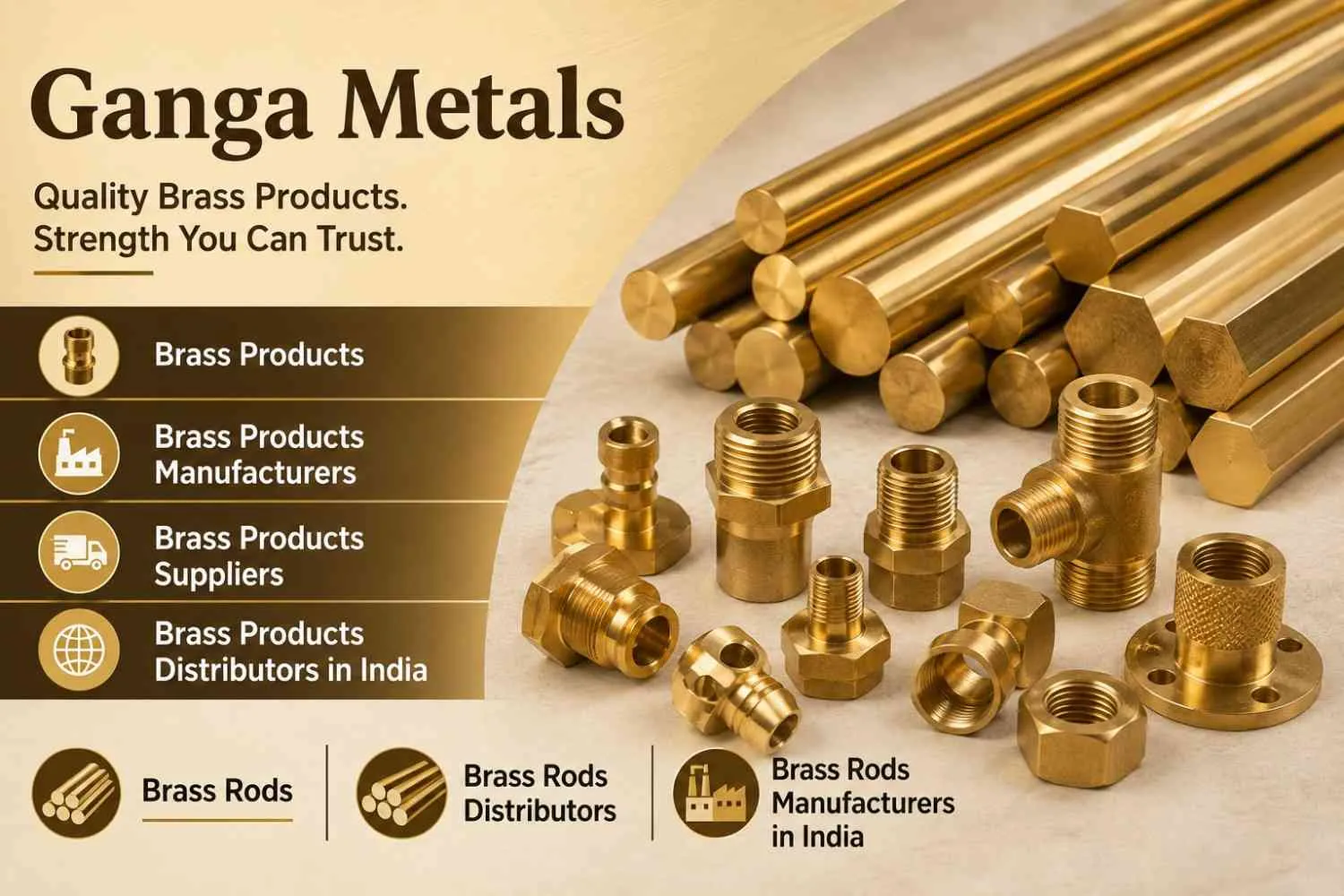
A delayed brass shipment rarely fails because of production alone. Most problems start earlier — vague material specs, inconsistent rod diameters, missing mill test certificates, or a supplier who suddenly changes raw material sourcing after quoting the order.
Buyers looking for reliable Brass Rods, industrial-grade Brass Products, and dependable sourcing from Ganga Metals usually learn this after one expensive mistake. And once a machining line stops because rod tolerance drifted by even 0.15 mm, the loss moves far beyond the replacement material.
The Brass Rod Specification Detail Most Buyers Skip
Not every brass grade behaves the same once it reaches machining, forging, or electrical applications. Which means procurement teams cannot treat all suppliers as interchangeable.
Brass Rods Used Across Industrial Segments
Industrial Brass Rods are commonly supplied in the following:
- Round brass rods
- Hex brass rods
- Square brass rods
- Hollow brass sections
- Extrusion-grade brass profiles
Most Brass Rods Manufacturers in India work with grades such as IS 319, CZ121, C36000, and free-cutting brass alloys used for electrical terminals, plumbing parts, precision turned components, and fasteners.
A detail many buyers overlook is grain consistency after extrusion. Diameter tolerance matters, yes. But uneven grain structure creates machining chatter, poor threading accuracy, and premature tool wear. That cost usually appears two months later on the production floor — not during incoming inspection.
Common Technical Specifications Buyers Ask For
Size Range
- 3 mm to 150 mm diameter
- Custom-cut lengths available
- Extruded and drawn finish options
Material Standards
- IS 319 Grade I & II
- ASTM-compliant brass alloys
- RoHS-compliant export grades
Surface Finish
- Bright finish
- Mill finish
- Polished industrial finish
And yet, many buyers still approve suppliers after checking only pricing and dispatch timelines.
That is usually where the trouble starts.
The Questions Procurement Teams Should Ask Before Finalizing Any Supplier
A supplier list means nothing if the verification process is weak. Roughly 38% of industrial material disputes in metal procurement stem from specification mismatch or undocumented substitutions during production batches.
1. Ask How Raw Material Traceability Is Maintained
Good suppliers can trace batches back to the melt source.
Bad answer: “Material is standard across all lots.”
That response usually means records are incomplete or manually maintained.
2. Verify Dimensional Tolerance Capability
For precision machining applications, tolerance drift directly impacts rejection rates.
Bad answer: “Tolerance depends on production conditions.”
No serious industrial buyer should accept that.
3. Confirm Packaging Standards for Transit
Brass surface damage during transport is more common than suppliers admit, especially during monsoon logistics movement across western India.
Bad answer: “Packaging will be managed dispatch time.”
That means there is no packaging protocol.
4. Request Real Export or Supply History
Several traders present themselves as manufacturers.
Which means buyers assume factory capability that does not actually exist.
Bad answer: “We handle many export orders.”
Without shipment records or application references, that statement carries little value.
5. Ask About Rejection Handling Before PO Approval
Nobody enjoys discussing defect handling before an order. Experienced buyers still do it.
A supplier who says “we’ll handle issues mutually” does not have a rejection policy. That negotiation becomes painful after material reaches your warehouse.
How Reliable Brass Products Protect Buyer Margins
Cheap brass sourcing often becomes expensive after machining, polishing, or assembly losses are calculated.
Stable Composition Reduces Production Waste
Consistent copper-zinc ratios improve machinability and threading precision. Electrical fittings or automotive insert producer shops are lucky to have lower rejection percentages due to a more constant allowed variation in the alloy composition of the rods.
Brass Rods for Longer Tool Life
Brass rods for machining with controlled brass hardness reduce the insert wear. On CNC production lines running 9-hour cycles, even minor inconsistency can force premature tool changes. That adds up quickly.
Consistent Supply Prevents Production Delays
Industrial buyers rarely discuss the hidden cost of rescheduling labour after delayed material arrivals. A shipment that does not arrive on schedule can affect dispatch obligations to many subsequent suppliers.
Export Buyers and Proper Documentation
Manufacturers dealing with exports require:
- Mill test certificates
- RoHS compliance
- Heat number traceability
- GST and transport documentation
Good Brass Products Suppliers know that documentation issues can keep containers at port longer than the actual delays resulting from the suppliers' production.
Reduced Secondary Processing from Improved Surface Finish
Rod with finishing that is not up to the requirement will result in longer production as rods would need extra time and increased costs to polish them.
Standardized Sizes Reduce Inventory Problems
Uniform sizing helps buyers maintain leaner stock planning. Mixed tolerance inventory creates confusion during batch allocation inside fabrication units.
Why Availability Across India Matters More Than Buyers Think
India’s brass supply chain is heavily concentrated around western manufacturing clusters, especially Gujarat and Maharashtra. Freight access to ports like Mundra and Nhava Sheva directly affects lead times for export-oriented buyers.
That’s one reason established Brass Products Manufacturers with stable distribution networks perform better during raw material fluctuations.
Supply Reach Across Industrial Markets
Reliable Brass Products Distributors in India typically support industries including:
- Electrical equipment manufacturing
- Plumbing and sanitary fittings
- Automotive component production
- Fastener manufacturing
- Precision turned parts
- Switchgear production
Most buyers searching for Brass Rods Distributors are not simply looking for stock availability. They need dependable replenishment cycles. There is a difference.
And here’s the harder truth: during copper price volatility, some suppliers quietly reduce material quality to protect margins. Buyers usually discover it only after plating or machining defects appear downstream.
About Ganga R Ispat Metals
We have spent years working with industrial buyers who care less about marketing language and more about whether material arrives correctly packed, correctly sized, and correctly documented.
At Ganga Metals, we supply industrial-grade Brass Products and precision Brass Rods for buyers across India. Our focus stays on consistency, repeatability, and commercial transparency because procurement teams remember failed shipments longer than successful quotations.
We learned that lesson early.
In 2022, we altered a section in our rod bundling process due to constant transporter abrasion marks on polished brass shipments to South India during the monsoon months. The issue was not production quality. It was friction during loading. We adjusted the packaging layers and reduced complaint frequency significantly within one quarter.
That kind of correction only happens when feedback actually reaches operations.
For industrial buyers needing dependable sourcing, we continue supporting wholesalers, OEMs, fabricators, and export businesses with structured supply support and responsive coordination.
If you are sourcing Brass Products, custom-size Brass Rods, or repeat industrial supply orders, send us:
- Material grade requirement
- Rod dimensions
- Quantity
- Application type
- Delivery location
We usually respond within one business day.
Our MOQ depends on material specification and processing requirements, though standard industrial orders generally begin from 100 kg onward. At Ganga Metals, we prefer discussing technical suitability before pricing because correcting the wrong material after dispatch wastes everyone’s time.
Conclusion
Reliable sourcing of Brass Rods and industrial Brass Products depends on more than pricing sheets and fast quotations. Buyers who evaluate traceability, tolerance consistency, and supplier accountability usually avoid the expensive production problems others keep repeating. As manufacturing demand across India continues growing, procurement teams will increasingly rely on suppliers who can maintain both quality discipline and delivery stability under pressure.
Here is another blog you might be interested in
What Makes Brass Rods and Brass Sheets Popular in the Indian Market
FAQs
What industries commonly use Brass Rods?
Electrical, plumbing, automotive, fastener manufacturing, and precision machining sectors use Brass Rods regularly because of machinability and corrosion resistance.
Do Brass Rods Distributors maintain ready stock year-round?
Some do. Some only procure after receiving enquiries. Buyers should confirm inventory depth before committing delivery schedules, especially during high-demand quarters between October and January.
What documents should Brass Products Suppliers provide?
Industrial buyers typically request:
- GST invoice
- Mill test certificate
- Material grade confirmation
- Transport documentation
- Compliance certifications where applicable
Export buyers may require additional documentation.
Are all Brass Products Distributors in India actual manufacturers?
No. Many are traders or stockists. That is not automatically a problem, but buyers should know who controls production before discussing technical customization or bulk repeat orders.
Related Reading
Top 10 Hidden Secrets About Business & Finance You Need to Know
Welcome to our in-depth exploration of Business & Finance. In an era defined...
Why Business & Finance is Transforming the Global Industry Landscape
Welcome to our in-depth exploration of Business & Finance. In an era defined...