From Amritsar to London: The Rise of Authentic Punjabi Catering in Britain
45 Views
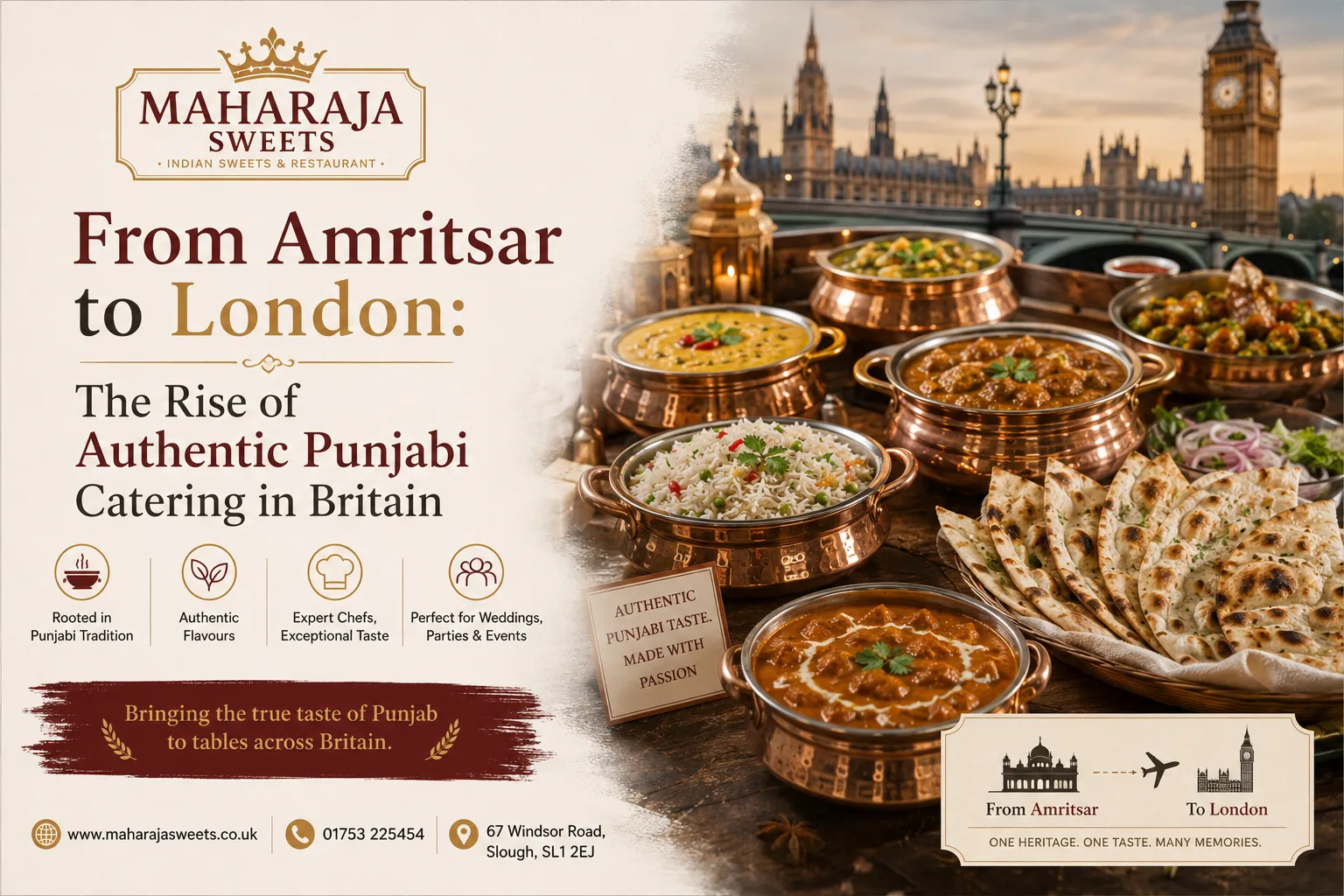
There's a particular smell that hits you the moment you step into Amritsar's old city. Ghee melting on a tawa, garlic hitting hot oil, the smoky char of a tandoor working overtime. Walk through Southall or Slough on a Saturday morning and you'll catch that same smell drifting out of kitchens that are, in every way that matters, doing the same job thousands of miles away. That's the real story behind Britain's Punjabi food scene. It didn't get imported and diluted. It travelled, and it stayed honest.
The First Wave Cooked for Survival, Not for Show
When Punjabi families first arrived in Britain in large numbers during the 1950s and 60s, food wasn't a business plan. It was a lifeline. Home cooking was how people held onto something familiar in a country that felt cold in every sense of the word. Small kitchens in terraced houses turned out dal, roti, and sabzi not for customers but for neighbours, cousins, and anyone who needed a reminder of home.
Those early cooks weren't trained chefs. They were mothers, grandmothers, and uncles who'd learned recipes by watching, not by measuring. That's actually why the food stayed so accurate. There was no attempt to adjust it for anyone else's taste. It was cooked the way it had always been cooked, full stop.
Community Gurdwaras Kept the Standard Alive
If you want to trace the real backbone of authentic Punjabi cooking in Britain, look at the langar halls. Every gurdwara across the country serves free communal meals daily, prepared by volunteers using the same techniques passed down for generations. No shortcuts, no substitutions, just proper dal, chapati, and sabzi cooked in bulk for hundreds of people.
This mattered more than people often realise. While restaurant menus across Britain were busy adapting Indian food for wider audiences (milder curries, sweeter sauces, less punch), the langar kitchens never had to compromise. They preserved the actual flavour profile of Punjab because their only audience was the community itself. That standard eventually spilled out into the catering world, as people who grew up eating langar food expected nothing less at their own family events.
Weddings Became the Turning Point
For a long time, authentic Punjabi food stayed mostly inside homes and gurdwaras. Restaurants catering to the general British public leaned toward a more anglicised version of Indian cuisine. But weddings changed that completely. When a Punjabi family throws a wedding, there's no room for compromise. Guests expect the real thing: proper saag, slow-cooked dal makhani, chole that's been simmering since morning, and a sweets table that could rival any back in Punjab.
This demand created an entire generation of caterers who specialised specifically in getting it right. Not adapted. Not simplified. Just correct. And because weddings often mixed Punjabi families with British colleagues, in-laws, and friends from other backgrounds, that authentic food started reaching people who'd never had it done properly before. Word spread fast.
Skilled Indian Catering Services Slough Turned Passion Into Precision
Slough became one of the UK's strongest hubs for this kind of food, partly due to its large Punjabi population and partly because demand created real competition among caterers. Reliable Indian catering services Slough grew out of home kitchens that scaled up without losing what made them good in the first place.
What changed wasn't the recipes. It was the execution. Caterers began investing in proper equipment, training staff to cook at scale without sacrificing quality, and building menus flexible enough to handle everything from a fifty-guest engagement to a five-hundred-guest wedding. The dal still tasted like someone's grandmother made it. It just now arrived on time, at temperature, for hundreds of plates instead of ten.
London's Food Scene Caught Up to What Was Already There
For years, London's mainstream restaurant scene treated Indian food as one broad category, with Punjabi dishes lumped in alongside everything else on a generic curry house menu. That's shifted hard in the last decade. Food writers, chefs, and diners have gotten more specific about what they want, and Punjabi cuisine has earned its own identity on that map: rich, buttery, generous with spice, built around wheat and dairy rather than rice and coconut.
This recognition didn't create authentic Punjabi cooking in Britain. It just finally noticed it. The tandoors, the langar kitchens, the family caterers, they'd been doing this the right way for decades. London's food culture just took its time catching up.
Sweets Carried the Tradition Just as Much as the Mains
While curries and tandoor dishes get most of the attention, the sweets counter tells its own version of this story. Barfi, ladoo, gulab jamun, and jalebi have always been central to Punjabi celebrations, and getting them right takes real skill. Sugar syrup that's too thick or too thin ruins a jalebi. Barfi made with the wrong ratio turns grainy instead of smooth.
Specialist sweet makers took this seriously long before it became fashionable, and today it's easier than ever for families to order Indian sweets that match what they'd expect from a proper Punjabi kitchen, whether it's for a wedding favour table, a festival, or just a Sunday visit from family. That level of care is exactly what's kept the tradition intact rather than watered down for convenience.
What Makes This Rise Different From Other Food Trends
Plenty of cuisines get trendy in Britain and then get reshaped to fit whatever the market wants. Punjabi food has largely avoided that fate. The reason is simple: the people cooking it were feeding their own communities long before anyone outside those communities cared. Authenticity wasn't a marketing angle. It was just how the food was made, because there was never really another option.
Caterers like Maharaja Sweets UK represent this shift well, built on decades of family cooking knowledge but scaled to handle the demands of modern British events. That combination, deep-rooted technique paired with professional execution, is exactly why Punjabi catering has moved from home kitchens to headline caterer at some of the biggest weddings in the country.
Where This Leaves Us Today
The journey from Amritsar's street kitchens to London's biggest wedding venues wasn't really a transformation. It was a quiet, steady insistence on doing things properly, generation after generation, kitchen after kitchen. Britain didn't reinvent Punjabi food. It just eventually got access to the real version, cooked by people who never stopped making it the way it was always meant to be made.
That's the actual rise here. Not a trend catching fire, but a tradition finally getting the recognition it earned decades ago.