Flooring with a Plot Twist: Unexpected Design Ideas for Wood Flooring
27 Views
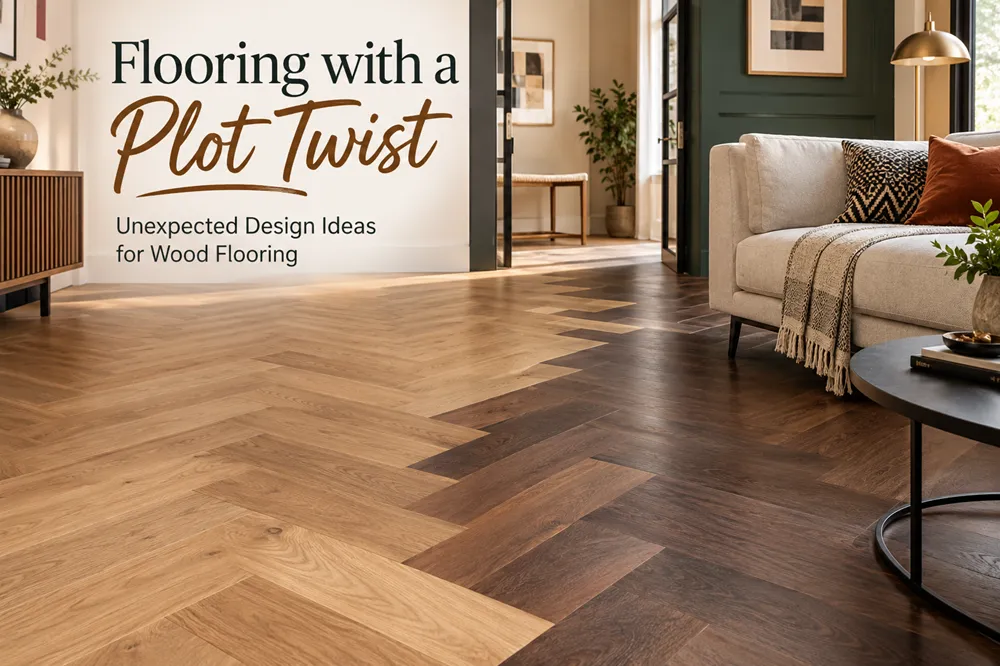
For decades, flooring has been treated like this quiet, kind of forgettable backdrop to a room’s furniture, colours, and architecture. But modern interiors are doing that switch; they’re changing the idea. Today, the floor can be a real defining design feature—bringing warmth, movement, texture, and personality, without taking over everything else in the space.
And that’s where creative approaches to wood flooring start to matter. From expressive patterns to strange layouts that you don’t usually see and even contrasting borders, the right floor can basically shift how a room looks and feels in a very noticeable way.
Whether you are renovating a period property, building a contemporary home, or refreshing a commercial interior, here are some unexpected angles to give your flooring a bit of a plot twist.
Can flooring really become a design statement?
Yes, absolutely. Flooring occupies a big visual area, so its colour, grain, direction, and pattern can influence the character of the entire room.
Instead of choosing flooring mainly because it is practical, think of it as part of the whole interior scheme. A warm oak tone can make a minimalist room feel way more inviting, while a geometric parquet pattern can add architectural detail to an otherwise simple space.
The versatile engineered oak flooring has a natural timber appearance and can sit comfortably across traditional interiors, transitional styles, and contemporary spaces too.
The trick is to think past the usual assumption that flooring is just something that covers the floor.
What happens when you move beyond straight planks?
Straight-laid boards are timeless, but they are not the only option, not really.
If you shift the direction, rearrange the timber, or even go for a different pattern, you can end up with a whole other look. Like, laying boards diagonally often makes a space feel more alive, and when you change the direction between adjoining areas, it can quietly separate zones inside an open-plan room, without needing extra walls or anything.
You can also experiment with:
● Contrasting timber tones
● Decorative borders
● Mixed plank widths
● Directional changes
● Chevron arrangements
● Herringbone layouts
● Framed flooring sections
These little choices can take a floor that might feel plain in the first place and turn it into a feature, the kind that just naturally pulls your eye.
Why is Engineered Parquet Flooring more than a traditional choice?
Parquet has a long design history, but that doesn’t mean it only belongs in classic interiors. While still keeping the warmth and that natural variation you get from timber, engineered parquet flooring can add geometric structure to more modern spaces.
In particular, herringbone and chevron patterns can add movement without forcing you into bold colours or heavy ornamentation. A good way to handle it is to let the pattern be the main visual idea and keep the surrounding walls and furniture fairly restrained.
That way you get balance: the floor says something, but the room doesn’t feel visually crowded – more calm than busy.
What if the floor and the architecture actually worked together?
Like, not just in theory but in a real way. One of the more interesting takes on wood flooring is to treat it as part of the architecture instead of a separate decorative layer.
Think about how the floor interacts with
● Doorways and entrances
● Staircases
● Fireplace surrounds
● Built-in furniture
● Columns
● Alcoves
● Large windows
● Room transitions
For example, a parquet pattern can be placed so it sort of pulls attention toward a fireplace or some central architectural detail. Also, the lay direction of engineered oak boards can guide the eye toward a specific part of the room, without you even noticing you’re being led. In the end, it makes the flooring feel composed and intentional rather than just installed, if that makes sense.
Can mixing flooring patterns work without looking chaotic?
It can, as long as there’s a clear visual connection and not a bunch of competing signals.
The easiest thing to try when you’re experimenting with multiple patterns is to keep consistency in the timber species or just stick to one overall colour family. So a classic plank installation can shift into engineered parquet flooring, for instance, while the shared wood tone holds everything together.
Another way is to use pattern as a zoning tool, rather than throwing several designs in randomly. You’re basically drawing boundaries.
The principle is plain: change one major visual element at a time. If the pattern gets more dramatic, then keep the colour fairly restrained. And if the colour is bold, go with a calmer laying pattern so it doesn’t feel like too much all at once.
One of the nice things about engineered oak flooring is that real timber has this visual personality. You get grain patterns, tonal variation, and those natural markings, and it can really stop a big floor from feeling flat or too uniformly the same.
Instead of trying to erase every single variation, you can almost treat it like part of the design; it’s fine, even better.
And natural-looking timber can also go really well with contemporary materials like glass, metal, concrete, stone, and painted cabinetry. That contrast between organic wood and tougher architectural surfaces can make modern interiors feel a bit more inviting and warm, not so cold.
How do you make wood flooring feel contemporary?
Contemporary flooring does not always mean you need some strange, unusual material. Sometimes it’s just about how a familiar material is handled and placed.
Try using timber with:
● Minimal furniture silhouettes
● Large-format architectural elements
● Neutral colour palettes
● Black or dark metal accents
● Natural textiles
● Sculptural lighting
● Clean-lined cabinetry
A traditional material such as oak can therefore feel distinctly modern when it’s matched with the right surroundings.
The floor doesn’t really need to play the supporting role.
Some of the most interesting flooring designs start from one simple question: What if the floor became part of the story?
And then it goes from there. Whether it’s picking expressive engineered oak flooring, bringing in geometric engineered parquet flooring, or rethinking how traditional wood flooring is laid out, there are a bunch of ways to get past the same predictable look.
The point isn’t always to make the floor louder or more dramatic. It’s more about making it feel deliberate, like every choice was made on purpose.
When pattern, colour, architecture, and material actually work together, the floor can turn into one of the most memorable pieces in the whole interior.
FAQs
Is engineered oak flooring suitable for modern interiors?
Yes. It can fit nicely in both traditional and contemporary spaces because of that natural timber look. The final mood depends on things like colour, finish, board format, laying direction, and what you already have around it.
What is the difference between engineered parquet flooring and standard wood flooring?
Engineered parquet flooring means engineered timber shaped into decorative geometric layouts, like herringbone or chevron. Standard wood flooring can include lots of plank formats and install styles. Usually, the biggest difference is the build and the way the pattern is arranged, not just what the material is.
How do I choose between engineered oak flooring and engineered parquet flooring?
Think about the look you want first. Engineered oak flooring in a more conventional plank layout tends to feel clean and calm, while engineered parquet flooring brings more noticeable geometry. You should also weigh room proportions, existing architecture, furniture, and the overall visual personality you’re aiming for before deciding, because it all adds up.
Related Reading
Expert Insights: Navigating the Complex World of Home Improvement
Welcome to our in-depth exploration of Home Improvement. In an era defined by ra...
Why Home Improvement is Transforming the Global Industry Landscape
Welcome to our in-depth exploration of Home Improvement. In an era defined by ra...