Fleet Wraps Buford GA: Common Design Mistakes Businesses Should Avoid
By Met Henery
12 Views
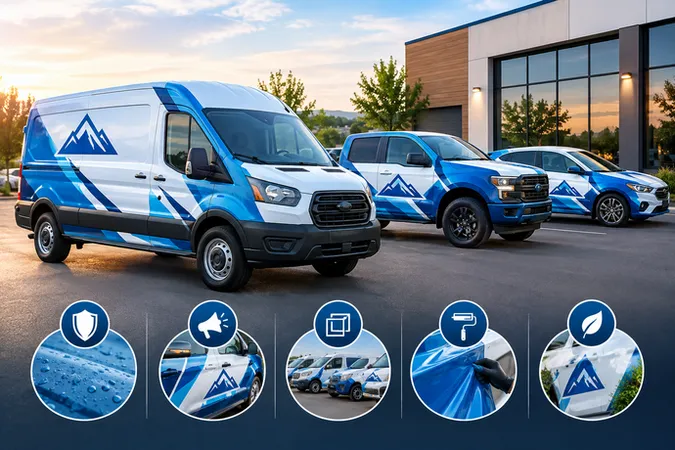
Vehicle graphics can help businesses increase brand awareness, communicate their services, and maintain a professional image on the road. However, an ineffective design can make company vehicles difficult to recognize or prevent potential customers from understanding the message. For businesses considering Fleet Wraps Buford GA, understanding common design mistakes is an important step toward creating attractive, readable, and effective vehicle graphics.
Fleet wraps turn company cars, vans, and trucks into mobile advertising spaces. When designed carefully, they can communicate a brand's identity wherever the vehicles travel. Good results depend on more than choosing attractive colors; businesses must also consider readability, layout, branding consistency, and the practical requirements of vehicle wrap installation.
Including Too Much Information
One of the most common vehicle wrap design mistakes is trying to display every available business detail. A vehicle moving through traffic gives viewers only a few seconds to notice and understand its message.
Adding lengthy descriptions, multiple slogans, extensive service lists, and unnecessary graphics can make the design confusing.
Instead, businesses should prioritize the information that matters most.
-
Display the company name prominently.
-
Include a short, clear description of the main service.
-
Use a memorable phone number or easy-to-read website address.
-
Remove unnecessary text and decorative elements.
-
Make the primary message visible from a reasonable distance.
Effective Fleet Wraps Buford GA should communicate essential information quickly. A simple design with a clear message is often more useful than a crowded layout.
Choosing Difficult-to-Read Fonts
Typography directly affects how easily people can recognize a business while its vehicles are moving or parked. Decorative fonts may look attractive on a computer screen but become difficult to read when printed across a vehicle's body.
Thin lettering, tightly spaced characters, and excessive use of italic or script fonts can reduce readability.
Businesses should select clean, professional typefaces with sufficient spacing and strong contrast against the background. Important details, such as the company name and contact information, should use larger text than secondary information.
Before approving a design, review it at different sizes and distances. A layout that looks clear on a desktop monitor may not perform as well on an actual vehicle.
Using Poor Color Combinations
Colors influence brand recognition and determine how easily information stands out. However, selecting colors simply because they look attractive together can create readability problems.
For example, light gray text on a white background or dark blue lettering on a black background may have insufficient contrast.
When planning commercial vehicle wraps, businesses should:
-
Use contrasting colors for important text and backgrounds.
-
Follow established brand colors where practical.
-
Limit the number of competing colors.
-
Consider how the design will appear in bright sunlight and shaded conditions.
-
Request a professional proof before production.
Color selection should support the brand's identity while keeping the message easy to understand. Testing the proposed color combinations helps identify problems before the wrap is printed.
Ignoring the Vehicle's Shape
A vehicle wrap is not a flat poster. Doors, windows, handles, mirrors, wheel arches, body curves, and panel gaps can affect how the final design appears.
Placing a company name across a door seam or positioning important text near a handle may interrupt the message. Similarly, graphics that do not account for the vehicle's proportions can appear unbalanced.
Professional designers should work with accurate vehicle templates and consider the placement of every major design element.
For businesses investing in Fleet Wraps Buford GA, reviewing a vehicle-specific mockup is essential. It allows owners to see how the design fits the vehicle before production begins.
Overlooking Brand Consistency
Businesses operating several vehicles need a consistent visual identity. When each vehicle uses different colors, fonts, logos, or messaging, customers may find it harder to recognize the company.
Fleet branding should establish a recognizable appearance across cars, vans, and trucks, even when their sizes differ.
Maintain consistency by using:
-
The same logo and core brand colors.
-
Consistent typography and messaging.
-
A recognizable layout across different vehicle types.
-
Uniform placement for contact information where possible.
-
High-quality logo files that reproduce clearly at different sizes.
A consistent fleet appearance helps reinforce brand recognition and presents a more organized image to potential customers.
Using Low-Quality Images or Logos
Low-resolution images can become blurry or pixelated when enlarged for vehicle graphics. This can make a business appear less professional and weaken the overall design.
Whenever possible, provide designers with vector logo files, such as SVG, EPS, or print-ready PDF formats. These formats generally allow graphics to scale without losing sharpness.
Photographs used in large printed areas should have sufficient resolution for the intended dimensions. Designers and print professionals can confirm whether supplied files are suitable for production.
Businesses should also verify that they have permission to use any third-party images, fonts, or graphics included in the design.
Failing to Consider Maintenance and Durability
A vehicle wrap must withstand everyday use, including sunlight, rain, road debris, and routine cleaning. Although design is important, material selection and installation quality also influence the wrap's appearance over time.
When comparing Fleet Wraps Buford GA, businesses should ask about the vinyl materials, protective laminates, installation process, and recommended maintenance procedures.
Helpful practices include:
-
Following the installer's instructions for the initial curing period.
-
Using cleaning products approved for the wrap material.
-
Avoiding abrasive brushes and harsh chemicals.
-
Inspecting edges and seams periodically.
-
Addressing peeling or damage promptly.
Appropriate care can help preserve the graphics, although the actual lifespan depends on material quality, installation, exposure, and maintenance.
Skipping the Final Design Review
Approving a wrap without carefully checking the final proof can lead to expensive corrections. Incorrect phone numbers, outdated logos, spelling errors, and poorly positioned graphics are easier to fix before printing than after installation.
Before authorizing production, confirm the following:
-
The business name and contact details are accurate.
-
The logo and brand colors are correct.
-
All text is readable at realistic viewing distances.
-
Important graphics avoid handles, seams, and other obstructions.
-
The layout matches the actual vehicle model.
-
The final design has been approved by the appropriate decision-maker.
Businesses working with providers such as PrintPro Graphics can discuss their branding goals, design requirements, and production expectations before moving forward. Clear communication throughout the process helps ensure that the finished graphics align with the company's intended image.
Conclusion
Well-designed fleet graphics can support local brand awareness and help businesses present a consistent, professional identity. However, overcrowded layouts, poor typography, weak color contrast, incorrect vehicle measurements, and low-quality graphics can reduce their effectiveness.
Before investing in Fleet Wraps Buford GA, businesses should focus on clear messaging, readable design, accurate vehicle templates, consistent branding, and appropriate materials. Careful planning and a thorough proofing process can prevent common mistakes and help create vehicle graphics that communicate the right message wherever the fleet travels.