First-Party Data Strategy: Why a Customer Data Platform Matters More Than Ever
By Dhara Panwar
152 Views
The digital marketing landscape is undergoing a fundamental shift. For years, businesses relied heavily on third-party data to understand their audiences, target ads, and drive growth. However, increasing privacy regulations, changes in browser policies, and growing consumer awareness have significantly reduced the availability and reliability of third-party data.
In this new environment, first-party data has become the most valuable asset for marketers. It is accurate, privacy-compliant, and directly tied to customer relationships. However, collecting first-party data is only the first step. The real challenge lies in organizing, analyzing, and activating it effectively.
This is where a customer data platform becomes essential. It acts as the central system that transforms first-party data into actionable insights and personalized experiences.
What is First-Party Data?
First-party data is information that a business collects directly from its customers through its own channels. This includes:
- Website interactions
- Mobile app behavior
- Purchase transactions
- Email engagement
- Customer service interactions
Unlike third-party data, which is often aggregated and less reliable, first-party data reflects real interactions with your brand. This makes it more accurate and relevant.
Why First-Party Data is Becoming Critical
Several factors are driving the shift toward first-party data.
Decline of Third-Party Cookies
Browsers are phasing out third-party cookies, which were traditionally used for tracking user behavior across websites. This limits the ability to rely on external data sources.
Privacy Regulations
Regulations such as GDPR and other global privacy laws require businesses to be transparent about data usage. First-party data, collected with user consent, aligns better with these requirements.
Customer Trust
Consumers are more aware of how their data is used. They are more likely to trust brands that use their data responsibly and provide value in return.
Need for Accuracy
Third-party data often lacks precision. First-party data provides direct insights into customer behavior, making it more reliable for decision-making.
Challenges in Managing First-Party Data
While first-party data offers many advantages, managing it effectively is not easy.
Data Fragmentation
Data is often spread across multiple systems, making it difficult to create a unified view of the customer.
Lack of Real-Time Access
Many systems process data in batches, which delays insights and limits responsiveness.
Limited Activation
Even when data is available, businesses may struggle to use it effectively for personalization and marketing.
Scaling Issues
As data volume grows, managing and analyzing it becomes more complex.
These challenges highlight the need for a centralized solution.
The Role of a Customer Data Platform
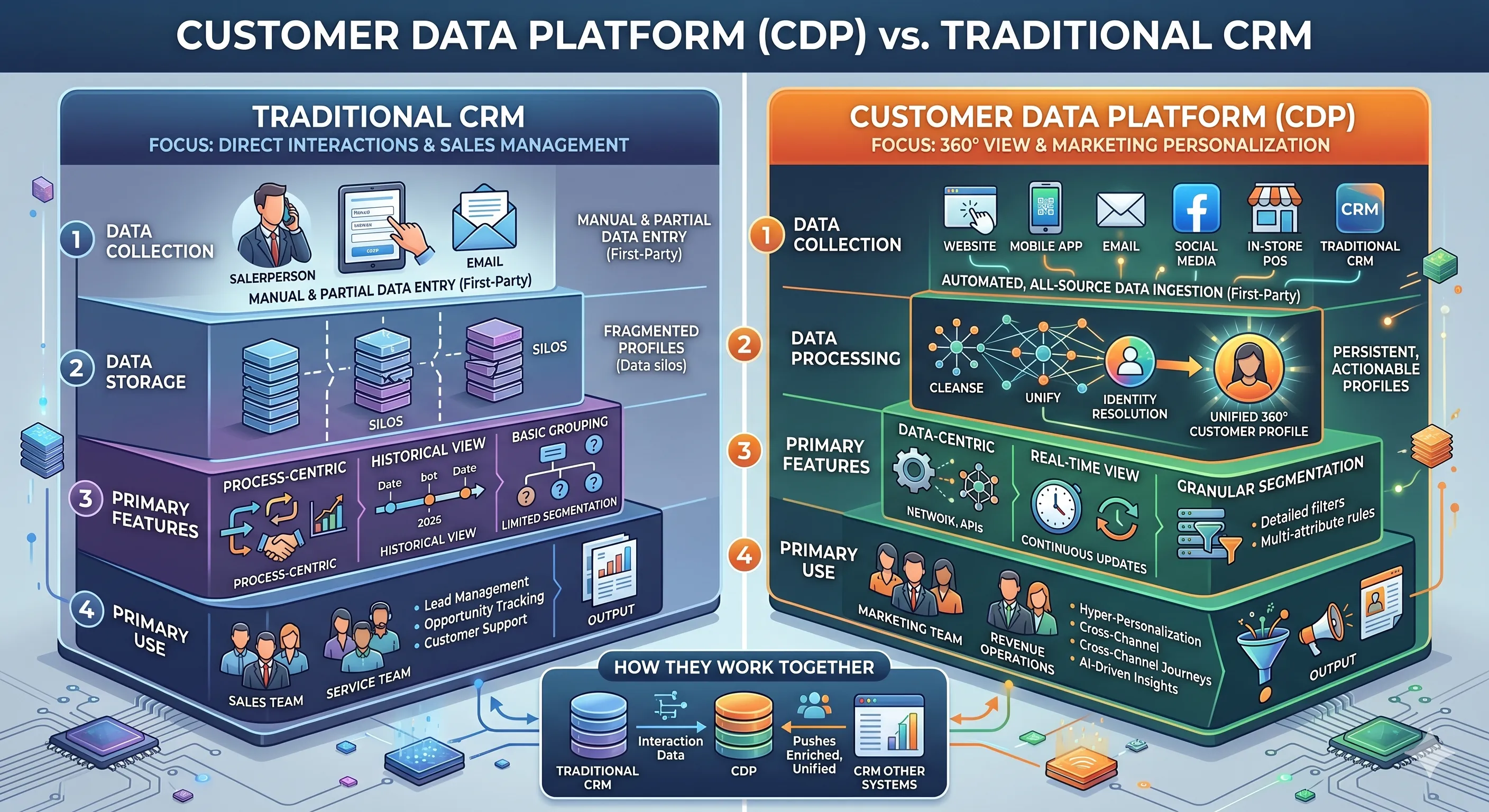
A customer data platform addresses these challenges by providing a unified and scalable approach to managing first-party data.
Data Unification
The platform collects data from multiple sources and combines it into a single customer profile. This eliminates silos and ensures consistency.
Identity Resolution
A customer data platform connects interactions across devices and channels, creating a complete view of each customer.
Real-Time Processing
Data is processed in real time, allowing businesses to respond instantly to user actions.
Data Activation
Insights can be used across multiple channels, including email, website, mobile apps, and advertising platforms.
Enabling Personalization with First-Party Data
Personalization is one of the most powerful applications of first-party data. With accurate and real-time insights, businesses can deliver experiences that align with customer intent.
Examples include:
- Personalized product recommendations
- Targeted email campaigns
- Dynamic website content
- Context-aware messaging
This level of personalization improves engagement and increases conversion rates.
Building an Effective First-Party Data Strategy
Collect Data Transparently
Ensure that customers understand how their data is being collected and used. Transparency builds trust and encourages data sharing.
Focus on Value Exchange
Customers are more willing to share data when they receive value in return. This could include personalized experiences, exclusive offers, or better service.
Integrate Data Sources
Bring together data from all touchpoints to create a unified view. This is essential for accurate insights.
Leverage Real-Time Data
Use real-time signals to respond quickly to customer behavior. This improves relevance and effectiveness.
Continuously Optimize
Analyze performance and refine strategies to improve outcomes over time.
Benefits of a Strong First-Party Data Strategy
Improved Customer Experience
Understanding customer behavior allows businesses to deliver more relevant and engaging experiences.
Higher Conversion Rates
Personalized interactions increase the likelihood of purchase.
Better Customer Retention
Consistent and meaningful engagement builds loyalty.
Increased Marketing Efficiency
Targeted campaigns reduce wasted spend and improve performance.
Future-Proofing
A strong first-party data strategy ensures that businesses can adapt to changing regulations and market conditions.
The Role of AI in First-Party Data Activation
Artificial intelligence enhances the value of first-party data by enabling advanced analytics and automation.
AI can:
- Predict customer behavior
- Identify patterns and trends
- Automate segmentation and targeting
- Optimize campaigns in real time
This allows businesses to move from reactive strategies to proactive engagement.
Real-World Use Cases
Ecommerce Personalization
Retailers use first-party data to recommend products based on browsing and purchase history.
Email Marketing
Emails are tailored based on user behavior, increasing engagement and conversions.
Customer Journey Optimization
Businesses can map and improve the customer journey across multiple touchpoints.
Retargeting
Users who show interest but do not convert can be re-engaged with relevant messaging.
The Future of First-Party Data
As the digital landscape continues to evolve, first-party data will become even more important. Businesses will need to focus on:
- Building direct relationships with customers
- Investing in data infrastructure
- Leveraging AI for deeper insights
- Ensuring compliance with privacy regulations
Customer data platforms will play a central role in enabling these capabilities.
Conclusion
First-party data is no longer just an option. It is the foundation of modern marketing. However, collecting data is not enough. Businesses need the right tools to manage and activate it effectively.
A customer data platform provides the infrastructure needed to unify data, generate insights, and deliver personalized experiences. In doing so, it helps businesses build stronger relationships with customers and drive long-term growth.
In a world where privacy and personalization must coexist, investing in a strong first-party data strategy supported by a customer data platform is essential for staying competitive.