Finding Quality Care at an Autism Treatment Center in Miami
70 Views
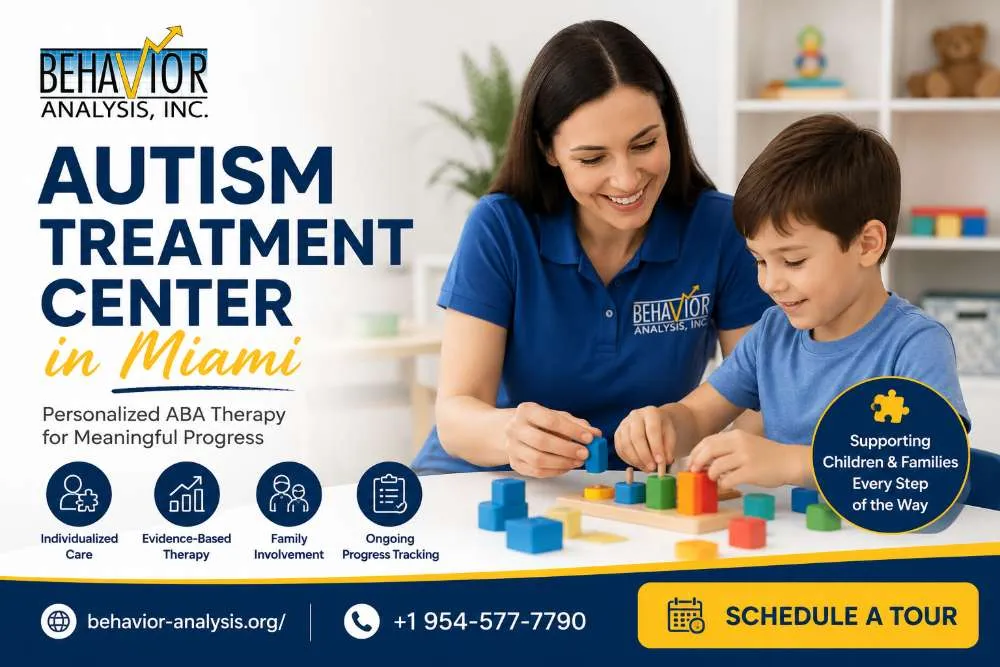
Finding the right Autism Treatment Center in Miami can feel overwhelming for families. Parents often want to understand which services a center provides, how professionals develop treatment plans, and whether the approach fits their child’s individual needs. Quality autism care should focus on meaningful skills, measurable progress, family involvement, and support that can adapt as a child grows.
At Behavior Analysis Inc., we provide individualized autism services through our Kendall location, serving families throughout Miami-Dade County. Our programs use Applied Behavior Analysis (ABA) and other evidence-based behavioral strategies to support children, teens, and young adults with autism.
What to Look for in an Autism Treatment Center in Miami

Every child with autism has different strengths, challenges, communication abilities, and learning needs. When evaluating an Autism Treatment Center in Miami, families should look beyond the list of services and consider how the center individualizes care.
A quality center should offer:
- Individualized assessments and treatment plans
- Qualified and experienced behavioral professionals
- Clear, measurable treatment goals
- Family education and parent training
- Regular progress monitoring
- Opportunities to practice skills in everyday settings
- Services appropriate for different ages and developmental stages
These elements can help families make informed decisions and understand how treatment supports their child’s development.
Individualized ABA Therapy for Autism
Applied Behavior Analysis is a structured approach that focuses on understanding behavior and teaching practical skills. At Behavior Analysis Inc., our ABA programs address areas such as communication, social interaction, daily routines, community skills, and behaviors that may interfere with learning.
Rather than using the same program for every child, our team develops individualized goals based on each person’s needs. Professionals can collect data throughout treatment and use that information to evaluate progress and adjust strategies when necessary.
This individualized approach allows treatment to evolve as a child develops new skills.
Early Intervention Can Build Important Skills
Early intervention can provide young children with opportunities to develop foundational skills during important stages of development. Families looking for an Autism Treatment Center in Miami may want to ask whether the provider offers programs designed for young children.
At our Kendall center, Behavior Analysis Inc. provides services for children as young as two. Our early intervention programs can address developmental milestones, communication, behavior, social skills, and school readiness.
Early intervention does not mean that older children cannot benefit from support. Autism services can remain valuable throughout childhood, adolescence, and young adulthood, with goals changing according to each person’s abilities and priorities.
Services for Children, Teens, and Young Adults
A child’s needs can change significantly over time. For this reason, families may benefit from choosing an Autism Treatment Center in Miami that can support different stages of development.
For younger children, treatment may emphasize communication, play, learning readiness, and daily routines. For school-age children, goals may include social skills, classroom behaviors, independence, and community participation.
For teens and young adults, programs can focus more on functional communication, self-management, daily living, vocational preparation, and greater independence.
At Behavior Analysis Inc., we recognize that autism support should address the individual rather than focus solely on age or diagnosis.
Family Involvement Matters
Parents and caregivers play an important role in helping children apply newly learned skills outside the treatment setting. A quality autism program should therefore provide opportunities for families to participate in the treatment process.
Parent training can help caregivers understand behavioral strategies, reinforce appropriate skills, and respond consistently to challenges. When families and professionals communicate regularly, they can work toward shared goals across home, school, and community environments.
At Behavior Analysis Inc., we include family involvement as part of our comprehensive approach to autism services.
Measuring Progress Through Data
Effective behavioral treatment should include a way to monitor progress. Professionals can collect information about specific skills and behaviors to determine whether an intervention produces meaningful changes.
Data can help the treatment team identify what works, what needs adjustment, and when a child is ready to work toward new goals. Progress tracking also gives families a clearer picture of their child’s development.
At Behavior Analysis Inc., our professionals use assessment, ongoing observation, and progress tracking to help guide individualized treatment decisions.
Choosing Care That Fits Your Family
When comparing an Autism Treatment Center in Miami, consider more than location. Ask about the qualifications of the clinical team, the types of assessments used, treatment goals, parent involvement, progress monitoring, and the age groups served.
Families should also consider whether the center offers services that fit their child’s current needs and whether those services can adapt as those needs change.
Behavior Analysis Inc. serves families in Kendall, South Miami, Coral Gables, Pinecrest, and surrounding Miami-Dade communities. Our team provides individualized ABA and autism support services for children, teens, and young adults.
Choosing quality autism care is an important decision. By understanding the available services and asking thoughtful questions, families can identify an Autism Treatment Center in Miami that emphasizes individualized support, practical skill development, measurable progress, and family participation.