EPR Registration Certificate in India: Complete Process, Documents, Fees & Benefits
By Gaurav Sharma
8 Views
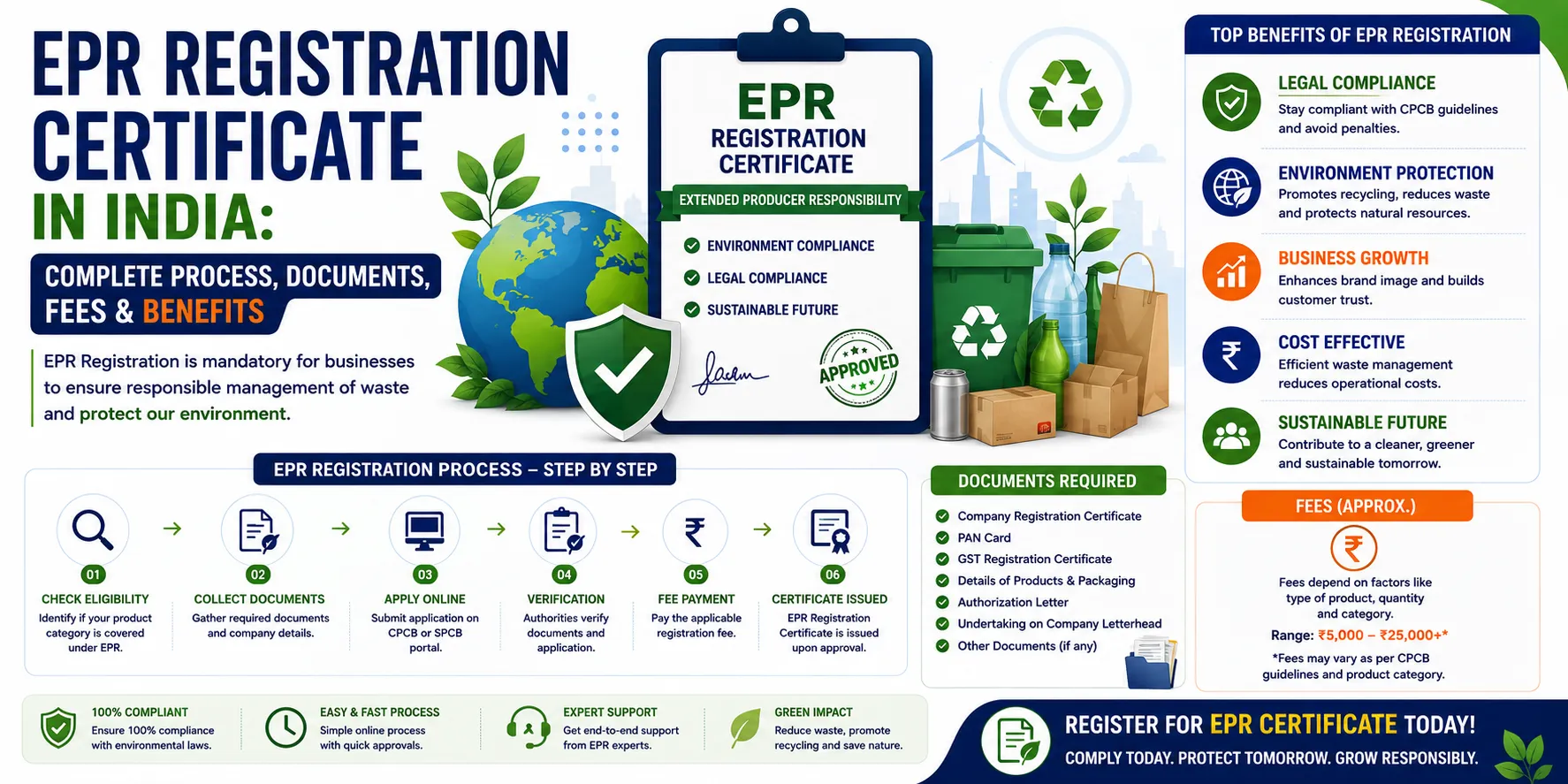
If your business makes, imports, sells, or uses products that create plastic or other regulated waste, you may have heard about EPR Registration Certificate. EPR means Extended Producer Responsibility. In simple words, it means the business that puts certain products into the market also has a responsibility to manage the waste created from them.
In India, EPR rules are especially important for businesses dealing with plastic packaging, batteries, e-waste, tyres, and other regulated waste categories.
What Is an EPR Registration Certificate?
An EPR Registration Certificate is an official registration that shows a business is following the applicable Extended Producer Responsibility rules.
Depending on the type of waste and business activity, registration may be required with the Central Pollution Control Board (CPCB) or through the applicable regulatory system.
For example, a company that sells products using plastic packaging may have responsibilities for collecting, recycling, or properly managing the plastic waste generated from its products.
Who Needs EPR Registration?
EPR requirements can apply to different types of businesses, depending on the waste category and their role in the supply chain.
Common examples include:
- Producers and manufacturers
- Importers
- Brand owners
- Plastic packaging businesses
- E-waste producers and manufacturers
- Battery producers and importers
- Tyre producers and importers
The exact requirement depends on the product and applicable EPR rules.
EPR Registration Process in India
The registration process may vary depending on the type of EPR authorization required. Generally, the process includes these steps:
1. Identify Your EPR Category
First, understand which EPR rules apply to your business. Your product, packaging, and business activity will decide the applicable category.
2. Collect the Required Documents
Prepare business, product, production, import, and waste-management details. The documents should be accurate and updated.
3. Apply on the Applicable Portal
The application is submitted through the relevant CPCB or government portal, depending on the EPR category.
4. Submit Business and Waste Details
You may need to provide information about your products, quantities, packaging, recycling arrangements, and other compliance details.
5. Application Review
The concerned authority reviews the application and supporting documents. If clarification or additional information is required, the applicant may need to respond.
6. Receive the Registration Certificate
Once the application is approved, the applicable EPR Registration Certificate is issued.
Documents Required for EPR Registration
The document list can change according to the EPR category and business type. Common documents may include:
- PAN card of the business
- Certificate of Incorporation or business registration proof
- GST registration certificate, where applicable
- Address proof of the business
- Details of products and packaging
- Details of production or imports
- Authorized person's details
- Details of recycling or waste-management arrangements
- Previous authorization or registration details, if applicable
- Other documents required under the relevant EPR rules
It is important to submit correct information because incomplete or incorrect documents can delay the application.
Is NOC from the Pollution Control Board Required?
A business may also need a NOC Pollution Control Board or other consent/authorization depending on its activity, premises, waste category, and applicable environmental laws.
However, EPR registration and Pollution Control Board consent are not always the same thing. Whether a separate NOC or consent is required depends on the nature of the business.
For this reason, businesses should check the environmental requirements applicable to their specific activities.
EPR Registration Fees
There is no single fee applicable to every EPR registration. The cost can depend on:
- Type of EPR registration
- Category of waste
- Business activity
- Quantity of products or waste
- Government or portal charges
- Professional assistance, if used
Therefore, businesses should check the latest applicable fee structure before submitting an application.
Benefits of EPR Registration
Getting the required EPR registration can offer several important benefits:
Legal Compliance
It helps businesses meet their responsibilities under applicable environmental regulations.
Better Waste Management
EPR encourages businesses to take responsibility for the waste connected with their products.
Builds Customer Trust
Customers are becoming more aware of environmental issues. Responsible waste management can improve a company's reputation.
Supports Recycling
EPR encourages proper collection, recycling, and responsible disposal of waste.
Avoids Compliance Problems
Following applicable EPR requirements can help reduce the risk of notices, penalties, or other regulatory action.
Can a Section 8 Company Get EPR Registration?
A Section 8 Company is generally formed for charitable or social objectives. If its activities fall within an EPR-regulated category, the applicable environmental requirements may still apply.
The important point is not simply the company's legal structure. The actual business activity, products, and waste category should be checked before deciding whether EPR registration is required.
Is 12A and 80G Registration Related to EPR?
12A and 80G Registration is mainly related to eligible charitable organizations and their tax-related benefits. It is different from EPR registration.
For example, a charitable organization may have 12A and 80G registration for income-tax purposes, while EPR registration may be required because of a separate activity covered by environmental rules.
So, these are two different compliance areas.
Final Thoughts
EPR is not just another certificate. It is a way to make businesses more responsible for the waste connected with their products. If your business falls under an EPR category, understanding the rules early can make compliance much easier.
Before applying, check your EPR category, prepare the correct documents, and understand whether additional approvals such as a NOC Pollution Control Board are required.
Businesses can also take professional assistance from Corpbiz to understand applicable registrations and compliance requirements.
Author Profile
Gaurav Sharma is a legal consultant and business compliance expert with over 10 years of experience helping startups, entrepreneurs, and companies with legal registrations and regulatory compliance in India. He focuses on making complex legal and compliance processes simple and easy to understand. Through his work with Corpbiz, Gaurav helps businesses understand registrations, licenses, certifications, and ongoing compliance requirements.