Embedded Finance and AI-Powered Fintech App Trends to Watch in 2027
22 Views
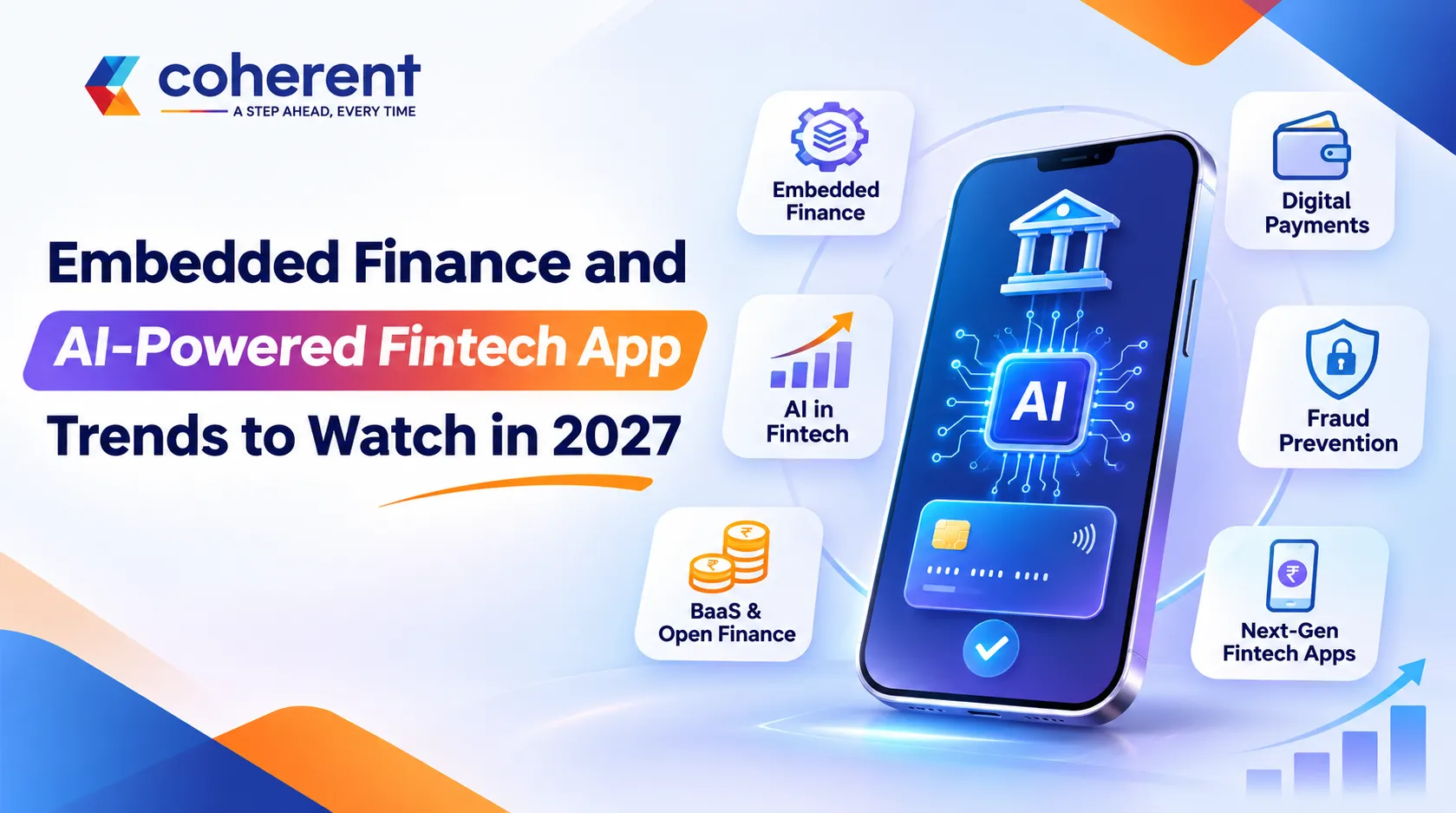
The financial technology industry is entering a new era in which embedded finance and artificial intelligence are transforming how businesses deliver financial services. In 2027, fintech applications will increasingly combine intelligent automation, personalized banking experiences, digital payments, and integrated financial solutions to meet changing customer expectations. From AI-powered credit scoring and fraud detection to Banking-as-a-Service (BaaS) and embedded lending, emerging technologies are creating new opportunities for financial institutions, startups, and digital businesses.
Businesses are also adopting generative AI and agentic AI to streamline financial operations, improve decision-making, and deliver faster customer support. As digital ecosystems expand, embedded financial services are becoming an important part of e-commerce, healthcare, retail, and SaaS platforms. Understanding these developments will help businesses identify growth opportunities, improve customer experiences, and prepare for the future of digital finance.
What Is Embedded Finance and How Does It Work?
Embedded finance refers to integrating financial services directly into non-financial platforms, allowing customers to access banking, payments, lending, and insurance without visiting separate financial institutions. It creates convenient financial experiences within applications people already use. With the growing demand for seamless digital transactions, businesses are increasingly exploring Fintech App Development to integrate secure payment systems, digital wallets, and lending solutions. This approach improves customer convenience, simplifies financial transactions, and creates new revenue opportunities for businesses across different industries.
Key Components of Embedded Finance
-
Embedded Banking: Allows businesses to offer banking-related services through integrated financial infrastructure and banking partnerships.
-
Embedded Payments: Enables customers to complete secure transactions directly within e-commerce, retail, and digital applications.
-
Embedded Lending: Provides customers with credit options, instant financing, and loan services through non-financial platforms.
-
Banking-as-a-Service (BaaS): Allows businesses to integrate banking capabilities using APIs and regulated financial partners.
Top Embedded Finance Trends to Watch in 2027
Embedded finance is evolving beyond basic payment integration. In 2027, businesses will increasingly explore connected financial ecosystems that combine payments, lending, insurance, and banking capabilities. These solutions can improve convenience while creating additional revenue opportunities.
Emerging Embedded Finance Innovations
-
Real-Time Embedded Payments: Instant payment experiences will support faster transactions across digital platforms.
-
Embedded Buy Now, Pay Later: Flexible payment options will help customers manage purchases through integrated financing services.
-
Embedded Insurance: E-commerce and service platforms will offer relevant insurance products during customer transactions.
-
Open Finance Integration: Secure financial data connectivity will support more personalized and interconnected financial experiences.
How Artificial Intelligence Is Transforming Fintech Apps in 2027
Artificial intelligence is becoming a major technology behind modern fintech applications. It helps financial businesses analyze large datasets, automate repetitive processes, detect suspicious activities, and personalize customer interactions. In 2027, AI adoption will increasingly focus on improving operational efficiency and financial decision-making.
Major Applications of AI in Fintech
-
AI-Powered Fraud Detection: Machine learning models can identify unusual transaction patterns and flag potentially suspicious activities.
-
Intelligent Credit Scoring: AI can analyze relevant financial information to support more informed lending decisions.
-
Predictive Financial Analytics: AI-powered analytics can help businesses identify spending patterns, financial risks, and customer behavior.
-
AI Virtual Assistants: Intelligent chatbots can provide customer support, answer account-related questions, and assist with routine financial activities.
Generative AI and Agentic AI in Financial Services
Generative AI and agentic AI are creating new opportunities for financial applications by improving automation, decision-making, and customer experiences. Generative AI can summarize financial data, generate insights, and simplify customer communication, while agentic AI can manage multi-step tasks within authorized workflows. As financial institutions explore these technologies in 2027, businesses may also consider AI Agent for Your Business? to understand how intelligent agents can streamline operations, improve efficiency, and support smarter financial service delivery through secure, scalable automation solutions.
How Generative and Agentic AI Improve Fintech
-
Personalized Financial Guidance: AI assistants can provide contextual insights based on customer preferences and available financial information.
-
Automated Financial Workflows: AI agents can coordinate approved tasks such as document processing and payment-related administrative activities.
-
Intelligent Customer Support: Generative AI can help answer complex customer queries using relevant financial information.
-
AI-Assisted Decision-Making: Financial teams can use AI-generated summaries and insights to support operational decisions.
AI-Powered Fintech App Development Trends in 2027
Fintech app development is moving toward intelligent, scalable, and customer-centric digital experiences. Developers are combining AI technologies, cloud infrastructure, APIs, and advanced security features to build applications that support changing financial requirements.
Key Fintech App Development Innovations
-
Hyper-Personalized Banking: AI can help deliver customized financial dashboards, recommendations, and spending insights.
-
AI-Powered Wealth Management: Robo-advisors can support investment research, portfolio monitoring, and personalized financial planning.
-
Voice-Enabled Banking: Voice interfaces can make selected banking activities more accessible and convenient.
-
Automated Financial Operations: Intelligent automation can simplify document verification, transaction reconciliation, and customer onboarding.
Emerging Technologies Shaping the Future of Fintech
Beyond artificial intelligence and embedded finance, several technologies are influencing the development of modern financial ecosystems. Their integration can improve connectivity, transaction efficiency, scalability, and security across digital financial services.
Technologies Driving Fintech Innovation
-
Blockchain Technology: Distributed ledger systems can support transparent transaction records and selected financial applications.
-
Cloud Computing: Cloud-native infrastructure helps fintech companies build scalable and flexible applications.
-
Open Banking APIs: APIs enable authorized financial data sharing and integration between participating platforms.
-
Biometric Authentication: Fingerprint, facial, and other biometric technologies can strengthen digital identity verification.
Benefits of AI-Powered Fintech and Embedded Finance
Combining AI with embedded financial services can create measurable business and customer benefits. Financial institutions and digital platforms can improve service delivery, streamline operations, and develop more connected financial experiences. However, outcomes depend on implementation quality, data governance, and regulatory compliance.
Major Business and Customer Benefits
-
Better Customer Experience: Personalized services and integrated payments can make financial activities more convenient.
-
Improved Operational Efficiency: AI automation can reduce repetitive administrative work and support faster processes.
-
Enhanced Financial Inclusion: Digital financial services can expand access to relevant products for underserved customer groups.
-
New Revenue Opportunities: Embedded lending, payments, and insurance can create additional business models and revenue streams.
Industry Applications of Embedded Finance and AI
Embedded finance and AI are no longer limited to traditional banks or fintech companies. Businesses across industries are integrating financial capabilities into their platforms to simplify transactions, automate processes, and improve customer experiences. As demand for smarter financial solutions grows, technology companies like Coherent Lab help businesses explore innovative approaches to fintech app development and AI integration. These advancements enable organizations to deliver seamless payment experiences, improve operational efficiency, and create more personalized financial services for their customers.
Industries Adopting Embedded Financial Services
-
E-commerce and Retail: Integrated payments, digital wallets, and flexible financing can simplify online shopping.
-
Healthcare: Healthcare platforms can integrate payment solutions and financing options for eligible customers.
-
Travel and Hospitality: Booking platforms can offer integrated payments, insurance, and financing services.
-
SaaS and Business Platforms: Software companies can provide invoicing, payment processing, and business financing through integrated financial services.
Challenges and Risks of AI-Powered Fintech Solutions
Despite their advantages, AI-powered fintech applications and embedded finance ecosystems introduce important technical, operational, and regulatory challenges. Businesses must address these risks before expanding financial services across digital platforms.
Important Challenges Fintech Businesses Must Address
-
Data Privacy: Financial applications must protect sensitive customer information and follow applicable data protection requirements.
-
Cybersecurity Threats: Secure authentication, encryption, monitoring, and access controls are essential for protecting financial systems.
-
AI Transparency: Businesses should understand how automated models influence important financial decisions.
-
Regulatory Compliance: Financial partnerships and digital services must meet relevant banking, lending, payment, and AI regulations.
How to Build an AI-Powered Fintech App with Embedded Finance
Building a successful fintech application requires more than selecting advanced technologies. Businesses need a clear product strategy, reliable financial partnerships, secure infrastructure, and an understanding of their target audience. A structured development approach can help reduce risks and support long-term scalability.
Essential Steps for Fintech App Development
-
Define Your Business Model: Identify the target audience, financial requirements, core features, and monetization strategy.
-
Choose the Technology Stack: Select suitable programming frameworks, cloud infrastructure, databases, and AI technologies.
-
Integrate Financial APIs: Work with appropriate banking, payment, identity verification, and lending partners.
-
Prioritize Security and Compliance: Implement encryption, authentication, testing, monitoring, and applicable regulatory safeguards.
Conclusion
Embedded finance and AI-powered fintech are transforming digital financial services in 2027. Innovations such as generative AI, agentic AI, open banking, embedded payments, and intelligent automation are creating new opportunities for businesses and financial institutions. Companies focusing on seamless customer experiences, secure infrastructure, regulatory compliance, and responsible AI adoption can gain a competitive advantage. Whether launching a fintech application or integrating financial services into an existing platform, choosing scalable technology is essential for sustainable growth.
Businesses exploring innovative fintech solutions can Get in Touch with experienced development professionals to discuss their requirements and build future-ready financial applications.