Ebook vs Print Book Which Format Should New Authors Publish First and Why It Matters
8 Views
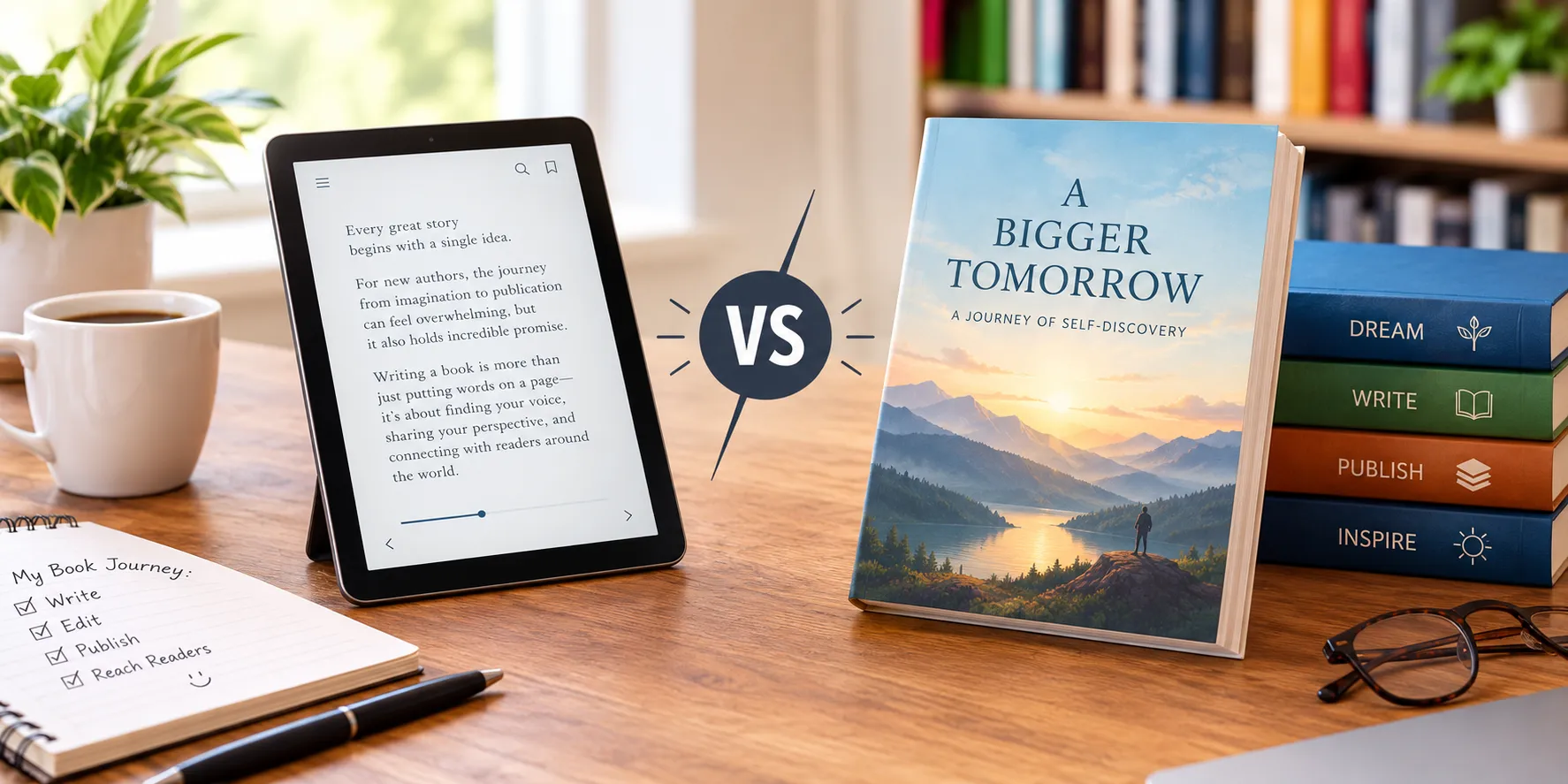
Choosing between an ebook and a print book is one of the first important decisions new authors face. Both formats offer valuable opportunities, but each serves readers differently and comes with distinct production costs, distribution options, and marketing considerations. Understanding the differences helps authors select a publishing format that aligns with their goals, audience, budget, and long-term vision.
For first-time writers, the right decision does not always involve choosing one format permanently. Instead, authors should consider which format makes the most sense for their initial launch and whether publishing both versions could strengthen their overall strategy. By evaluating reader preferences, production requirements, accessibility, and earning potential, new authors can make an informed choice and establish a stronger foundation for their publishing journey.
Understanding the Difference Between an Ebook and a Print Book
An ebook is a digital version of a book that readers access through compatible devices, including smartphones, tablets, computers, and dedicated e-readers. Depending on the format, readers can adjust text sizes, search for specific words, add bookmarks, and carry thousands of titles on one device. Ebooks offer convenience and flexibility, making them particularly attractive to readers who prefer digital reading experiences.
A print book, on the other hand, provides a physical reading experience through paperback or hardcover editions. Readers can hold the book, turn its pages, display it on a shelf, and share it with others. Physical books also support visual elements such as textured covers, carefully selected paper, and distinctive interior layouts that contribute to the overall reading experience.
Neither format automatically guarantees greater sales or better reader satisfaction. Instead, their effectiveness depends on the book's subject, intended audience, pricing, presentation, and promotional strategy. A professional book publishing company can help new authors evaluate both options and select a format that aligns with their publishing objectives rather than assuming one format works best for every title.
Why the First Publishing Format Matters for New Authors
Managing Your Initial Publishing Budget
Budget is often a major consideration for first-time authors. Ebooks generally require less upfront financial investment because writers do not need to print physical copies or maintain inventory. Although professional editing, cover design, ebook formatting, and marketing can still cost money, authors can avoid many expenses associated with physical production.
Print books introduce additional considerations, including page layout, paper selection, printing costs, shipping, and proof copies. Print-on-demand services can reduce financial risk by producing copies when customers place orders. Nevertheless, authors should account for printing charges and distribution fees when setting a profitable retail price.
Reaching the Right Target Audience
Your intended readers should influence your format decision from the beginning. Readers who frequently use digital devices may prefer ebooks because they can purchase and begin reading almost immediately. Meanwhile, readers who enjoy collecting books, giving them as gifts, or reading without electronic screens may prefer printed editions.
Consider your genre and the expectations associated with it. Romance, science fiction, and many nonfiction categories have established ebook audiences, while illustrated children's books, photography collections, cookbooks, and gift editions may benefit from physical presentation. These are general patterns rather than strict rules, so researching comparable titles and asking potential readers can provide more useful guidance.
Advantages of Publishing an Ebook First
Lower Financial Risk and Faster Launch Preparation
For many new authors, publishing an ebook first offers a practical way to enter the market without committing to a large production budget. Once the manuscript has undergone professional editing and the cover and digital formatting are complete, the author can prepare the book for distribution through an appropriate ebook retailer.
Digital publishing also eliminates the need to store physical inventory. Authors can make certain updates to digital files when necessary, subject to retailer policies and platform requirements. This flexibility helps new writers correct formatting problems or revise content without reprinting an entire batch of books.
However, lower production costs do not eliminate the need for quality. A poorly edited manuscript or an unprofessional cover can undermine reader confidence regardless of the format. Authors should invest appropriate attention in editing, proofreading, cover design, and ebook compatibility before releasing their work.
Convenient Global Digital Distribution
Ebooks can reach readers across multiple markets through online retailers and digital distribution services. Authors may publish through a single platform or explore additional retailers, depending on their distribution strategy and contractual commitments. This approach can make a book available internationally without shipping physical copies from the author's location.
Nevertheless, global availability does not automatically produce global sales. Authors still need to identify their target audience, write a compelling book description, choose appropriate categories, and promote their work through relevant channels. Pricing, competition, retailer visibility, and reader reviews also influence performance.
A Practical Way to Test Reader Interest
Publishing digitally can help authors learn how readers respond to a book before investing in a larger print strategy. Sales patterns, customer feedback, and promotional results may reveal which topics attract attention and which marketing messages encourage purchases.
However, early ebook sales should not be treated as a definitive prediction of print demand. Digital and physical readers may behave differently, and a small launch sample may not represent the wider market. Authors should use available results alongside reader surveys, comparable titles, and realistic financial projections when deciding their next steps.
Advantages of Publishing a Print Book First
Building a Professional Physical Presence
A print book can create a tangible connection between an author and readers. Physical copies work well at book fairs, school visits, conferences, speaking engagements, signing events, and local bookstore promotions. They also provide opportunities for photographs, personalized gifts, and promotional activities that showcase the finished publication.
For authors building a professional identity, a carefully designed paperback or hardcover can support credibility in relevant settings. Business writers, consultants, educators, and public speakers may find printed books particularly useful when sharing expertise with clients or audiences. Still, the format should serve a clear purpose rather than simply making the project appear more substantial.
Creating a Better Experience for Visual Content
Some books depend heavily on their physical presentation. Cookbooks, art books, photography collections, illustrated children's stories, and workbooks may require layouts that benefit from consistent page dimensions and carefully planned image placement. Although digital versions can accommodate visual content, their appearance may vary across devices and reading applications.
Print production also allows authors to consider paper quality, binding, color reproduction, and cover finishes. These elements can improve the reading experience when they support the book's purpose. However, detailed illustrations, full-color pages, and premium materials may increase production costs, making careful budgeting essential.
Supporting Local Sales and In-Person Events
Authors who already have access to a local audience may benefit from launching a print edition first. For example, a trainer could sell a practical guide at workshops, while a memoir writer could offer signed copies during community events. These activities create direct opportunities to introduce the book and develop personal relationships with readers.
Before ordering inventory, however, authors should estimate likely demand and compare printing options. Print-on-demand can reduce the risk of unsold stock, while bulk printing may lower the per-copy cost when demand is predictable. The best option depends on sales volume, storage capacity, delivery arrangements, and the author's available budget.
Ebook vs Print Book: Comparing the Main Factors
New authors can simplify their decision by comparing the practical strengths and limitations of each format.
|
Factor |
Ebook |
Print Book |
|
Initial production |
Usually lower |
Often higher |
|
Inventory requirements |
None for digital copies |
Depends on printing method |
|
Reader experience |
Portable and adjustable |
Tangible and collectible |
|
Distribution |
Digital retailers |
Online stores and physical channels |
|
Revision flexibility |
Digital files can be updated |
Existing copies cannot be changed |
|
Visual presentation |
Varies by device and format |
Consistent physical layout |
|
Event sales |
Limited physical presence |
Well suited to signings and fairs |
|
Shipping |
No physical shipping |
Physical delivery may be required |
These comparisons provide a useful starting point, but actual costs and opportunities vary by platform, country, genre, and distribution arrangement. Authors should review current retailer terms, production estimates, and expected earnings before committing to a publishing plan.
How to Choose the Best Format for Your First Book
Define Your Publishing Goals
Start by identifying what you want your first book to accomplish. If your primary objective is to reach digital readers while limiting upfront expenses, an ebook may be the most practical starting point. If you need a physical resource for workshops, speaking engagements, or gift purchases, a print edition may better support your immediate goals.
Your publishing goals should also reflect your long-term plans. An author hoping to develop a series might prioritize digital distribution and introduce print editions as demand grows. Meanwhile, a business owner publishing a specialized handbook may benefit from publishing consulting services to evaluate format options and choose an approach that supports the book’s credibility, usability, and long-term commercial goals.
Research Your Genre and Comparable Authors
Examine books that target a similar audience and cover related subjects. Look at the formats available, approximate retail prices, reader reviews, cover styles, and product descriptions. This research can help you identify established reader expectations and potential opportunities to differentiate your own book.
Pay attention to what readers actually say about their preferences. Reviews may reveal whether customers value portability, illustrations, durable bindings, or convenient digital access. You can also ask potential readers through newsletters, online communities, or surveys. Use these findings as evidence, but avoid assuming that another author's results will automatically apply to your book.
Calculate Your Costs and Potential Earnings
Before publishing, prepare a basic budget covering editing, proofreading, cover design, formatting, distribution, and marketing. For print editions, include printing, shipping, storage, and any applicable fulfillment costs. Then compare the estimated expenses with realistic sales scenarios rather than relying on optimistic projections.
Retail prices alone do not determine profit. Digital retailers may apply revenue-sharing arrangements, while print distribution can involve printing charges, retailer discounts, and other deductions. Review each platform's current payment terms and calculate how much you could earn per sale before choosing your price.
Prepare Your Manuscript for the Selected Format
Although ebooks and print books share the same core manuscript, they require different production checks. Ebook formatting should accommodate compatible devices, readable typography, functional navigation, and appropriate image handling. Print formatting requires attention to trim size, margins, page numbering, spine width, bleed, and image resolution.
Professional editing and design can improve both versions, but each format needs its own quality review. Read the ebook on multiple devices when possible, and order a physical proof before approving a print edition. These checks help identify errors that might otherwise affect reader satisfaction and generate avoidable correction costs.
Should New Authors Publish Both Formats Together?
Publishing an ebook and a print book at the same time can offer readers more choice. Digital customers can purchase a convenient electronic edition, while readers who prefer physical copies can order a paperback or hardcover. Offering both formats may also help authors accommodate different budgets and reading preferences without limiting the book to a single purchasing experience.
However, simultaneous publication increases the number of production tasks that must be coordinated. Authors need to finalize digital and print files, review pricing, prepare product descriptions, and ensure that their covers and metadata remain consistent. If resources are limited, releasing one format first and adding the second later can provide a more manageable approach.
A staged launch works best when the author has a clear reason for delaying the second edition. For example, an ebook launch may help test demand before a print release, while an initial print run may support an upcoming event. Choose a schedule that fits your resources and marketing plan instead of following a universal rule.
Conclusion
For many first-time authors, an ebook offers an accessible starting point because it avoids physical inventory and can simplify the initial release. Nevertheless, print books remain valuable for visual content, in-person events, gift purchases, and readers who prefer physical copies. Neither format is universally superior; the right choice depends on your audience, budget, genre, and publishing objectives.
Before making your decision, research comparable titles, calculate realistic costs, and prepare your manuscript to professional standards. If your budget and schedule allow, consider offering both formats to serve different reader preferences. By choosing a publishing strategy that supports your book's purpose, you can make a confident first launch and build a stronger foundation for future publications.
Related Reading
Expert Insights: Navigating the Complex World of Education & Learning
Welcome to our in-depth exploration of Education & Learning. In an era defin...
Why Education & Learning is Transforming the Global Industry Landscape
Welcome to our in-depth exploration of Education & Learning. In an era defin...