Dubai Healthcare City License Checklist: What Every Healthcare Investor Should Prepare Before Applying
By Citadel HMC
57 Views
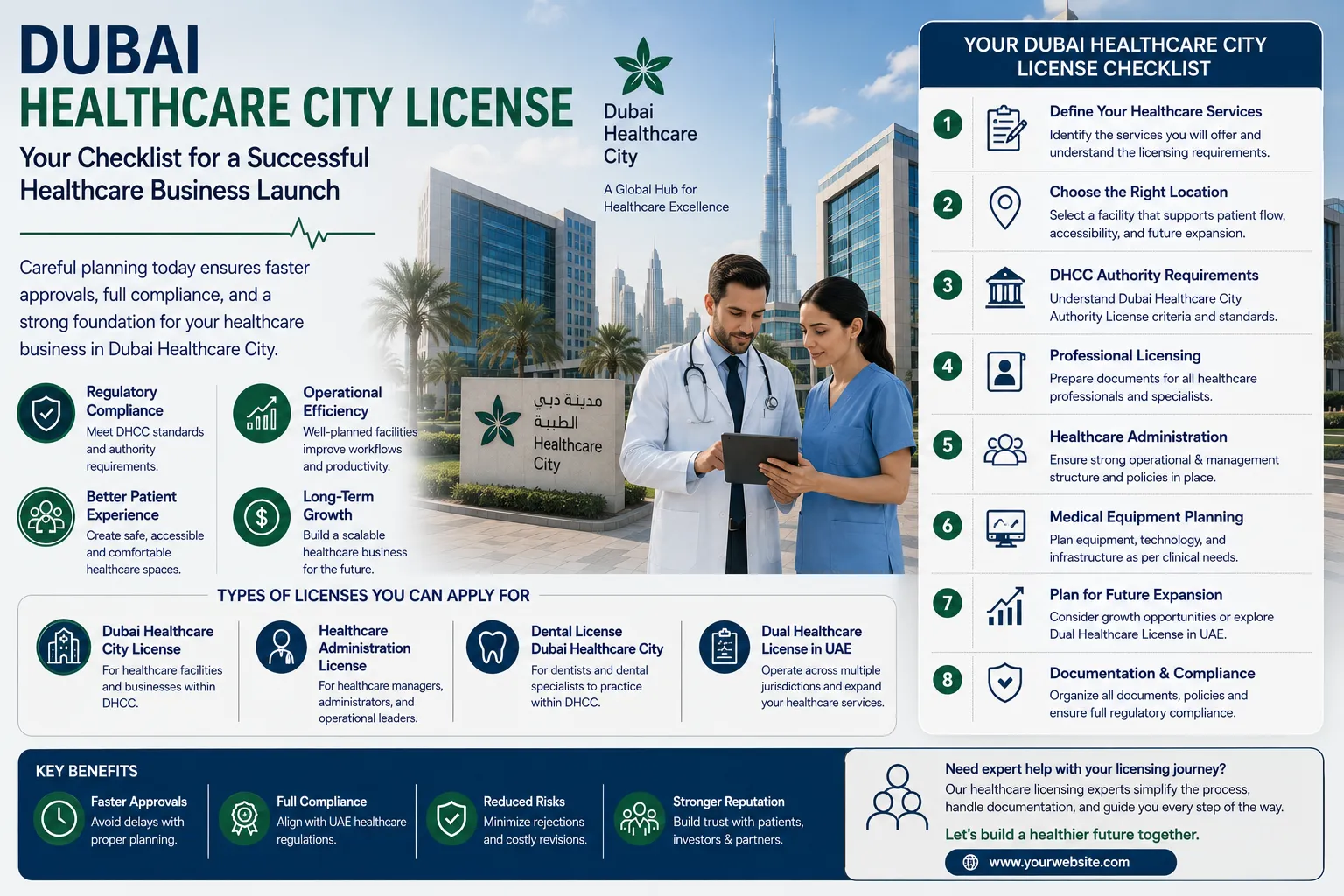
Establishing a healthcare facility in Dubai requires more than finding the right location or hiring qualified medical professionals. Every successful healthcare project begins with proper planning, regulatory awareness, and a structured licensing strategy. Whether you are launching a medical center, dental clinic, specialty hospital, rehabilitation facility, or healthcare consultancy, understanding the licensing process can save valuable time, reduce costs, and prevent unnecessary setbacks.
Obtaining a Dubai Healthcare City License is a critical milestone that allows healthcare providers to operate legally while demonstrating compliance with recognized healthcare standards. However, many investors underestimate the preparation required before submitting their application. Missing documents, unsuitable facility layouts, incomplete operational plans, and poor project coordination are among the most common reasons for approval delays.
This guide provides a practical checklist that helps healthcare professionals and investors prepare confidently while improving the likelihood of a smooth licensing journey.
Why Healthcare Licensing Requires Careful Planning
Healthcare organizations operate in an industry where patient safety, clinical quality, and regulatory compliance are essential. Licensing authorities evaluate every aspect of a healthcare business before granting approval because every decision can directly affect patient care.
Proper planning helps healthcare providers:
- Reduce approval delays
- Improve operational readiness
- Protect long-term investments
- Support patient safety
- Ensure legal compliance
- Enhance business credibility
- Build confidence among investors and healthcare partners
Instead of treating licensing as paperwork, successful organizations consider it part of their overall healthcare business strategy.
Step 1: Define Your Healthcare Services Clearly
One of the first decisions is determining which healthcare services the facility will provide.
Healthcare authorities assess the proposed services to determine licensing requirements, facility specifications, staffing needs, and equipment standards.
Examples include:
- General medical practice
- Dental services
- Physiotherapy
- Cosmetic treatments
- Diagnostic imaging
- Laboratory services
- Rehabilitation programs
- Day surgery
- Preventive healthcare
Clearly identifying healthcare activities prevents confusion later in the approval process.
Step 2: Choose the Right Facility Location
The physical environment plays an important role in healthcare licensing.
Before selecting a property, evaluate whether the facility can accommodate:
Functional Clinical Layouts
Healthcare facilities should support efficient movement of patients, visitors, healthcare professionals, and medical equipment.
Accessibility
The building should provide convenient access for elderly individuals, patients with disabilities, and emergency services.
Future Expansion
Healthcare demand evolves over time. Choosing a location with expansion potential helps avoid costly relocations in the future.
Well-planned facilities improve operational efficiency while supporting better patient experiences.
Step 3: Understand Dubai Healthcare City Authority Requirements
The Dubai Healthcare City Authority License process involves reviewing multiple components of a healthcare project.
Authorities typically evaluate:
- Business activities
- Clinical services
- Healthcare professionals
- Facility infrastructure
- Engineering systems
- Infection prevention measures
- Quality management procedures
- Patient safety policies
- Healthcare governance
Preparing these elements before submission reduces the likelihood of additional review requests.
Step 4: Prepare Professional Licensing Documentation
Every healthcare professional working within the organization must satisfy applicable licensing requirements.
For example, individuals applying for a Dental License Dubai Healthcare City should ensure that their qualifications, professional experience, certifications, and supporting documents are accurate and complete.
Organized documentation accelerates verification while minimizing administrative delays.
Step 5: Build a Strong Healthcare Administration Structure
Many investors focus heavily on medical services but overlook operational leadership.
An effective Healthcare Administration License framework supports organized healthcare delivery through:
- Clinical coordination
- Financial management
- Workforce planning
- Compliance monitoring
- Patient experience improvement
- Resource management
- Risk reduction
- Continuous quality improvement
Strong healthcare administration allows clinical teams to focus on patient care while maintaining operational excellence.
Step 6: Plan Medical Equipment Early
Healthcare equipment planning should never be treated as a final-stage activity.
Medical devices influence:
- Room dimensions
- Electrical systems
- HVAC requirements
- Medical gas systems
- Network infrastructure
- Clinical workflows
Early equipment planning reduces redesign costs while supporting smoother licensing inspections.
Step 7: Evaluate Future Business Expansion
Healthcare organizations rarely remain the same size throughout their lifecycle.
Many investors eventually expand services, establish additional branches, or introduce new specialties.
Some organizations also explore opportunities related to a Dual Healthcare License in UAE where permitted by applicable regulations and business objectives.
Forward-thinking planning creates greater flexibility for future development without disrupting ongoing operations.
Common Mistakes That Slow Licensing Approval
Many healthcare projects encounter preventable delays because important planning stages are overlooked.
Some of the most frequent issues include:
Incomplete Documentation
Missing certificates, incorrect forms, outdated records, or inconsistent information often require additional review.
Poor Facility Planning
Healthcare layouts designed without clinical workflow considerations may require significant modifications.
Late Consultant Involvement
Waiting until construction has already begun before engaging healthcare specialists often increases both project costs and approval timelines.
Weak Operational Policies
Healthcare facilities require documented procedures covering infection control, emergency response, quality assurance, patient safety, and operational management.
Preparing these policies early demonstrates organizational readiness.
Emerging Trends Influencing Healthcare Licensing
Healthcare regulations continue evolving alongside advances in technology and patient expectations.
Modern healthcare facilities increasingly prioritize:
Digital Healthcare Solutions
Electronic medical records, patient portals, telehealth platforms, and AI-supported clinical systems are becoming standard components of healthcare delivery.
Sustainable Healthcare Facilities
Energy-efficient lighting, environmentally responsible materials, and resource-efficient building systems contribute to long-term operational performance.
Patient-Centered Facility Design
Comfortable waiting areas, intuitive navigation, private consultation rooms, and accessible healthcare environments improve patient satisfaction.
Smart Healthcare Infrastructure
Integrated building management systems, digital maintenance monitoring, and connected medical technologies improve operational efficiency.
Healthcare organizations that prepare for these trends often remain more competitive after licensing approval.
Why Professional Healthcare Licensing Support Matters
Healthcare licensing involves multiple disciplines including architecture, engineering, healthcare operations, regulatory compliance, documentation management, biomedical planning, and project coordination.
Working with experienced consultants can provide valuable support through:
- Licensing strategy development
- Regulatory compliance reviews
- Facility planning guidance
- Documentation preparation
- Authority coordination
- Operational readiness planning
- Project timeline management
Professional guidance reduces uncertainty while allowing healthcare providers to focus on delivering quality medical services.
Conclusion
A successful Dubai Healthcare City License application begins with careful preparation rather than simply completing forms. Every stage—from selecting healthcare services and planning facilities to organizing documentation and establishing operational policies—contributes to a smoother approval process.
Whether you are pursuing a Healthcare Administration License, applying for a Dental License Dubai Healthcare City, or evaluating opportunities related to a Dual Healthcare License in UAE, strategic planning significantly improves project outcomes.
Healthcare organizations that prioritize compliance, patient-centered design, operational efficiency, and regulatory readiness are better positioned for long-term growth in Dubai's evolving healthcare sector. Investing in expert guidance today creates a stronger foundation for tomorrow's healthcare success.