DIY Window Cleaning vs Professional: When Is It Worth Calling a Pro
13 Views
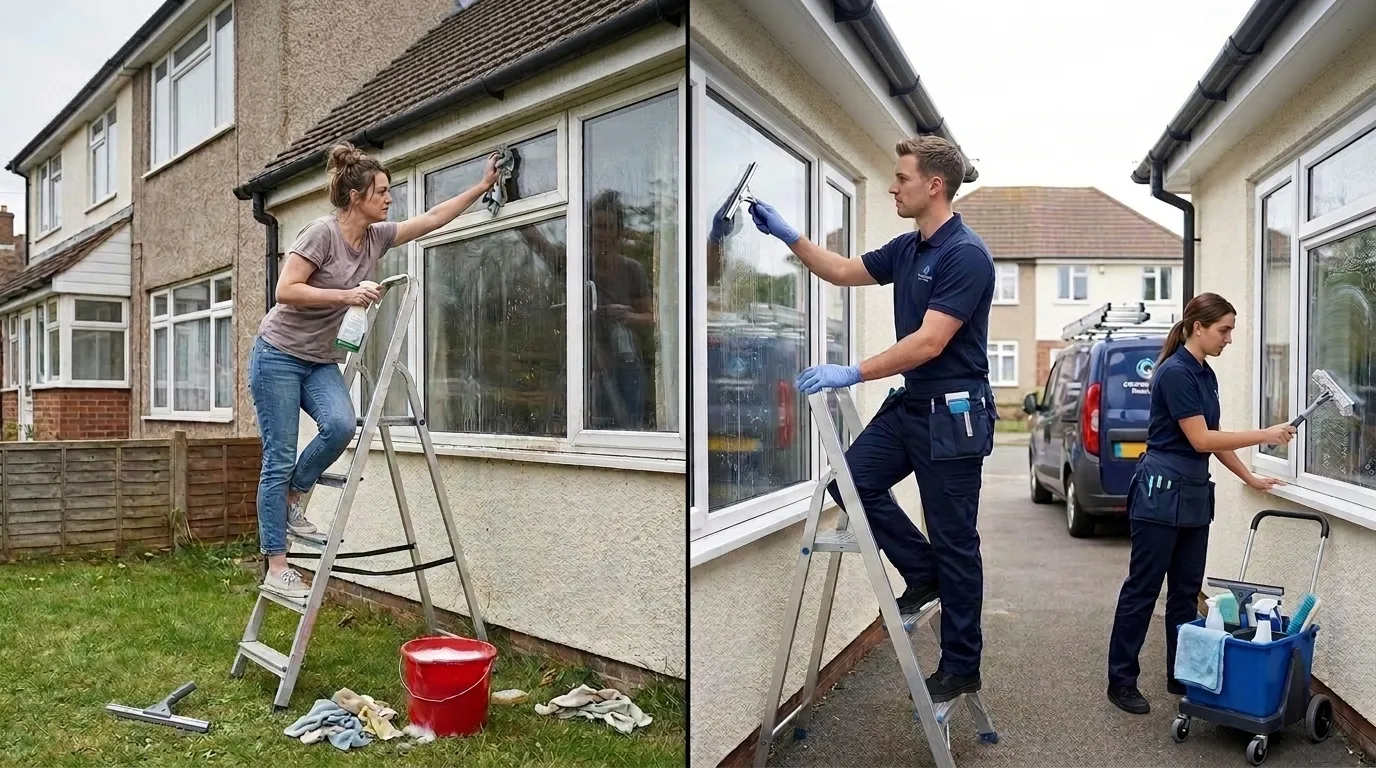
Summary:
DIY window cleaning works fine for ground-floor, lightly soiled glass using a vinegar-water solution and squeegee. Professional service becomes worth it for upper-story windows, hard water buildup, or storefront glass, since falls account for a large share of home injuries and pros use purified water systems that leave a streak-free finish DIY tools rarely match.
Every homeowner eventually hits the same fork in the road. Windows look grimy, a bucket and squeegee are sitting in the garage, and the question becomes whether to spend a Saturday on a ladder or just pick up the phone. The right answer depends less on effort and more on height, glass condition, and what's actually at stake if something goes wrong.
This piece breaks down where DIY genuinely holds up, where it falls short, and what the numbers say about cost and safety on both sides.
DIY vs Professional Window Cleaning Explained
The tools look similar on the surface: a squeegee, a cleaning solution, and a cloth. The difference shows up in the water. Professionals typically rely on purified or deionized water systems that leave no mineral residue, which is why professionally cleaned glass tends to stay streak-free far longer than a DIY job using tap water.
Technique matters just as much as equipment. A trained crew works in overlapping passes with a specific squeegee angle designed to prevent drip lines and missed edges, something that takes most homeowners several attempts to get consistent. None of that means DIY cleaning is pointless, just that it has a narrower range where it performs as well as a professional job.
Is Professional Window Cleaning Worth It?
For most single-story homes with light seasonal grime, a DIY approach is perfectly reasonable. The calculation changes once windows are hard to reach, heavily soiled, or showing early hard water spotting that ordinary glass cleaner won't touch.
Professional service tends to pay off in a few specific situations:
● Multi-story homes where interior and exterior access both require extra equipment
● Windows with visible mineral buildup or etching that DIY methods have already failed to remove
● Storefronts and commercial glass that need a consistently spotless finish for customers
● Homeowners preparing to sell, where clean glass measurably affects curb appeal
● Anyone who would otherwise need to rent or buy ladder equipment for a single annual job
Safety Risks of Cleaning High Windows Yourself
This is where the DIY math gets more serious than most homeowners expect. Ladder-related injuries are far more common at home than most people assume, and the numbers back that up clearly.
Falls Happen More Often at Home Than on the Job
According to the American Academy of Orthopaedic Surgeons, published in International Safety & Hygiene News, roughly 500,000 people are treated annually for ladder-related injuries, with about 300 of those incidents proving fatal. The same research found that 97 percent of ladder injuries occur in non-occupational settings such as homes and farms, not construction sites.
Height Isn't the Only Factor
The CDC found that 43 percent of fatal falls over the previous decade involved a ladder. In its 2011 analysis of work-related ladder injuries, nearly 90 percent of nonfatal ladder falls occurred from heights below 16 feet, while falls from 6 to 10 feet accounted for 50 percent of emergency department-treated cases with an estimated fall height.
That makes height an important consideration when deciding how to approach elevated window cleaning. A second-story window may not seem especially high from the ground, but using a ladder still introduces a fall hazard.
Wet Glass and Awkward Reaches Compound the Risk
Cleaning solution, hose runoff, and morning dew all make ladder rungs and window sills slicker than they look. Combine that with the natural urge to overreach for one more corner instead of repositioning the ladder, and the everyday window cleaning task starts to resemble the exact scenario safety researchers warn about most.
DIY Window Cleaning vs Professional
The right choice depends on the window's accessibility, condition, and your comfort with the required equipment. DIY works well for simple jobs, while professional cleaning offers added convenience and expertise for more challenging windows
|
Factor |
DIY |
Professional |
|
Cost |
Lower |
Higher |
|
Best for |
Ground-floor windows |
Hard-to-reach windows |
|
Equipment |
Basic cleaning tools |
Specialized equipment |
|
Safety |
Ladder risks may apply |
Trained professionals handle access |
|
Results |
Depends on technique |
More consistent finish |
|
Convenience |
Requires your time |
Saves time and effort |
When the job moves beyond easy-to-reach glass, especially for your commercial property, the extra time, equipment, and safety considerations can make professional help the simpler option. World Wide Window Co offers a dependable window cleaning service of storefront to keep commercial glass clear, polished, and ready for customers.
Best DIY Window Cleaning Solution for Everyday Upkeep
For homeowners sticking with DIY between professional visits, a simple solution handles most everyday grime without streaking:
● Mix equal parts white vinegar and distilled or filtered water in a spray bottle
● Apply generously and let it sit for a minute on lightly soiled glass
● Wipe with a microfiber cloth or squeegee in one direction to avoid streak lines
● Finish edges and corners with a dry cloth to catch any leftover moisture
This approach works well for ground-floor windows and light dust, but it won't touch etched glass or heavy mineral buildup, which usually call for a professional-grade solution.
Frequently Asked Question
1. Is Professional Window Cleaning Worth It?
Yes, professional window cleaning is worth considering for high, hard-to-reach, heavily soiled, or commercial windows. It saves time and reduces the need for ladder work.
2. How Much Does Professional Window Cleaning Cost?
Professional window cleaning costs vary based on window count, size, accessibility, and cleaning requirements. Larger and harder-to-reach windows generally cost more.
3. What are the Safety Risks of Cleaning High Windows Yourself?
The main safety risk is falling from a ladder. Wet surfaces, awkward reaching, and unstable ladder positioning can increase injury risk.
4. What is the Best DIY Window Cleaning Solution?
A simple DIY window cleaning solution uses equal parts white vinegar and distilled or filtered water. Apply it to lightly soiled glass, then use a squeegee or microfiber cloth.
5. When Should You Hire a Professional Window Cleaner?
Hire a professional when windows are high, difficult to access, heavily stained, or part of a commercial storefront. DIY cleaning works best for accessible ground-floor windows.
The Bottom Line
DIY window cleaning earns its place for quick, ground-level touch-ups between deeper cleanings. Once height, hard water buildup, or a business's storefront glass enters the picture, the math shifts toward professional service, both for the finish quality and for avoiding a completely preventable trip to the emergency room.
When your windows need more than a quick touch-up, professional window cleaning from World Wide Window Co can remove stubborn pollen, dirt, and water spots, helping keep your glass clear through the changing Pacific Northwest seasons. Request a free quote and let our experienced team handle the hard-to-reach areas.
Related Reading
Expert Insights: Navigating the Complex World of Home Improvement
Welcome to our in-depth exploration of Home Improvement. In an era defined by ra...
Why Home Improvement is Transforming the Global Industry Landscape
Welcome to our in-depth exploration of Home Improvement. In an era defined by ra...