Digital Battery Passport Solutions for Smarter Battery Tracking
By stevemartin
82 Views
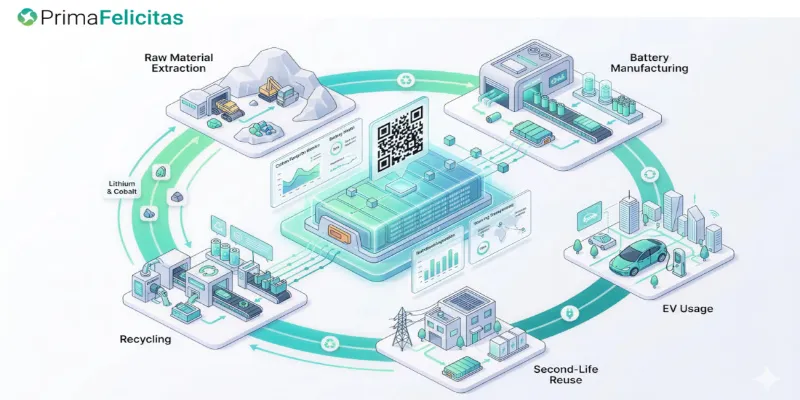
The battery industry is rapidly evolving as electric vehicles, renewable energy storage, consumer electronics, and industrial applications continue to expand. Alongside this growth, businesses face increasing expectations for transparency, sustainability, regulatory compliance, and responsible resource management. Digital battery passport solutions are emerging as an important technology for managing battery information throughout its complete lifecycle.
A Digital Battery Passport creates a digital identity for a battery and connects important information across manufacturing, distribution, usage, maintenance, and end-of-life stages. By combining this information with advanced Battery Traceability Solutions, manufacturers and other stakeholders can gain better visibility into battery materials, production processes, performance, and recycling.
A well-designed Battery Traceability System can therefore become a valuable foundation for businesses looking to improve supply chain transparency and prepare for the increasingly digital battery ecosystem.
What Is a Digital Battery Passport?
A Digital Battery Passport is a structured digital record containing important information about an individual battery or battery product. Instead of storing information across disconnected documents and systems, relevant data can be organized within a centralized digital environment.
Depending on the battery and business requirements, a passport may include information such as:
- Battery identification
- Manufacturer information
- Material composition
- Raw material origin
- Manufacturing information
- Carbon footprint
- Technical specifications
- Performance data
- Repair and maintenance history
- Recycling information
- End-of-life data
This information can provide stakeholders with a clearer understanding of where a battery comes from, how it has been manufactured, how it performs, and what happens when it reaches the end of its useful life.
Why Digital Battery Passport Solutions Matter
Modern battery supply chains involve numerous participants, including raw material suppliers, component manufacturers, battery producers, automotive companies, logistics providers, service organizations, and recyclers.
Managing information across such a complex ecosystem can be challenging. Data may exist in different formats, systems, and locations, making it difficult to establish a consistent source of information.
Digital battery passport solutions help address this challenge by creating structured digital records that can connect relevant information across the battery lifecycle.
Businesses can use these solutions to improve:
- Data accessibility
- Supply chain visibility
- Regulatory preparedness
- Product transparency
- Sustainability reporting
- Lifecycle management
- Stakeholder collaboration
This makes digital battery passports valuable not only for compliance but also for long-term operational efficiency.
The Role of Battery Traceability Solutions
Traceability is essential for understanding the journey of battery materials and products. Battery Traceability Solutions can help organizations monitor information from raw material sourcing through manufacturing, distribution, usage, and recycling.
A reliable traceability approach can help businesses identify:
- Where materials originated.
- Which manufacturing processes were used.
- Where batteries were distributed.
- How batteries performed during their lifecycle.
- What happened during repair or maintenance.
- How batteries were handled at the end of their useful life.
This visibility can help organizations identify potential supply chain risks and improve accountability.
Building a Battery Traceability System
A Battery Traceability System provides the technological infrastructure required to collect, manage, and connect battery lifecycle data.
An effective system may integrate data from multiple sources, including manufacturing platforms, enterprise software, IoT devices, logistics systems, and recycling facilities.
Important components can include:
Unique Digital Identification
Each battery can be associated with a unique digital identity, allowing relevant information to be connected to the correct product.
Secure Data Management
Battery information needs to be protected from unauthorized access while remaining available to approved stakeholders.
Data Integration
A traceability platform should be capable of connecting information from different business systems and supply chain participants.
Lifecycle Monitoring
Businesses can track important events throughout a battery's lifecycle, from production to end-of-life processing.
Reporting and Analytics
Organizations can use collected information to generate reports, identify trends, and support business and compliance decisions.
Benefits for Battery Manufacturers
Battery manufacturers can benefit significantly from implementing Digital battery passport solutions.
Better digital records can help manufacturers understand production information, material sourcing, quality data, and product performance.
A connected system can also reduce dependence on manual documentation. Automated data collection and integration can improve consistency while reducing the risk of information being lost or duplicated.
Manufacturers can also use lifecycle information to identify areas for improving production efficiency and sustainability.
Benefits for Electric Vehicle Companies
Electric vehicle manufacturers depend on reliable battery information to understand battery performance, condition, and lifecycle history.
A Digital Battery Passport can provide access to important information associated with an EV battery, supporting better lifecycle management.
For example, information about battery health and usage history may support maintenance, refurbishment, second-life applications, and recycling decisions.
This can contribute to a more circular approach to battery management.
Supporting Sustainability and Circular Economy Goals
Battery sustainability extends beyond manufacturing. Responsible management of materials, product use, reuse, and recycling is becoming increasingly important.
Battery Traceability Solutions can support circular economy strategies by connecting information across the entire battery lifecycle.
For example, lifecycle information can help determine whether a battery is suitable for:
- Continued use
- Repair
- Refurbishment
- Second-life applications
- Material recovery
- Recycling
Greater visibility can help organizations make better decisions about resources while reducing unnecessary waste.
Improving Supply Chain Transparency
Battery supply chains can span multiple countries and organizations. This makes transparency particularly important.
A connected Battery Traceability System can help businesses understand the movement of materials and products throughout their supply networks.
Improved visibility can support:
- Supplier management
- Material verification
- Quality control
- Risk management
- Inventory planning
- Sustainability initiatives
When stakeholders have access to reliable information, collaboration becomes more efficient and supply chain decisions can be made with greater confidence.
Preparing for Regulatory Requirements
Battery-related regulations are increasingly focused on transparency, sustainability, and lifecycle information. Businesses therefore need digital infrastructure that can adapt to changing requirements.
Implementing Digital battery passport solutions can help organizations establish structured data management processes before regulatory demands become more complex.
Instead of relying on disconnected records, businesses can build a centralized framework that makes relevant information easier to collect, manage, verify, and report.
Early preparation can reduce future implementation challenges and help organizations respond more efficiently to new requirements.
Choosing the Right Digital Battery Passport Solution
Every organization has different battery products, supply chains, technologies, and compliance requirements. Therefore, selecting a suitable solution requires careful evaluation.
Businesses should consider:
- Scalability
- Data security
- System interoperability
- API capabilities
- Automation
- User access controls
- Lifecycle data management
- Reporting capabilities
- Integration with existing enterprise systems
A flexible platform should be able to grow alongside the organization and support additional battery types, suppliers, products, and stakeholders.
The Future of Battery Lifecycle Management
The battery industry is moving toward greater digitalization. As electric mobility, energy storage, and sustainable manufacturing continue to expand, reliable lifecycle data will become increasingly valuable.
Digital battery passport solutions can help organizations move from fragmented information toward connected digital ecosystems. Combined with Battery Traceability Solutions and a scalable Battery Traceability System, these technologies can provide the transparency needed for smarter battery lifecycle management.
The future of battery management will depend not only on producing better batteries but also on understanding their complete lifecycle.
Conclusion
Digital battery passport solutions provide businesses with a structured way to manage battery information from manufacturing through end-of-life. A Digital Battery Passport can improve transparency, while Battery Traceability Solutions help organizations connect information across complex supply chains.
By implementing an effective Battery Traceability System, manufacturers, EV companies, suppliers, and recyclers can improve lifecycle visibility, support sustainability initiatives, strengthen operational efficiency, and prepare for evolving regulatory expectations.
As the global battery ecosystem becomes increasingly digital and interconnected, organizations that invest in reliable battery data infrastructure will be better positioned to manage complexity and build more transparent, sustainable, and future-ready operations.