Dealer Group Procurement: Uniform and Facility Services for Multi-Rooftop Dealerships
By UniFirst
10 Views
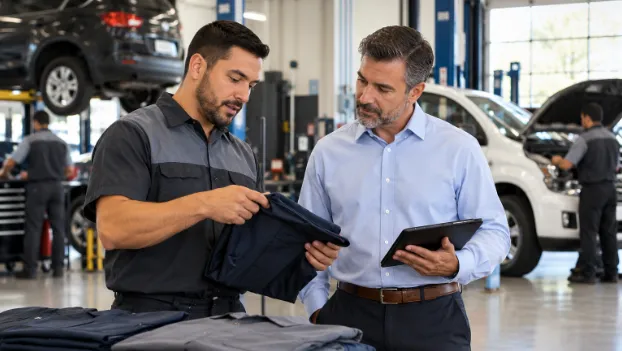
Running one dealership is a lot of work. Managing several locations across Houston adds another layer of complexity. Each rooftop may have its own service manager, technicians, parts department, and purchasing process. One location orders work shirts from one supplier, while another buys shop towels separately. Over time, keeping track of these arrangements can become a job of its own.
Dealer group procurement helps automotive groups bring these purchasing decisions under better control. By reviewing supplier agreements, checking inventory, and setting clear purchasing standards, teams can manage uniform and facility services more consistently without losing sight of each dealership's needs.
Why Does Dealer Group Procurement Matter for Automotive Businesses?
Think about a dealership group with four locations around Houston. The service manager at one location orders uniforms when supplies run low. Another manager handles the same task through a different supplier. Meanwhile, the purchasing team has to review separate invoices and answer questions about different service agreements.
None of these decisions may seem like a big problem on its own. Together, they can make spending harder to track and supplier management more time-consuming.
A clear procurement process gives the group a better picture of what each location buys, how much it spends, and which services it receives. It also helps the team spot differences that deserve a closer look.
Uniforms and facility supplies may not be the first things dealership leaders think about when reviewing operating costs. Still, technicians need clean workwear, service bays need shop towels, and customer-facing areas need clean entrance mats and well-maintained facilities.
The aim isn't to make every dealership operate exactly the same way. It's to set sensible standards, reduce unnecessary differences, and make purchasing easier to manage.
Where Does Uniform Tail Spend Build Up Across Multiple Dealerships?
Uniform tail spend refers to smaller, recurring purchases and service expenses that don't always receive the same attention as major purchasing categories. Across several dealerships, these costs can be easy to overlook because they are spread across different invoices, suppliers, and departments.
UniFirst's procurement strategy and tail spend article discusses common areas to review, including inventory management, product selection, and additional service charges.
Here are a few ways these issues can show up in an automotive business.
Uniforms Ordered Without Reviewing Actual Needs
Employee changes can quickly make uniform records outdated. A technician may leave, move to another location, or take on a different role, but the uniform order may not be updated.
For example, a dealership might continue paying for garments assigned to a former employee simply because nobody has reviewed the account. Checking active employee lists and garment quantities regularly can help prevent this kind of mismatch.
Different Products for Similar Roles
One dealership may provide technicians with a particular work shirt, while another chooses a different style for employees doing similar jobs. Sometimes, those differences make sense. Other times, they come from separate purchasing decisions made over the years.
Reviewing garment choices across locations helps the group decide which products can be standardized. Teams can still account for differences in job duties, comfort, and working conditions.
Small Facility Purchases Spread Across Vendors
Shop towels, floor mats, mops, and restroom supplies all support daily operations. But when each dealership manages these items separately, purchasing teams may have several suppliers to contact, invoices to review, and service arrangements to remember.
Looking at these needs together can help the group understand its overall spending and decide whether some purchasing or service processes can be simplified.
Fees That Are Difficult to Compare
The lowest advertised rental rate doesn't always mean the lowest total cost. A uniform agreement may include separate charges for maintenance, replacements, or other services.
Before comparing suppliers, review the full agreement and ask questions about any charges that aren't clear. This gives the procurement team a more accurate picture of what each program includes.
How Can Multi-Rooftop Vendor Management Improve Consistency?
Multi-rooftop vendor management helps dealership groups keep track of suppliers, agreements, service expectations, and spending across locations.
Instead of leaving every service manager to handle each supplier independently, the group can establish common purchasing guidelines. Local managers can still raise concerns and explain what their teams need, but they have a clear process to follow.
Here are some practical steps to get started:
-
List current suppliers: Record which providers each dealership uses for uniforms, laundering, shop towels, floor mats, and other facility services.
-
Review existing agreements: Compare pricing, service schedules, maintenance terms, replacement policies, and renewal dates.
-
Set clear purchasing standards: Decide which products and services can reasonably be standardized across locations.
-
Assign responsibilities: Identify who approves purchases, updates employee records, reviews invoices, and contacts suppliers about service issues.
-
Track recurring problems: Keep records of missing garments, incorrect quantities, billing questions, and other service concerns.
-
Review performance regularly: Compare costs and service quality instead of waiting until a contract is about to expire.
For example, imagine four Houston-area dealerships use different methods to report uniform shortages. One manager sends an email, another calls the supplier, and the others wait until the next service visit. A shared reporting process would make it easier to track requests and identify problems that keep coming back.
Good vendor management isn't just about reducing the number of suppliers. It's about making sure the selected providers meet the group's needs and that every location knows how to get help when something goes wrong.
What Should Dealership Groups Standardize Across Uniform and Facility Services?
Not every employee needs the same uniform, and not every dealership uses the same amount of supplies. The best starting point is to understand what each department actually needs.
For automotive groups in Houston, the review should cover employee workwear as well as the supplies used to keep service areas clean and organized.
Uniforms for Technicians and Customer-Facing Staff
Start by listing the roles at each dealership and the garments employees need for their daily work. Technicians may need durable work shirts, work pants, or coveralls. Service advisors and sales staff may need clothing that creates a more polished appearance for customer interactions.
Compare fit, comfort, durability, garment care, and maintenance requirements before deciding which options to standardize. The goal is to choose workwear that suits the job, not simply to select the same garment for everyone.
Dealerships looking for mechanic uniforms Houston can also review the service arrangements that help keep garments clean, maintained, and ready to wear.
Shop Towels, Floor Mats, and Facility Supplies
Uniforms are only one part of the purchasing picture. Automotive businesses also rely on shop towels, floor mats, mops, and restroom supplies throughout the workday.
Review how much each location uses, how often items need servicing, and whether current quantities match demand. A busy service center may need more shop towels than a smaller dealership, so identical quantities won't always make sense.
A shared purchasing process can still make it easier to compare requirements and manage supplier relationships.
Service Frequency and Garment Maintenance
The details of a service agreement matter just as much as the products themselves. Ask about pickup schedules, laundering, repairs, replacements, and account support. Consider whether the service arrangement fits each dealership's hours and staffing needs.
UniFirst offers automotive uniform and facility service programs that can include workwear, laundering, repairs, replacements, shop towels, and floor mats. Reviewing these options against each location's requirements can help a dealership group determine which services are a good fit.
How Can Procurement Teams Compare Costs Across Dealership Locations?
Looking at one invoice won't tell you the whole story. A useful cost review considers recurring charges, additional fees, unused inventory, and the time employees spend managing the program.
Start by collecting the same information from every dealership. Use a consistent reporting period and common cost categories so the comparisons are fair.
|
Area to review |
What to check |
Why it matters |
|
Uniform program |
Active wearers, garment quantities, rental charges |
Helps identify unused or mismatched inventory |
|
Garment maintenance |
Repair, replacement, and related fees |
Shows the full cost of maintaining workwear |
|
Facility supplies |
Shop towels, mats, and restroom products |
Highlights differences in purchasing and service arrangements |
|
Supplier agreements |
Renewal dates, terms, and service frequency |
Helps teams plan reviews and negotiations |
|
Invoice management |
Billing errors, duplicate charges, and exceptions |
Makes spending easier to track |
|
Service performance |
Missing items, recurring issues, and response times |
Connects costs with day-to-day service quality |
Build a Simple Procurement Scorecard
Once the information is ready, create a scorecard for each dealership. Include monthly or annual costs, the number of employees covered, the services received, and any recurring problems.
Be careful when comparing locations of different sizes. A dealership with a large service department will naturally have different requirements from a smaller rooftop.
Instead, compare locations with similar operating needs and investigate differences that can't be explained by staffing, workload, or service requirements.
It's also worth looking beyond price. A supplier with a lower rate may still create extra work if garments regularly go missing or managers have to follow up repeatedly about service problems.
The goal is to understand the full picture and choose arrangements that support both cost control and reliable service.
How Can Dealer Groups Introduce a Better Procurement Process Without Disrupting Operations?
Changing suppliers or combining purchasing arrangements can raise practical concerns. Dealership managers may worry about getting the right garment sizes, keeping enough uniforms available, or avoiding interruptions during the transition.
A phased approach makes these changes easier to manage.
1. Establish a baseline. Collect current agreements, invoices, garment inventories, supplier contacts, and service schedules before making changes.
2. Identify the main problems. Look for recurring billing questions, unused garments, inconsistent service, and products that don't match employees' needs.
3. Agree on shared requirements. Decide which standards should apply across the group and where individual locations need different products or service arrangements.
4. Evaluate suitable providers. Compare the full service offering, pricing transparency, maintenance arrangements, local support, and ability to serve the required locations.
5. Plan the transition. Confirm employee measurements, garment quantities, pickup schedules, account responsibilities, and the process for handling service issues.
6. Review the results. Compare performance with the original baseline. Check whether costs are easier to understand, employees receive what they need, and managers spend less time coordinating routine services.
Use this checklist to keep the process organized:
-
Current suppliers and contracts documented
-
Employee and garment inventories reviewed
-
Uniform and facility requirements defined
-
Pricing and service terms compared
-
Responsibilities assigned to central and local teams
-
Transition dates and service expectations confirmed
-
Review schedule established
A clear process helps managers understand their responsibilities and gives procurement teams better oversight. It also makes it easier to catch problems early, before the same issue affects several locations.
Frequently Asked Questions About Dealer Group Procurement
What is dealer group procurement?
Dealer group procurement is the process of coordinating purchasing and supplier management across multiple dealership locations. It helps teams review contracts, compare costs, standardize suitable products, and monitor service quality. For uniforms and facility services, it can also improve visibility into garment inventories, maintenance arrangements, and recurring supply needs.
How can uniform tail spend affect a dealership group?
Uniform tail spend includes recurring garment rental charges, replacement purchases, maintenance fees, and other smaller expenses that may receive limited attention. When several rooftops follow different processes, these costs can be difficult to track. Regular inventory checks and consistent invoice reviews help teams identify unnecessary expenses and understand where spending needs a closer look.
How can multi-rooftop vendor management help automotive groups?
Multi-rooftop vendor management gives procurement teams a consistent way to oversee suppliers, service agreements, purchasing standards, and performance across locations. It helps central teams identify recurring problems while giving local managers a clear process for requesting support. The approach works best when shared standards reflect each dealership's actual operating needs.
Should every dealership use the same uniforms and facility supplies?
Not necessarily. Dealerships can standardize suitable garments, purchasing procedures, and supplier expectations while allowing for differences in job duties, staffing, and service volume. Technicians and customer-facing employees, for example, may need different workwear. The goal is to remove unnecessary variation without sacrificing comfort, practicality, or appropriate workplace requirements.
What should a dealership group review before changing uniform suppliers?
Review current agreements, total charges, garment inventory, employee requirements, pickup schedules, maintenance terms, and service history. Compare providers on pricing transparency, service coverage, account support, and transition planning. Before making a change, confirm how employee updates and service issues will be handled so every rooftop knows what to expect.
Next Step: Review Your Houston Dealership Group's Procurement Needs
Managing uniforms and facility services across multiple rooftops doesn't have to mean handling every detail separately. A review of your dealer group procurement process can help your team understand current spending, find unnecessary complexity, and set clearer service expectations while accounting for each dealership's needs.
UniFirst works with automotive businesses on uniform and facility service programs, including workwear, laundering, repairs, shop towels, and floor mats. Start by reviewing your current arrangements and identifying where a more coordinated approach could make daily operations easier.
Ready to see how a uniform program could work for your team? Contact us for a free quote.