Deal Flow Management Software: A Complete Guide for Investment Teams
By Hafsa Tariq
17 Views
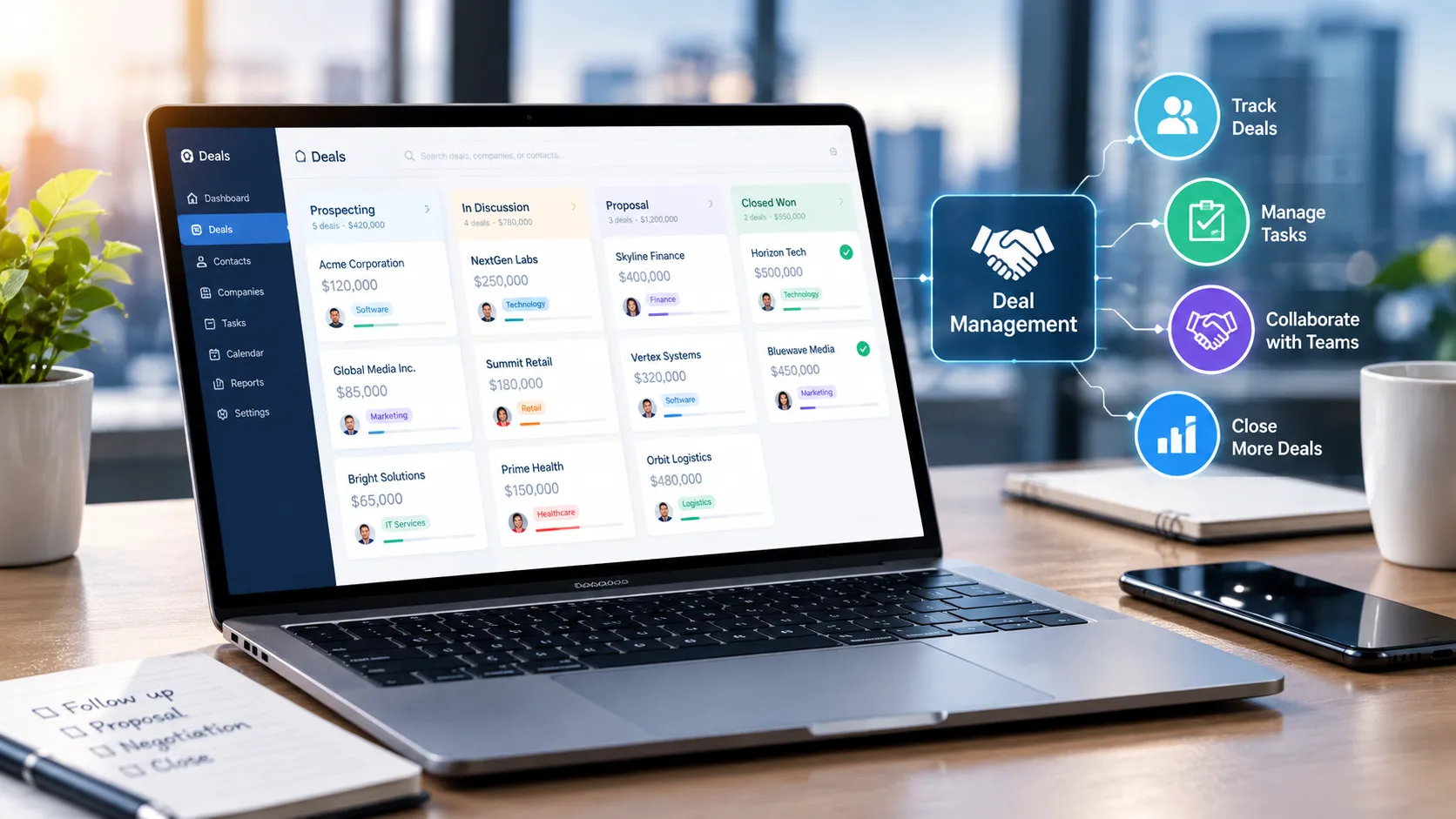
Managing a steady stream of investment opportunities can become difficult when deal information is spread across spreadsheets, emails, documents, and disconnected systems. Investment teams need a clear way to track opportunities, manage relationships, organize due diligence, and move promising deals through each stage of the investment process.
Deal flow management software helps investment firms centralize these activities in one platform. It gives teams greater visibility into their pipeline while helping them organize opportunities, collaborate internally, and maintain important deal and relationship information.
What Is Deal Flow Management Software?
Deal flow management software is a technology solution designed to help investment professionals manage opportunities from initial sourcing through evaluation and execution.
Instead of manually tracking potential investments in spreadsheets or separate systems, teams can use software to create a centralized deal pipeline. Each opportunity can be organized according to its current stage, relevant contacts, financial information, notes, documents, and next steps.
For private equity, private credit, venture capital, and other private markets firms, this can provide a structured way to manage a growing volume of opportunities.
How Does Deal Flow Management Software Work?
A typical deal flow management platform organizes opportunities into different stages of the investment process. These stages may include:
- Deal sourcing
- Initial screening
- Evaluation
- Due diligence
- Investment committee review
- Negotiation
- Closing
- Portfolio management
Teams can update an opportunity as it progresses through the pipeline. This provides a centralized view of active, completed, and declined opportunities.
The software can also link deal information to relationship data, helping investment professionals understand who introduced an opportunity, which contacts are involved, and how past interactions may affect the relationship.
Key Features of Deal Flow Management Software
The capabilities available vary by platform, but several features are particularly useful for investment teams.
Deal Pipeline Management
A centralized pipeline allows teams to see where each opportunity stands. Investment professionals can quickly identify active deals, upcoming actions, stalled opportunities, and deals that require attention.
Deal Sourcing Management
Investment teams often receive opportunities from multiple sources, including intermediaries, advisors, existing relationships, and direct outreach. Deal flow software can help organize these sources and track how opportunities enter the pipeline.
Relationship Management
Deal flow is closely connected to relationships. A platform that combines deal information with relationship management can help teams maintain a complete view of interactions with investors, executives, advisors, and other stakeholders.
Due Diligence Tracking
Due diligence involves collecting and reviewing significant amounts of information. Deal management tools can help teams organize documents, tasks, notes, and important milestones associated with an opportunity.
Collaboration
Multiple members of an investment team may work on the same transaction. Centralized deal information makes it easier for team members to share updates, assign tasks, and maintain consistent records.
Reporting and Analytics
Deal flow reporting can help firms understand pipeline activity, sourcing channels, conversion rates, deal stages, and other operational metrics. This information can support more structured pipeline management.
Why Investment Firms Use Deal Flow Management Software
As investment pipelines become more complex, manual processes can create unnecessary administrative work. Deal flow management software can help firms create a more consistent process for managing opportunities.
One major benefit is better visibility. Instead of searching through multiple spreadsheets or email conversations, teams can access relevant deal information from a centralized system.
It can also improve organization. Standardized deal stages, fields, tasks, and workflows help investment professionals follow a consistent process across opportunities.
Another benefit is relationship continuity. When deal and relationship information are connected, teams can better understand the history behind an opportunity and maintain institutional knowledge when team members change.
Deal Flow Management Software vs. Spreadsheets
Spreadsheets can be useful for basic deal tracking, particularly for smaller teams. However, they can become difficult to maintain as the number of opportunities and stakeholders increases.
A spreadsheet may require manual updates, has limited workflow automation, and may not provide the same level of relationship or document management as a dedicated platform.
Deal flow management software is designed specifically around investment workflows. It can provide structured pipelines, centralized records, automated processes, permissions, reporting, and integrations that are difficult to manage efficiently through spreadsheets alone.
How to Choose Deal Flow Management Software
Investment firms should consider their specific workflows before selecting a platform. Important factors may include:
Pipeline flexibility: The system should support the firm's investment process and allow teams to customize deal stages.
Relationship management: Look for capabilities that connect deals with investors, advisors, executives, and other relevant contacts.
Data management: The platform should make it easy to organize important deal information and retrieve it when needed.
Integrations: Connections with existing CRM, communication, data, and productivity systems can reduce duplicate data entry.
Security: Investment firms handle sensitive information, so security controls and compliance capabilities should be carefully evaluated.
Reporting: Teams should be able to generate useful pipeline and activity reports without relying heavily on manual processes.
Scalability: The platform should support the firm's growth as deal volume, users, and data increase.
The Role of AI in Deal Flow Management
Artificial intelligence is increasingly being incorporated into investment technology. AI-powered capabilities can help teams organize information, identify relevant relationships, summarize data, and support research and workflow automation.
For example, AI can help investment professionals find relevant information across large datasets or surface relationship insights that may otherwise be difficult to identify manually.
However, AI should complement investment professionals rather than replace their judgment. Investment decisions still require human analysis, due diligence, risk assessment, and consideration of the firm's investment strategy.
Improving the Deal Flow Process
Technology alone does not create an efficient investment process. Firms should also establish clear workflows and responsibilities.
A practical approach is to define standardized deal stages, establish required information for each stage, assign ownership, and create clear follow-up processes.
Teams can then use their software to automate repetitive activities and monitor opportunities throughout the pipeline.
Regularly reviewing pipeline data can also help firms identify bottlenecks. For example, if opportunities frequently remain in an evaluation stage for extended periods, the team can examine the process and determine whether additional information, resources, or clearer decision criteria are needed.
Conclusion
Deal flow management software gives investment teams a centralized way to organize opportunities, relationships, workflows, and deal information. By replacing fragmented tracking methods with a structured digital process, firms can improve pipeline visibility and create more consistent workflows.
For private equity, private credit, venture capital, and other private markets firms, the right platform should fit naturally into the firm's existing investment process while providing the flexibility to scale as deal activity grows.
The goal is not simply to track more deals. It is to create a connected system that helps investment professionals manage relationships, evaluate opportunities, collaborate effectively, and maintain a clear view of their entire deal pipeline.