Customer Retention Strategies for Expanding a Taxi App Business
103 Views
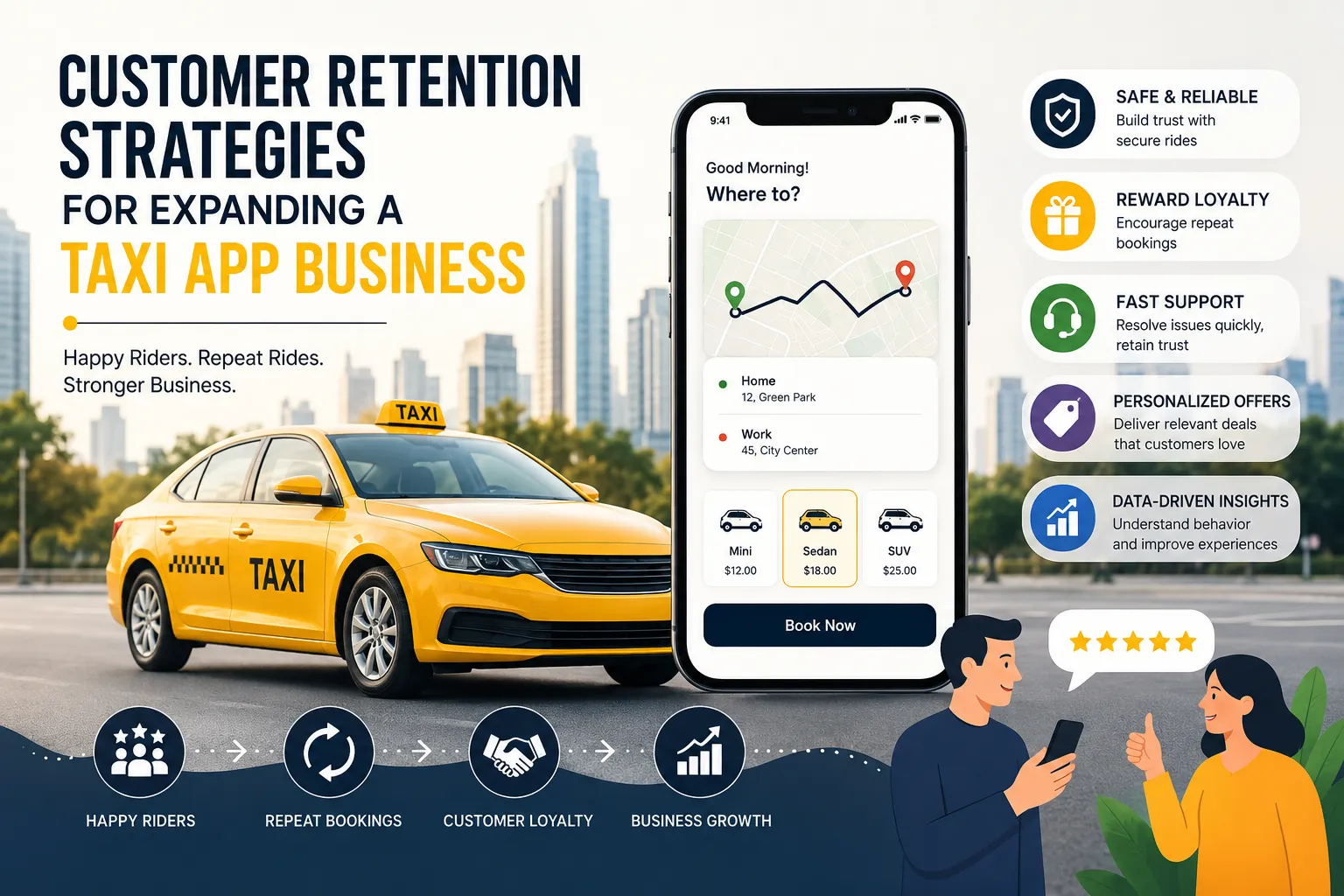
In the rapidly evolving ride-hailing industry, attracting new users is only part of the growth equation. Sustainable expansion depends on retaining existing customers and encouraging them to choose the same platform repeatedly. As competition increases and customer expectations continue to rise, businesses must focus on delivering consistent value, convenience, and reliability. A well-planned retention strategy not only improves customer satisfaction but also increases lifetime value, reduces acquisition costs, and strengthens brand reputation. For operators using a white label taxi app, customer retention can become a major driver of long-term business success.
Key Statistics Highlighting the Value of Customer Retention
Customer retention has become one of the most important performance indicators for transportation businesses. Consider the following industry insights:
- Increasing customer retention by just 5% can significantly improve profitability in service-based businesses.
- Existing customers are more likely to make repeat purchases compared to newly acquired users.
- Acquiring a new customer often costs several times more than retaining an existing one.
- Personalized experiences can substantially improve customer engagement and loyalty.
- Businesses with strong customer retention strategies generally achieve higher customer lifetime value and more predictable revenue growth.
These statistics demonstrate why retention should be a central component of any taxi business expansion strategy.
Delivering Consistent Ride Experiences Across Every Journey
Consistency remains one of the strongest foundations of customer loyalty. Riders expect a dependable experience every time they book a trip. Even minor inconsistencies can negatively affect trust and encourage users to explore competing platforms.
Several factors contribute to a consistent ride experience:
- Accurate driver arrival times
- Clean and well-maintained vehicles
- Professional driver behavior
- Transparent pricing
- Reliable route navigation
When customers know exactly what to expect, they feel more comfortable relying on the platform for their transportation needs. Businesses operating a white label taxi app should continuously monitor service quality metrics and gather rider feedback to identify areas for improvement.
A consistent experience transforms occasional riders into loyal customers who regularly choose the same service for daily commuting, airport transfers, and special travel requirements.
Using Personalized Features to Increase Rider Engagement
Modern consumers appreciate personalized experiences that align with their preferences and travel habits. Personalization helps businesses create stronger emotional connections with users while improving convenience.
Taxi platforms can implement personalization through:
- Preferred pickup and drop-off suggestions
- Customized ride recommendations
- Personalized promotions
- Saved payment methods
- Frequently visited destination shortcuts
By analyzing customer behavior, businesses can deliver relevant experiences that make the booking process faster and more enjoyable. Personalization also demonstrates that the platform understands customer needs rather than treating every rider identically.
As customer expectations continue to evolve, personalization is becoming a necessity rather than a competitive advantage.
Creating Reward Programs That Encourage Repeat Bookings
Loyalty programs remain one of the most effective retention tools across multiple industries. In the taxi sector, rewards can motivate users to continue booking rides through the same platform instead of switching to competitors.
Effective reward programs may include:
- Ride credits after a specific number of trips
- Discount vouchers for frequent riders
- Tier-based membership benefits
- Referral incentives
- Exclusive seasonal offers
The goal is not simply to provide discounts but to create ongoing value that strengthens customer relationships. Well-designed loyalty programs encourage repeat bookings while making customers feel recognized and appreciated.
Businesses should carefully track participation rates and redemption patterns to ensure that reward initiatives remain profitable and attractive.
Strengthening Customer Trust Through Safety and Transparency
Trust is one of the most valuable assets for any transportation business. Customers are more likely to remain loyal when they feel safe and informed throughout their journey.
Several measures can strengthen trust:
- Real-time ride tracking
- Driver verification systems
- Emergency assistance features
- Transparent fare breakdowns
- Secure payment processing
Clear communication also plays an important role. Customers should receive accurate information regarding pricing, estimated arrival times, and ride status updates.
Many businesses investing in taxi app development prioritize advanced safety and transparency features because they directly influence customer confidence. When riders feel protected and informed, they are more likely to continue using the platform over the long term.
Improving Support Services for Faster Issue Resolution
Even the most efficient taxi businesses occasionally encounter service issues. What differentiates successful companies is how quickly and effectively they resolve customer concerns.
Strong customer support contributes to retention by minimizing frustration and restoring trust after negative experiences. Important support practices include:
- Multiple communication channels
- Quick response times
- Well-trained support representatives
- Proactive problem resolution
- Follow-up communication after complaints
Customers generally understand that occasional problems may occur. However, they expect businesses to address those issues professionally and efficiently.
A responsive support system can often transform a dissatisfied rider into a loyal advocate. Companies that prioritize customer care demonstrate their commitment to service quality and customer satisfaction.
Leveraging Data Insights to Predict Customer Behavior Trends
Data-driven decision-making has become essential for improving customer retention. Modern taxi platforms generate valuable information that can help businesses understand rider preferences, usage patterns, and potential churn risks.
Useful data points include:
- Ride frequency
- Average booking value
- Preferred travel times
- Popular routes
- Customer satisfaction ratings
By analyzing these insights, businesses can identify trends and implement targeted retention initiatives before customers disengage.
For example, if a previously active user shows a decline in booking frequency, personalized incentives or engagement campaigns can be introduced to encourage renewed activity. Businesses operating a white label taxi app can use analytics tools to monitor customer behavior and make informed strategic decisions.
Data-driven retention strategies help organizations allocate resources more effectively while improving customer experiences.
Adapting Retention Strategies as Business Operations Scale Up
As taxi businesses expand into new markets, retention strategies must evolve alongside operational growth. Approaches that work for a smaller customer base may not remain effective at larger scales.
Key considerations during expansion include:
- Maintaining service consistency across regions
- Standardizing operational processes
- Monitoring customer feedback at scale
- Expanding driver training programs
- Enhancing technological infrastructure
Businesses should also evaluate the cost to build taxi app improvements that support growing customer expectations. Investing in scalability enables platforms to maintain quality standards while accommodating increasing demand.
During expansion, organizations may also choose to hire taxi app developers with expertise in performance optimization, user experience enhancements, and advanced retention-focused features. These investments can help ensure that customer satisfaction remains high even as the business grows.
A scalable retention strategy supports sustainable growth while preserving the quality that originally attracted loyal customers.
Driving Sustainable Growth Through Customer-Centric Approaches
Customer retention is not achieved through a single initiative but through a combination of consistent service quality, personalized experiences, effective support, transparent operations, and continuous improvement. Businesses that prioritize customer needs at every stage of the rider journey create stronger relationships and higher levels of trust. As competition within the transportation sector continues to intensify, organizations that focus on delivering reliable value and meaningful customer experiences will be better positioned to maintain loyalty, strengthen their market presence, and achieve sustainable long-term growth.