Custom Disposable Coveralls for Pharma, Cleanroom & Industrial Use
By AmeliaSmith
18 Views
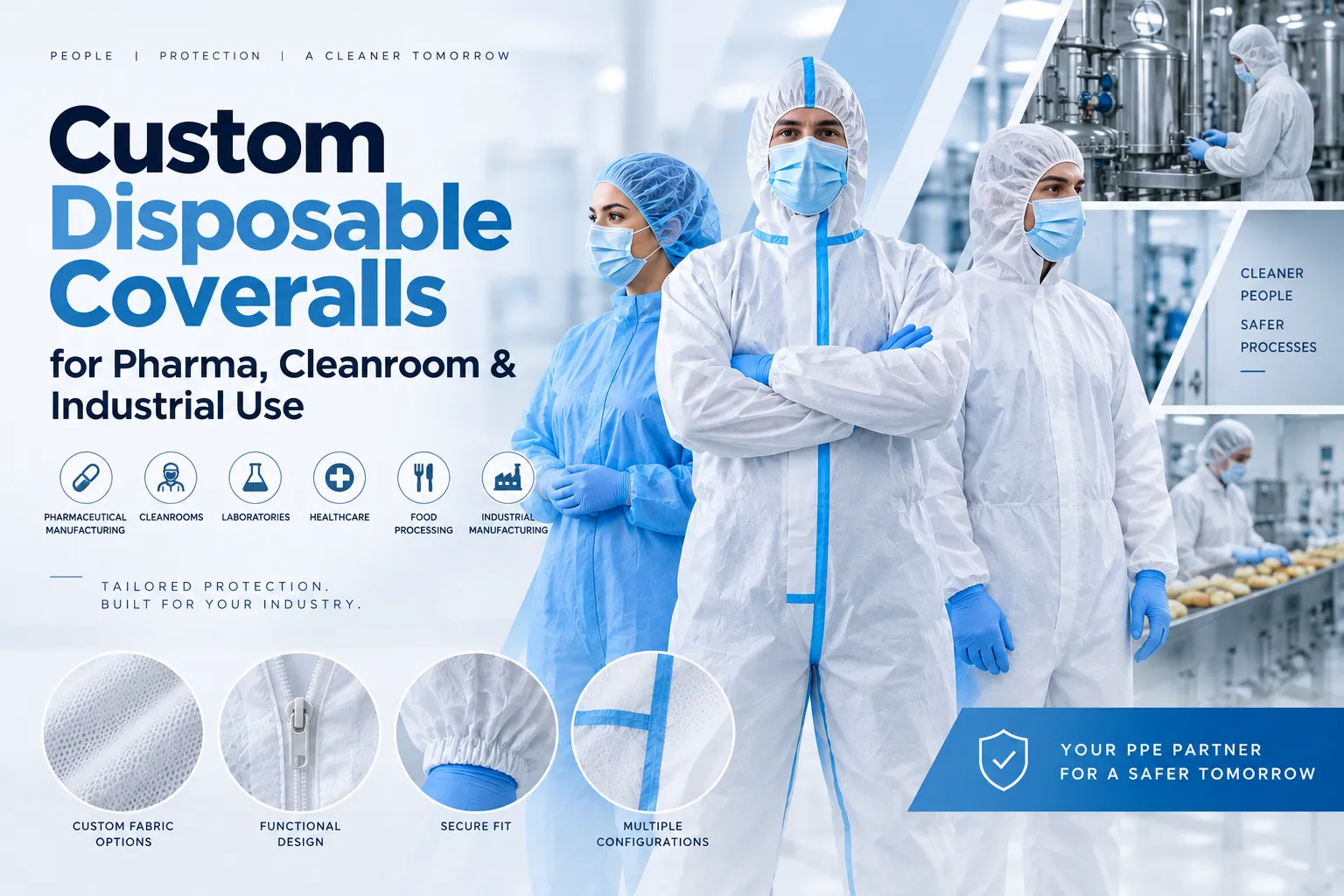
Disposable coveralls are used across pharmaceutical manufacturing, cleanrooms, laboratories, healthcare, food processing and industrial operations. However, the protective clothing requirements of one facility may differ considerably from another.
This is where custom disposable coveralls can offer greater flexibility. Instead of purchasing a generic garment and adapting workplace procedures around it, businesses can define specifications according to their application, workforce and operational requirements.
For procurement managers, purchase departments, EHS teams and facility managers, customisation can be particularly valuable when coveralls are purchased in large or recurring quantities. The objective is to establish a practical PPE specification that provides appropriate coverage, comfort and consistency while remaining commercially viable.
Different Workplaces Require Different Specifications
A disposable coverall used for general workplace hygiene may not require the same construction as one used in a pharmaceutical production area or controlled environment.
Before selecting a product, procurement teams should understand:
These factors help determine whether a lightweight non-woven coverall or a more specialised construction is appropriate.
There is no single specification that suits every application. The garment should be selected according to the facility's own risk assessment and PPE procedures.
Fabric Selection Sets the Foundation
The fabric is one of the most important considerations when developing a custom coverall.
Non-woven polypropylene is widely used in disposable protective apparel because it can provide lightweight coverage and flexibility for many professional applications.
Depending on the requirements, manufacturers may also offer SMS or laminated constructions.
Spunbond polypropylene can be appropriate where lightweight coverage and breathability are priorities.
SMS materials use multiple non-woven layers and can offer different characteristics from single-layer spunbond fabric.
Laminated materials may be considered where increased liquid resistance is required.
Procurement teams should select the fabric according to the intended application rather than simply choosing the heaviest available material.
GSM is useful when comparing fabrics, but it should not be treated as an independent measure of protection. Material construction, garment design and workplace conditions all need to be considered together.
Coverall Design Affects Everyday Performance
Once the material has been established, garment construction becomes important.
Employees may need to bend, walk, reach and work around equipment while wearing the coverall. The design should therefore provide appropriate coverage without unnecessarily restricting movement.
Hood
An attached hood can provide additional coverage around the head and neck and may be relevant for controlled environments.
Cuffs
Elasticated cuffs can help keep sleeves positioned around the wrists and can work alongside gloves.
Ankles
Elasticated ankles can help maintain the position of the garment around footwear.
Closure
A suitable front closure should allow efficient donning and removal while providing the required coverage.
These features can make a noticeable difference when coveralls are worn by large numbers of employees every day.
Sizing Should Follow the Workforce
A large organisation may have employees with significantly different body dimensions. Ordering a standard size mix without reviewing actual demand can lead to unnecessary inventory and poor fit.
Businesses can analyse their workforce and establish an appropriate distribution across available sizes.
Sample fitting can help identify issues involving:
For high-volume procurement, getting the size distribution right can also reduce wastage caused by employees using garments that are unnecessarily large or too small.
Customisation Beyond the Garment
Customisation does not always mean changing the physical construction of the coverall.
Colour can be useful for differentiating employees, contractors, visitors or operational areas. Depending on the facility, different colours may support internal identification and workplace organisation.
Packaging can also be customised according to purchasing and warehouse requirements.
Procurement teams may specify:
Standardised packaging can make inventory management easier, particularly for businesses operating multiple facilities.
Where Custom Coveralls Are Used
Pharmaceutical Manufacturing
Pharmaceutical facilities may use disposable coveralls as part of established personnel hygiene and gowning procedures. Consistent product specifications and dependable supply are particularly important for recurring PPE requirements.
Cleanrooms
Cleanroom operations may require specific garment configurations based on their contamination-control procedures. Coveralls can be used alongside gloves, shoe covers, hair covers and other PPE.
Laboratories
Research, diagnostic and testing facilities may use disposable coveralls for particular activities where additional protective apparel is required.
Healthcare
Healthcare organisations can use disposable coveralls in selected applications according to their internal PPE protocols.
Food Processing
Food-processing facilities may use disposable protective garments as part of personnel hygiene procedures. Comfort becomes particularly relevant when workers wear PPE throughout a production shift.
Industrial Manufacturing
Industrial operations may use coveralls for applications involving dust, powders, dirt or other workplace materials. The appropriate specification should be determined by the actual operating conditions.
Sample Approval Should Come Before Bulk Production
For customised disposable coveralls, sample evaluation is an important procurement step.
The product should ideally be reviewed by procurement, quality, EHS and representative end users.
Teams can assess:
Once the sample is approved, the exact product specification should be documented.
This approved specification becomes the reference for future production and helps prevent variations between repeat orders.
Evaluating Disposable Coverall Suppliers
The manufacturing partner becomes especially important when a business requires customised products.
When comparing disposable coverall suppliers, procurement teams should evaluate more than the quoted price.
Important factors include:
A supplier may be able to produce an acceptable sample, but long-term procurement requires the ability to reproduce the same specification consistently across production batches.
Dispowear Protection's Manufacturing Capability
Dispowear Protection manufactures disposable PPE and non-woven protective apparel for healthcare, pharmaceutical, laboratory, cleanroom, food-processing and industrial applications.
The company operates with in-house virgin polypropylene non-woven fabric production and disposable garment manufacturing capabilities, providing greater control over material and finished-product production.
Its portfolio includes disposable coveralls, isolation gowns, lab coats, bouffant caps, shoe covers, boot covers, sleeve protectors and beard covers.
The GenFab® Disposable Coverall range provides an option for organisations requiring disposable protective apparel for professional and industrial applications.
For businesses purchasing multiple PPE categories, working with a manufacturer that has both fabric and garment production capabilities can also simplify supplier coordination.
Conclusion
Custom disposable coveralls allow businesses to align protective apparel more closely with their workplace, workforce and operational requirements.
Material construction, GSM, hood design, cuffs, ankles, closure, sizing, colour and packaging can all be considered when establishing the specification. For large-volume buyers, sample approval and documented specifications are particularly important for maintaining consistency across repeat orders.
Dispowear Protection combines virgin polypropylene non-woven fabric production with disposable PPE manufacturing, supporting organisations across pharmaceutical, healthcare, laboratory, cleanroom, food-processing and industrial sectors.
For procurement teams, a clearly defined requirement, practical sample evaluation, accurate consumption forecasting and a capable manufacturing partner provide a stronger foundation for a reliable long-term disposable coverall supply programme.