CPVC Pipe Dubai: A Practical Guide to Choosing Reliable Piping Solutions
By Anz Waters
3 Views
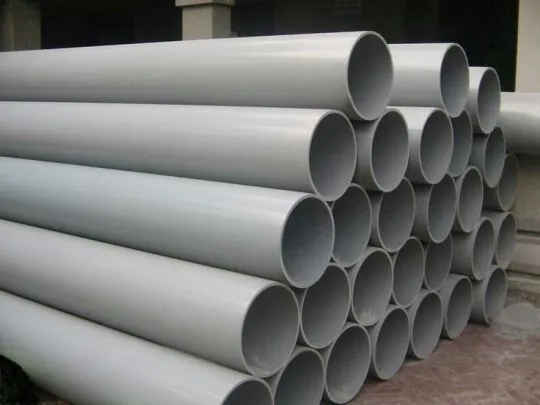
When it comes to modern plumbing, industrial systems, and water-treatment projects, choosing the right pipe material can make a significant difference. A piping system needs to handle pressure, temperature, chemicals, and everyday wear without creating unnecessary maintenance problems. This is one reason CPVC pipe Dubai solutions have become an important choice for residential, commercial, and industrial projects across the UAE.
CPVC, or Chlorinated Polyvinyl Chloride, is a thermoplastic material developed by modifying conventional PVC through chlorination. This process improves its temperature and chemical resistance, making CPVC suitable for applications where ordinary PVC may not be the right option. ANZ Waters provides CPVC pipeline systems, pipes, fittings, valves, primers, and solvent cement for a wide range of applications.
Understanding CPVC Pipes
CPVC pipes are designed to transport fluids efficiently while offering several advantages over traditional metallic piping materials. Their resistance to corrosion, relatively light weight, and ease of installation make them attractive for projects where long-term reliability and practical installation are important.
Unlike metal pipes, CPVC does not rust. It is also resistant to tuberculation and deposits, which can help maintain a consistent internal flow over the service life of a properly designed and installed system. ANZ Waters highlights CPVC's resistance to corrosion, chlorine, chloramine, deposits, and water hammer, along with its lightweight construction.
For a city such as Dubai, where construction projects range from residential towers and hotels to water-treatment facilities and industrial plants, having flexible piping options is particularly valuable.
Why CPVC Pipe Is Popular in Dubai
Dubai's construction environment demands materials that can perform reliably while keeping installation practical. Engineers, contractors, consultants, and facility managers often need piping systems that balance performance, durability, maintenance, and project cost.
CPVC offers several characteristics that make it worth considering.
1. Excellent Temperature Resistance
One of the main differences between CPVC and conventional PVC is its ability to handle higher temperatures. This makes CPVC particularly useful for hot and cold water applications and selected industrial processes.
For projects involving heated fluids, selecting a piping material according to the required operating temperature is essential. CPVC can provide an appropriate solution when the application, product specification, pressure rating, and installation requirements are properly matched.
2. Resistance to Corrosion
Corrosion is a common concern when metal piping is exposed to water, chemicals, or aggressive environments. CPVC is inherently resistant to rust and many corrosive conditions.
This characteristic can reduce concerns associated with corrosion-related deterioration and maintenance. For industrial applications involving certain chemicals, CPVC can also be considered because of its chemical resistance. However, compatibility should always be checked against the specific chemical, concentration, temperature, and operating conditions.
3. Lightweight and Easier to Handle
Another practical advantage is weight. CPVC pipes are considerably easier to handle than many traditional metallic alternatives.
This can make transportation and installation more convenient, particularly on construction sites where materials need to be moved through multiple floors or restricted areas. Easier handling may also help contractors manage installation efficiently when appropriate tools, joining procedures, and trained personnel are used.
4. Reduced Maintenance Requirements
A good piping system should not only perform well when it is installed; it should continue performing reliably over time.
Because CPVC is resistant to corrosion and deposits, it can be a low-maintenance option for suitable applications. This can be especially useful for commercial and industrial facilities where unexpected maintenance can disrupt operations.
Of course, actual service life depends on system design, installation quality, operating conditions, chemical exposure, temperature, pressure, and the manufacturer's specifications.
CPVC Pipes and Fittings: Why the Complete System Matters
Buying a pipe alone is not enough to create a dependable piping network. Fittings, valves, adapters, joining materials, and accessories all need to work together.
A professional CPVC system may include pipes, elbows, tees, couplings, reducers, threaded fittings, adapters, valves, strainers, primer, and solvent cement. ANZ Waters lists CPVC Schedule 80 pipes and a range of corresponding fittings and valves, including ball valves, diaphragm valves, male and female adapters, Y-strainers, primer, and glue.
This complete-system approach can simplify procurement and help ensure that compatible components are selected for a particular installation.
For example, imagine a commercial building requiring a new process-water line. The contractor may need straight pipe sections, elbows to navigate the building layout, tees for branch connections, reducers for changes in pipe size, valves for flow control, and appropriate joining materials. Sourcing compatible components from an experienced supplier can make the process much easier.
Where CPVC Pipes Are Used
The versatility of CPVC is one of its biggest advantages. It can be used across several industries and applications when the product specification is appropriate.
Residential and Commercial Plumbing
CPVC is commonly associated with plumbing applications, including hot and cold water distribution. Residential buildings, hotels, apartments, offices, and other commercial properties can benefit from lightweight, corrosion-resistant piping systems.
In large developments, consistent material quality and proper installation are particularly important because a plumbing problem can affect many occupants.
Water and Wastewater Treatment
Water-treatment facilities require piping materials capable of handling different operating conditions. CPVC can be used in suitable water and process applications where its temperature, pressure, and chemical-resistance characteristics meet the project requirements.
ANZ Waters supplies piping solutions for water and wastewater treatment, along with other systems such as PVC, HDPE, ABS, PVDF, and PPH.
Chemical Processing
Chemical environments can be challenging for conventional piping materials. CPVC's chemical resistance makes it useful for selected chemical-processing and waste-handling applications.
The key word here is selected. No piping material should be chosen simply because it is described as chemically resistant. Engineers should verify chemical compatibility using the actual operating conditions before specifying the system.
Swimming Pools and Water Parks
Swimming pools, aquaculture facilities, water parks, and similar recreational installations require reliable water circulation and treatment systems. CPVC and other thermoplastic materials can be useful in these environments because of their corrosion-resistant characteristics.
Industrial Applications
CPVC can also be considered for industrial process water, cooling water, selected chemical processes, laboratories, and other applications where the material's performance characteristics align with the system requirements. ANZ Waters lists applications extending across chemical processing, industrial processes, laboratories, marine projects, power-related industries, agriculture, and aquaculture.
Choosing a CPVC Pipe Supplier in Dubai
Finding a supplier is easy. Finding the right supplier requires a little more thought.
When searching for a CPVC pipe supplier in Dubai, buyers should look beyond price. A lower initial quotation does not necessarily represent better value if the product is unsuitable, delivery is unreliable, or technical support is limited.
Here are some important factors to consider.
Product Range
A supplier with a broad range of CPVC pipes, fittings, valves, and accessories can make procurement easier. It is much more convenient when compatible components can be sourced from one supplier rather than pieced together from different sources.
Product Standards and Certifications
Quality documentation matters. Depending on the application, buyers may need specific standards, approvals, certifications, pressure ratings, or testing documentation.
ANZ Waters works with manufacturers and brands including Neproplast, Spears, IPEX, FIP, Cosmoplast, and Supreme Fittings, with product ranges covering different piping and valve requirements.
Technical Knowledge
A good supplier should understand that every project is different. Pipe size, pressure, temperature, chemical exposure, connection method, installation environment, and application all influence product selection.
A knowledgeable supplier can help customers identify suitable components instead of simply supplying whatever is requested.
Reliable Delivery
Construction schedules are rarely flexible. A delay in piping materials can affect several other trades and potentially push back project milestones.
Working with a supplier that understands project timelines and maintains an effective distribution network can therefore be valuable.
After-Sales Support
The relationship should not end when the invoice is issued. Technical assistance, product information, installation guidance, and responsive communication can make a significant difference when questions arise during a project.
Why ANZ Waters Is Worth Considering
ANZ Waters positions itself as a provider of water and wastewater treatment technologies and piping solutions serving energy, municipal, and marine markets, with distribution across the GCC. Its product portfolio includes CPVC, PVDF, PPH, PVC, double-containment, HDPE, and ABS pipeline systems, among other solutions.
For customers specifically looking for CPVC pipe Dubai solutions, this broader experience can be useful because piping requirements often overlap with other parts of a water-treatment, plumbing, or industrial project.
The company offers a range of CPVC components rather than focusing solely on straight pipe. Its listed CPVC products include Schedule 80 pipe, couplings, tees, elbows, reducers, adapters, threaded fittings, valves, Y-strainers, primer, and solvent cement.
ANZ Waters also lists Dubai-based contact details and describes its location as Dubai, UAE.
CPVC vs. Traditional Metal Piping
The choice between CPVC and metal piping should always depend on the application, but the differences are worth understanding.
Metal pipes can provide excellent mechanical performance in many demanding environments, but they can also be heavier and susceptible to corrosion depending on the material and conditions.
CPVC, by contrast, is lightweight and corrosion-resistant. Its joining methods can also simplify installation. ANZ Waters notes that CPVC solvent-cement joints can eliminate the need for flame-based joining and that the material is lightweight and easy to transport.
That does not mean CPVC is automatically better for every project. High-temperature, high-pressure, mechanical, fire-safety, and chemical applications require careful engineering evaluation. The correct material is the one that meets the actual requirements of the system.
Installation Matters as Much as Material Selection
Even the highest-quality pipe can perform poorly if it is installed incorrectly.
CPVC installation generally requires proper cutting, preparation, alignment, and joining procedures. The correct primer and solvent cement should be used where specified, and installers should follow the manufacturer's instructions.
Poorly prepared joints, incorrect fittings, excessive stress, improper support, or unsuitable operating conditions can compromise a piping system.
This is why contractors should treat installation as part of the overall quality process rather than an afterthought.
Looking at the Bigger Picture
Modern infrastructure is not simply about putting pipes inside walls or beneath floors. A well-designed piping network needs to provide dependable fluid movement while supporting safety, efficiency, maintenance, and long-term operation.
CPVC can play an important role in that picture. Its combination of temperature resistance, corrosion resistance, light weight, and practical installation makes it suitable for a broad range of applications.
For Dubai projects, the supplier is also an important part of the equation. The right supplier can help simplify product selection, procurement, logistics, and technical coordination.
Final Thoughts
Choosing the right CPVC pipe Dubai solution is ultimately about more than finding a pipe at the right price. It is about finding a product that fits the application's temperature, pressure, chemical, installation, and regulatory requirements.
CPVC has earned its place in modern plumbing and industrial systems because it offers a practical combination of durability, corrosion resistance, ease of handling, and versatility. ANZ Waters provides CPVC pipeline systems along with a broad selection of fittings, valves, and accessories for water-treatment, plumbing, industrial, recreational, and other applications.
For contractors, engineers, facility managers, and project developers looking for CPVC piping solutions in Dubai, taking time to compare product specifications, supplier experience, certifications, technical support, and delivery capabilities can lead to a much more dependable result.
In the end, a good piping system is one you do not have to think about every day. It quietly does its job, handles the demands placed upon it, and continues supporting the facility for years to come. That is the real value of choosing the right CPVC pipe and the right supplier from the beginning.
Related Reading
Top 10 Hidden Secrets About Business & Finance You Need to Know
Welcome to our in-depth exploration of Business & Finance. In an era defined...
Why Business & Finance is Transforming the Global Industry Landscape
Welcome to our in-depth exploration of Business & Finance. In an era defined...