Coworking Space vs. Traditional Office in Lahore: Which Model Makes More Sense for a Business With an Unpredictable Growth Plan?
By lsabella
34 Views
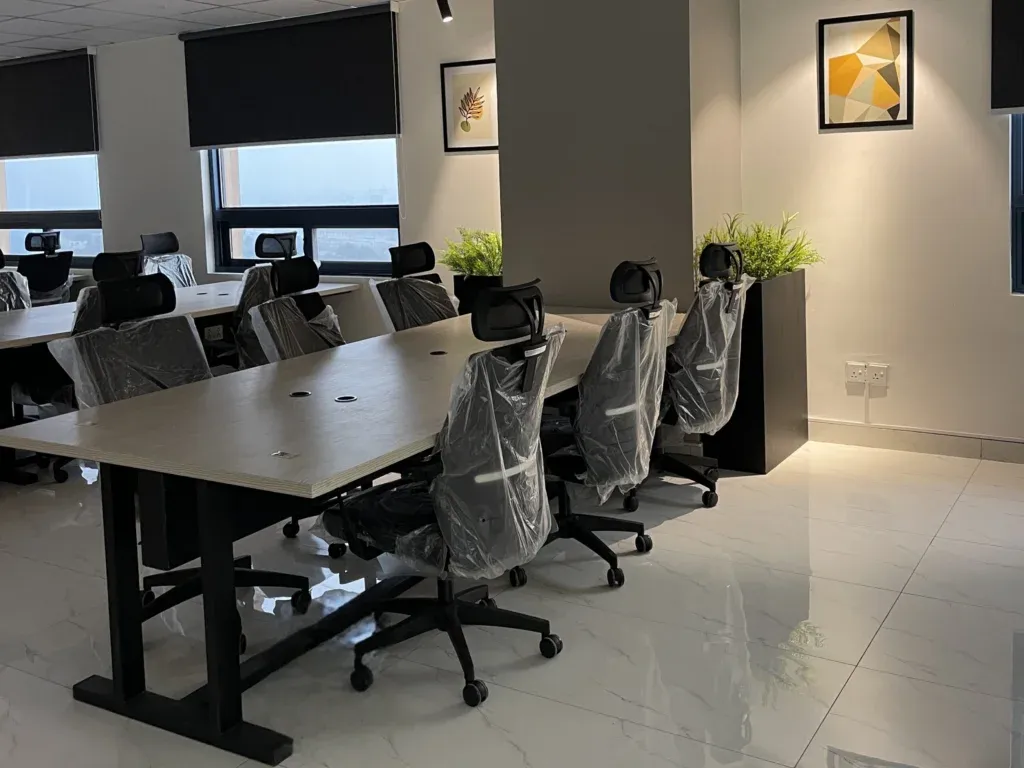
In 2016, Lahore entrepreneur Hassan Shahid faced a problem that many growing businesses still deal with today. After leaving the Plan9 incubator, he needed an affordable office where his small startup team could begin working without taking on a heavy financial commitment.
He searched for suitable offices in DHA and Gulberg. In his own published account, Shahid explained that the options within his budget came with high furnishing costs, while landlords offered little flexibility in lease terms. For a young company still finding its footing, that made a traditional office difficult to justify.
Instead of forcing the business into a space that did not match its stage of growth, Shahid and his co-founders explored shared workspace. They tested the idea through a post in the Pakistan Startup Facebook group and received real inquiries from other businesses facing the same problem.
That experience is still relevant because the basic challenge has not changed.
A Lahore software company may have 12 employees today and 25 next year. An agency may hire after winning new clients, then slow recruitment when projects end. A foreign company may start with five people in Lahore and expand only after the local operation proves successful.
In each case, the office decision becomes difficult for the same reason. The business does not know exactly how much space it will need.
When growth is unpredictable, choosing between coworking and a traditional office is not simply about finding the lowest rent. It is about deciding how much fixed cost and space risk the company can safely carry while the future is still uncertain.
Why Unpredictable Growth Makes Office Planning Harder
Office planning is much easier when the headcount is stable.
If a company has stayed close to 70 employees for several years, management can estimate future space needs with some confidence. A growing company does not have that advantage.
Suppose your Lahore business has 12 employees today. You expect to hire, but you cannot say with confidence whether the team will reach 16, 25, or 40 people during the next two years.
Rent a small office and you may outgrow it sooner than expected. Rent enough space for 40 people and you may spend months paying for desks that remain empty.
That is the real problem behind unpredictable growth. The company is being asked to make a long-term property decision using a short-term business forecast.
For that reason, the right question is not only, “What office can we afford today?”
A better question is, “What happens to our office cost if our headcount turns out to be very different from what we expect?”
Once you look at the decision that way, flexibility becomes part of financial planning rather than just an office preference.
Lahore Businesses Are Operating in a Changing Digital Economy
This issue matters in Lahore because the city has a large base of software firms, digital agencies, startups, consulting businesses, freelancers, and remote teams.
The Pakistan Economic Survey 2025-26 reported around US$3.388 billion in IT exports during July to March FY2026. It also reported about US$856.3 million in freelancers’ remittances during the same period.
These figures do not tell us exactly how much office space Lahore businesses need. What they do show is the growing importance of technology, freelance, and export-focused work in Pakistan.
Businesses in these sectors often grow in ways that are difficult to predict.
A software company may secure an overseas project and suddenly need more developers. A digital agency may hire designers and account managers after winning a large client. A hybrid company may increase its workforce without needing a permanent desk for every employee.
That creates a simple planning challenge.
The business may be growing, but its office requirement may not grow at the same speed.
For companies in this position, choosing the wrong office model can create unnecessary costs long before the business becomes stable.
What a Traditional Office Really Costs in Lahore
Monthly rent is the easiest cost to see in a traditional office, but it is rarely the full cost.
A conventional lease gives a company a high level of control. You can choose the furniture, design the layout, manage access, install company branding, set up your own network, and create meeting rooms around the way your team works.
For many established companies, that level of control is worth paying for.
The challenge is that the business also becomes responsible for turning the property into a fully functioning workplace.
Current listings from Zameen.com show how significant the basic rental commitment can be in Gulberg. At the time of research, a 1,700-square-foot unfurnished office in Gulberg 3 was listed at PKR 250,000 per month, while a 2,108-square-foot office in Gulberg 2 was listed at PKR 325,000 per month.
These are individual asking prices rather than official market averages. Actual rent can vary according to the building, floor, parking, condition, exact location, facilities, and negotiation.
Even so, the examples show why rent is only the starting point.
A business may also need to pay for desks, chairs, partitions, internet installation, electricity, backup power, cleaning, security, repairs, meeting-room furniture, pantry supplies, and office administration.
Once these costs are added, the real question becomes less about rent and more about the total cost of keeping the workplace running.
That is where coworking begins to look different.
How Coworking Changes the Financial Structure
A co working space approaches the office problem in another way.
Instead of leasing a property and setting up every part of the workplace yourself, a business usually pays for access to an operational environment. Depending on the provider and package, this may include desks, private rooms, meeting areas, internet, backup power, utilities, common areas, maintenance, and support services.
The important point is not that coworking is always cheaper.
A traditional office can become more economical when a large team uses most of the space for several years. In that situation, setup costs are spread over time and the company is not paying for large unused areas.
Coworking becomes more useful when future headcount is difficult to predict.
If you have 10 people today, you can start closer to your current requirement. If the company grows, you can look for more desks, a larger private room, or a managed office.
Instead of paying today for employees you may hire later, the company can increase its space commitment as real growth happens.
That difference is especially important for businesses that expect change but cannot predict its speed.
Coworking Space vs. Traditional Office in Lahore: A Practical Comparison
Once both models are viewed through the lens of uncertain growth, the differences become much clearer.
Factor
Coworking Space
Traditional Office
Initial setup cost
Usually lower because furniture and basic infrastructure are already available
Usually higher because fit-out, furniture, internet, and other setup may be required
Monthly cost structure
Often based on seats, rooms, or workspace packages
Usually based on the entire leased property
Ability to scale
Generally easier if extra desks or rooms are available
Expansion may require a larger office or a new lease
Risk of unused space
Lower because the business can begin closer to its current team size
Higher if the company rents based on expected future hiring
Control over layout
More limited
Much greater control over design and layout
Branding
Possible in some private or managed spaces, but often limited
Full control over signage and office identity
Privacy
Depends on whether the company uses shared or private areas
Usually higher because the whole workplace can be controlled
Internet and backup power
Often included, depending on the provider
Usually arranged and managed by the business
Office management
Many daily operational tasks are handled by the workspace operator
Business manages cleaning, repairs, utilities, security, and vendors
Best suited for
Businesses with changing headcount, hybrid teams, startups, and project-based companies
Businesses with stable staffing and long-term space needs
The table shows why neither model is automatically better.
A traditional office offers more control.
Coworking offers more flexibility.
For a business with predictable staffing, control may matter more. For a company whose headcount could change quickly, flexibility often becomes the bigger priority.
Getting the Office Size Wrong Can Be Expensive
The cost of choosing the wrong office size appears in two different ways.
The first is overestimating growth.
Imagine that a business leases enough space for 30 employees because management expects rapid expansion. One year later, the team still has only 15 people.
The company is not simply looking at empty desks. It is paying rent on space that produces little value. Cleaning, cooling, maintenance, and other operating costs may also continue across the larger office.
The second problem is underestimating growth.
A company takes a smaller office for 15 people and then wins a major contract. Within a year, the team reached 28.
Now meeting rooms start becoming work areas. New employees struggle to find proper desks. Teams become crowded, and the office no longer supports the way the company needs to work.
Eventually, the business may have to move.
That can mean new deposits, fit-out expenses, internet setup, furniture changes, transport costs, and disruption to normal work.
Flexible workspace does not eliminate every risk. Extra seats may not always be available, so companies still need to ask about expansion options and contract terms.
The difference is that a flexible model is generally built to handle changes in team size more easily.
Why Lahore’s Startup Experience Matters
The experience of Hassan Shahid shows why this kind of flexibility became attractive in Lahore in the first place.
His team did not begin with a theoretical interest in coworking. They were trying to solve a practical office problem.
They needed professional workspace but did not want to spend heavily on furnishing a traditional office when the business was still young. After struggling to find a suitable option in DHA and Gulberg, they discovered that other startups were dealing with the same issue.
That tells us something important about uncertain growth.
A young business may need a professional environment long before it has enough stability to know what its permanent office should look like.
The workspace decision should therefore match the stage of the business rather than the size the founder hopes to reach one day.
Startup Funding Can Change Office Plans Quickly
Growth is not controlled only by management. It can also be affected by funding conditions.
According to Business Recorder, citing research from Invest2Innovate, Pakistani startups raised around US$74.23 million through 11 disclosed deals in 2025.
That was reported as 121% higher than the US$33.5 million raised across eight disclosed deals in 2024 under the same comparison.
A stronger funding year can support recruitment, new teams, and expansion.
However, funding does not make growth predictable.
An expected investment round may be delayed. A new client may arrive earlier than expected. A major customer may leave. A business may suddenly have more money for recruitment or decide that cash needs to be protected.
Because those changes can happen quickly, office commitments should be able to survive more than the best-case version of the growth plan.
Airlift Shows How Fast Growth Assumptions Can Reverse
Airlift gives Lahore businesses a much larger example of the same issue.
Rest of World reported that the Lahore-based company became Pakistan’s highest-valued startup and raised US$85 million in 2021, which was the country’s largest single startup funding round at the time.
Less than a year later, the situation had changed dramatically.
On July 12, 2022, Airlift announced that its operations would shut down permanently after a difficult global funding environment affected the company and planned financing failed to come together.
Office costs were not the reason for Airlift’s collapse. Its challenges were far broader.
The useful lesson is about forecasting.
A company can move from aggressive expansion to cost reduction much faster than a property commitment can change.
That is why a business with uncertain growth should ask whether its office cost would still be manageable if expansion slowed, stopped, or reversed.
When a Traditional Office Makes More Sense
Despite the risks of overcommitting, a traditional office can still be the better choice for many businesses.
It makes more sense when staffing is stable, cash flow is predictable, and the company expects to remain in the same location for several years.
It can also be important when control and privacy matter more than flexibility.
A law firm may need strict confidentiality. A larger company may want its own reception, boardroom, security process, network infrastructure, signage, and employee facilities. A specialised operation may need equipment that cannot easily be used in shared space.
The economics of a traditional office also improve when occupancy stays high.
If a company knows that around 60 employees will regularly use the same location for several years, setup costs can be spread across a longer period and unused space becomes less of a concern.
Before taking this route, management should be able to answer three questions clearly:
- How many people will regularly use the office? The number should come from realistic staffing plans rather than ambitious hiring targets.
- How long is the company likely to stay? A longer stay makes setup and furnishing costs easier to justify.
- Can the business afford the office if growth slows? The lease should remain manageable even if hiring or revenue does not meet expectations.
If the answers are clear, a traditional office deserves serious consideration.
When Coworking Makes More Sense
Coworking becomes more attractive when those answers are uncertain.
It can suit startups, software firms, digital agencies, consulting teams, project-based companies, hybrid businesses, and foreign firms testing the Lahore market.
The important factor is not the industry itself. It is the level of uncertainty.
A team may grow from 10 to 20 people. It may stay at 10. A project may require extra staff for six months. A business may become more remote and discover that fewer employees need permanent desks.
Flexible workspace allows office requirements to move more closely with those changes.
Even then, businesses should review the details carefully.
Ask about deposits, notice periods, internet quality, power backup, meeting rooms, privacy, parking, access hours, extra-seat charges, and availability if the team expands.
Flexibility only has value when the actual agreement supports it.
Compare the Total Cost Before Choosing Either Model
After hours of research into Lahore office options, Pakistan’s digital economy, startup funding, and real founder experiences, one mistake stands out clearly.
Businesses often compare traditional monthly rent with a coworking membership fee as if both numbers cover the same things.
They usually do not.
For a traditional office, calculate rent, deposits, furniture, fit-out, electricity, internet, backup power, cleaning, security, maintenance, repairs, pantry expenses, administration, and the cost of unused space.
For coworking, calculate the membership or private-office fee, deposits, parking, additional seats, meeting-room charges, and any services that are not included.
Management time should also be part of the calculation.
If a founder or senior employee regularly deals with internet failures, repairs, furniture, building management, and office vendors, that time has a business cost even if it never appears as a separate line on a monthly bill.
A fair comparison should therefore consider three things together: total cost, flexibility, and management effort.
Test Both Options Against Three Growth Scenarios
A company with uncertain growth should not build its office plan around one optimistic forecast.
A simple three-scenario test is much more useful.
Suppose your business has 12 employees today.
Your low-growth case might keep the team near 12 people. Your expected case might take it to 20 people. Your high-growth case might take it to 35 people.
Now test both office models against all three outcomes.
If the team stays at 12, how much traditional office space would remain unused?
If the team reaches 35, would the current office still work?
How easily could a flexible workspace provide more desks or a larger private area?
What happens if the business becomes more hybrid and fewer people need permanent desks?
This exercise forces management to think about several realistic outcomes instead of betting the office budget on one forecast.
The better option is not necessarily the one that looks cheapest today.
It is the one that still works when the forecast turns out to be wrong.
Which Office Model Makes More Sense for an Unpredictable Lahore Business?
For a Lahore company with stable staffing, predictable cash flow, clear privacy needs, and a long-term location plan, a traditional office can provide strong value and greater control.
For a business that genuinely does not know what next year’s team will look like, coworking or another flexible workspace model usually reduces the risk of making the wrong space commitment.
That does not mean coworking will always have the lowest price per desk.
It means the company can keep office capacity closer to its real needs while the business develops.
The local founder experience shows why demand for flexible offices emerged in Lahore. Current Zameen.com listings show that commercial rent in areas such as Gulberg can become a serious fixed monthly expense. The Pakistan Economic Survey 2025-26 confirms the growing importance of digital services and freelancer earnings. Research from Invest2Innovate shows that startup financing can change sharply from one year to another. The Airlift story shows how quickly aggressive expansion can reverse when business conditions change.
For a company with an unpredictable growth plan, the safer approach is usually to secure enough workspace for the team it actually has, maintain a realistic route for expansion, and take on a larger permanent office commitment when future headcount becomes easier to trust.
The best office is not necessarily the largest space the company can afford today.
It is the office model that can still make financial and practical sense when tomorrow’s business looks different from today’s plan.
Related Reading
Top 10 Hidden Secrets About Business & Finance You Need to Know
Welcome to our in-depth exploration of Business & Finance. In an era defined...
Why Business & Finance is Transforming the Global Industry Landscape
Welcome to our in-depth exploration of Business & Finance. In an era defined...