The Cost of Change Curve: Why the Same Decision Costs 10x More Depending on When You Make It
By john mark
94 Views
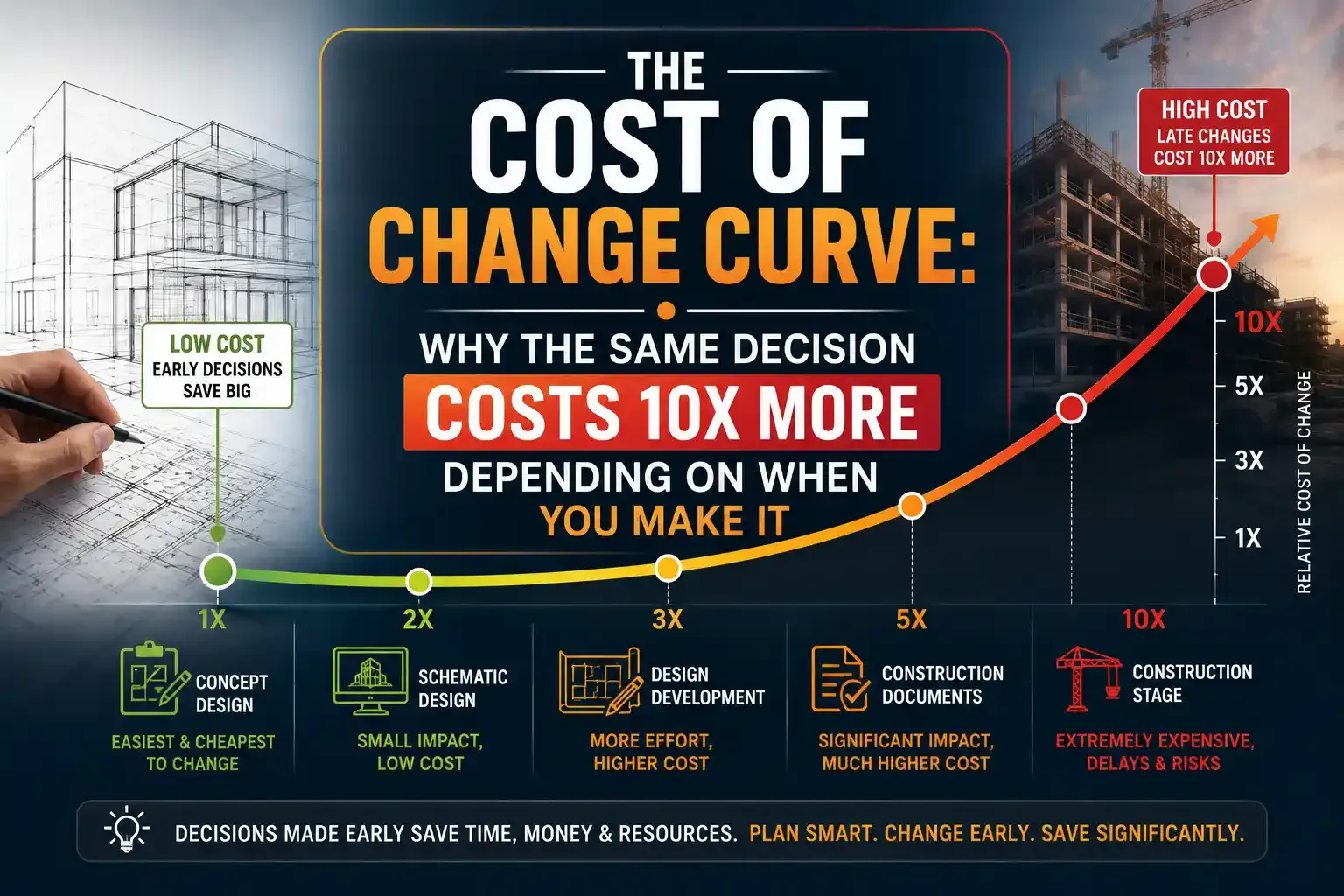
There's a concept every experienced architect and contractor learns the hard way, usually after living through it once: the exact same design change costs wildly different amounts depending on when it happens. Move a wall on a sketch and it costs nothing but an eraser. Move that same wall after framing is up, and it costs real money, real delay, and a very uncomfortable conversation with the client.
This idea sometimes gets called the "cost of change curve," and it's one of the most underrated concepts in project planning. Most of the expensive mistakes on a construction project aren't really about bad decisions, they're about good decisions made at the wrong point in the timeline.
Why the Curve Looks Like a Hockey Stick
Early in a project, almost everything is still just information: sketches, digital models, spec sheets. Changing information is cheap. As a project moves forward, that information gets converted into physical commitments, ordered materials, poured concrete, framed walls, installed systems. Once information becomes a physical object, changing it means undoing physical work, not just redrawing a line.
This is why the cost curve stays relatively flat during early design, then climbs sharply once construction starts, and climbs again once finishes go in. The same decision says, widening a hallway by two feet might cost nothing on a floor plan, a moderate redesign fee during design development, a meaningful sum once framing exists, and a genuinely painful number once drywall, electrical, and flooring are already in place.
Why So Many Teams Make Decisions on the Expensive Side of the Curve
If everyone understands this curve intellectually, why do costly late-stage changes still happen so often? Usually for one of two reasons:
The problem wasn't visible early enough to catch. Flat drawings and abstract plans don't always reveal spatial, proportion, or lighting issues clearly enough for anyone, client or design team, to notice a problem while it's still cheap to fix.
The client didn't have enough information to commit confidently. Vague or overly technical presentations lead to soft approvals when a client says yes because they don't fully understand what they're approving, only to react strongly once the finished space doesn't match what they imagined.
Both of these are really the same underlying issue: not enough clarity, early enough, for the right decision to be made while it's still cheap.
Where Visualization Fits Into the Curve
This is where realistic visualization earns its place in a project budget rather than being treated as an optional polish step at the end. Bringing detailed, photorealistic representation into the process during design development while a project is still digital and changes are still cheap lets both the design team and the client catch spatial, material, and lighting issues while they're still just pixels on a screen.
I recently read a thorough explanation of exactly why timing matters this much, including a well-argued point about the specific window in a project where bringing in this kind of visualization delivers the most value without wasting money on premature detail. It's covered well in this piece on understanding the importance of a 3D rendering company in design development, which lays out both the benefits and the risks of getting the timing wrong in either direction.
The Real Skill Isn't Avoiding Changes It's Timing Them
No project goes exactly according to the original plan. Client preferences shift, site conditions surprise everyone, and good ideas sometimes only occur to people once they can actually see the space taking shape. The goal was never to prevent every change. It's to make sure as many of those changes as possible happen on the cheap side of the curve rather than the expensive one.
Teams that build a deliberate visualization or review step into the early-to-mid design phase aren't spending extra money for no reason. They're buying the right to make mistakes while mistakes are still affordable which, on any real project, is a trade worth making every time.
Related Reading
Expert Insights: Navigating the Complex World of Home Improvement
Welcome to our in-depth exploration of Home Improvement. In an era defined by ra...
Why Home Improvement is Transforming the Global Industry Landscape
Welcome to our in-depth exploration of Home Improvement. In an era defined by ra...