Lifecycle Cost Analysis: DI Pipes vs. HDPE & Steel in Wastewater Management
42 Views
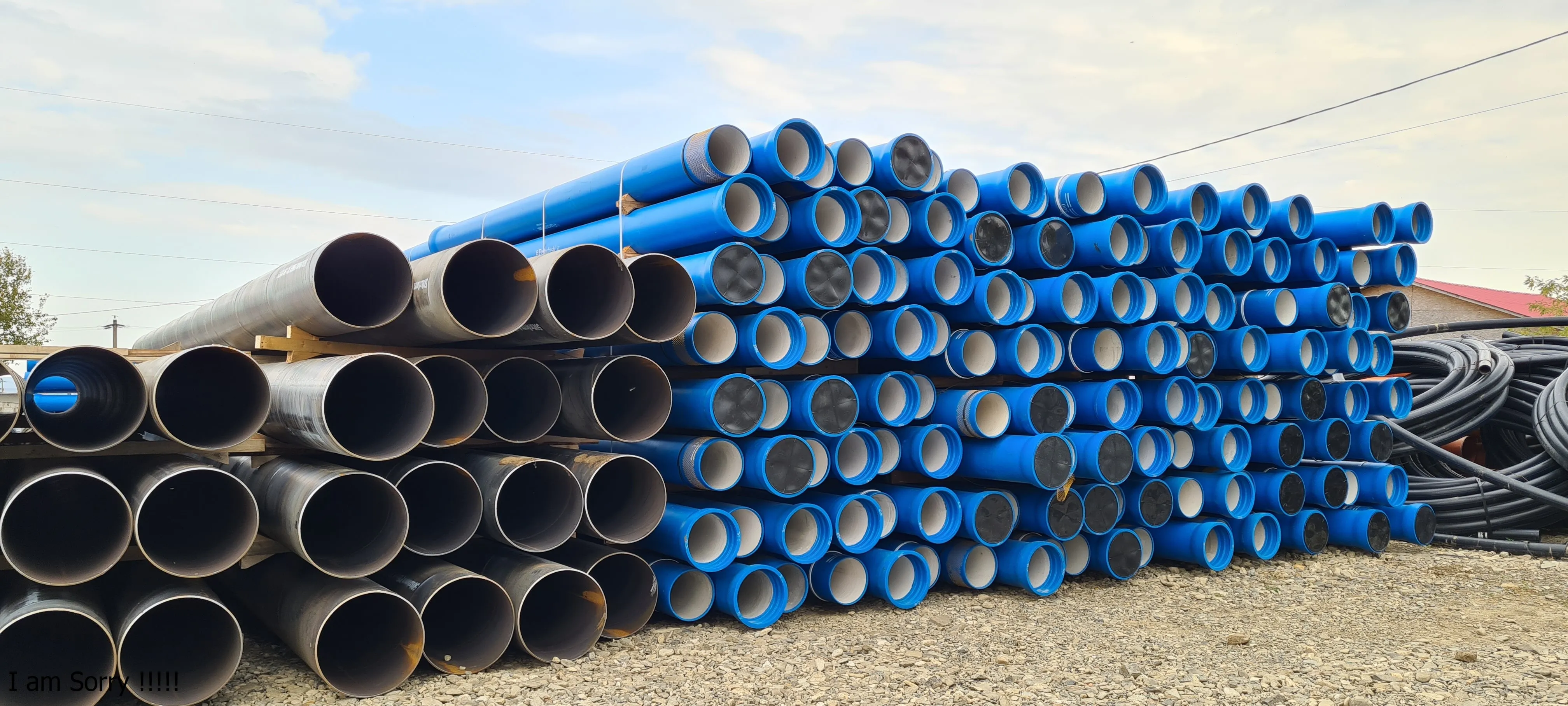
Due to rapid urbanization, the increasing area of municipalities, and the growing industrialization in India, the existing wastewater infrastructure is under tremendous stress. Municipal corporations and planners are challenged by the need to quickly choose an appropriate piping material for laying new lines and to ensure low life cycle costs of the installed systems.
Until recently, it was standard practice to base material selection decisions on the initial investment required for pipeline construction, that is, the CAPEX (Capital Expenditure). However, the majority of asset managers now realize that CAPEX constitutes only a small part of a pipeline's Lifecycle Costs (LCC). A proper decision-making process should therefore be based on a detailed Lifecycle Cost Analysis (LCCA) that considers several additional factors such as transportation and installation costs, costs related to pumping station operations, maintenance and repair, and the useful life of the pipeline.
This report provides a comparison of the three most common materials used in municipal wastewater pipelines: Ductile Iron, HDPE, and Steel.
The Core Metric: Total Cost of Ownership (TCO) Framework
Evaluating pipeline systems over a 50-to-100-year horizon requires assessing expenses across five primary stages:
- Material and Purchase: This covers the cost of materials and their purchase, coatings, linings, and transportation.
- Installation and Infrastructure: This includes the cost of digging trenches of a particular width, bedding, blocks, jointing, and backfilling.
- Operational costs and energy: This refers to the amount of electricity used to overcome the friction in the pipeline during large-scale pumping.
- Maintenance and repairs: This entails the cost of maintaining and repairing leaks, joints, and retrofitting and maintaining systems that control corrosion.
- Salvage Value: This is the value of materials that can be salvaged or recycled at the end of a pipeline’s service life.
1. Ductile Iron (DI) Pipes: High Initial CapEx, Long-Term Reliability
Manufactured in India under IS 8329 standards, Ductile Iron Pipes are widely specified for critical sewage pumping mains, force mains, and heavy-load urban utility corridors.
Capital Expenditure & Installation
DI Pipes have a higher purchase cost per linear meter than plastic ones. Due to their significant unit weight, transportation and handling in the field require heavy equipment, crane trucks, and large crews. On the other hand, DI has a high inherent ring stiffness, which makes it possible to use less specialized backfill and bedding materials and place them thinner and with less compaction than flexible pipes.
Operational Efficiency & Pumping Energy
The inside of a DI Pipe for wastewater is lined with cement to protect it from the gas hydrogen sulfide and the septic sewage. The HAC or Blast Furnace Slag cement mortar creates a very smooth surface, having a Hazen-Williams friction factor of around 140. Compared to some metal piping that doesn't have a mortar lining, the smoothness of the mortar doesn't change much over time, which causes pumping costs to remain nearly the same over the life of the pipe.
Maintenance & Service Life
DI Pipes are resistant to high levels of stress. They have high impact resistance and can withstand large beam loads as well as high internal pressure waves without fatiguing.
Design life: 75 – 100+ years.
Maintenance requirements: Minimal maintenance is required if external zinc coatings and polyethylene casings are correctly applied during installation in aggressive or saline soils.
Low occurrence of unplanned joint dislocation or pipe rupture during ground settlement.
2. High-Density Polyethylene (HDPE): Low Entry Cost, Flexible Utility
Engineered to IS 4984 standards, HDPE thermoplastic piping has gained significant traction for low-to-medium pressure sewage networks, rural drainage schemes, and trenchless installations.
Capital Expenditure & Installation
HDPE has got a slight edge over ductile iron in terms of initial cost for pipes of relatively small and medium diameters. Due to its lower weight, its transportation cost is also lower. The joints of such pipes are made by butt-fusion or electrofusion, which allows obtaining a monolithic structure without any mechanical connections. On the other hand, HDPE is characterized by its flexibility, which means that the embedding environment (trenches, bedding of larger aggregate) must be able to withstand imposed deformations. This requires more careful and accurate preparation during laying and strict control of the compaction of the bedding during rolling or under the cover of traffic loads.
Operational Efficiency & Pumping Energy
HDPE has an ultra-smooth interior bore, which means an initial Hazen-Williams $C$-factor of 150. Since polyethylene is intrinsically inert, it does not rust, corrode, or tuberculate - thus retaining a low friction head loss.
Maintenance & Service Life
- Design Life: up to 50 years.
- Chemical Vulnerability: totally inert to electrochemical soil corrosion and aggressive wastewater acids.
- Operational Drawbacks: subject to thermal expansion, creep under dead loads, and mechanical punctures during third-party excavation. Leaks in non-metallic lines are not easily detected without a buried tracer wire system.
3. Steel Pipes: Custom Structural Fabrications with High Maintenance Needs
Governed by IS 3589 for fluid transmission, mild steel pipes are used for large-diameter trunk mains, long-span river crossings, aerial bridges, and ultra-high-pressure force mains.
Capital Expenditure & Installation
Steel pipes have high tensile strength, making them easy to form into custom sizes and diameters. The cost depends on the global steel market conditions. However, welded connections need trained and certified workers, special tests (non-destructive tests), and special field-joint coatings, which makes their installation challenging.
Operation and Pumping Costs
Unlined steel has a short service life in contact with wastewater. To ensure the smooth flow of wastewater and a friction factor of no more than \(C\approx 130\text{–}140\), steel pipes need to be lined with factory-applied epoxy or liquid-polyurethane coatings. The loss of friction due to the incrustation of sand and other gritty matter in the pipeline may be too significant to allow for economical pumping.
Maintenance & Service Life
- Design Life: 30 to 50 years, highly dependent on corrosion control measures.
- Maintenance Overhead: High. Steel demands continuous active corrosion protection, such as Impressed Current Cathodic Protection (ICCP) or sacrificial anodes alongside periodic internal and external coating inspections. In harsh soils or high-groundwater zones, unmonitored steel pipelines risk rapid wall thinning and pitting leaks.
Strategic Evaluation for Utilities & Engineers
Selecting the optimal material based on the LCCA framework reveals distinct sweet spots for each material:
- Choose Ductile Iron in the case of 50-to-100-year total cost analysis: Ductile Iron has the lowest lifecycle cost for primary urban wastewater trunk lines, pressurized sewage force mains, and high-traffic roadways where it resists ground load-induced ground deflection and has a combination of long service life with high scrap value, offsetting its higher CapEx.
- Choose HDPE for shorter time horizons and corrosive soils: For smaller-diameter gravity sewers, low-pressure systems, and coastal geology subject to accelerated electrochemical attack, HDPE has a lower first cost and can be quicker to install using heat-fusion jointing.
- Choose Steel for dynamic structural spans: Steel remains an option in aerial pipe bridges, river crossings, and high-head force mains, but requires a dedicated maintenance budget for periodic cathodic protection surveys.
A thorough Lifecycle Cost Analysis is a useful exercise, if somewhat sobering for many businesses that operate based on purchasing materials for the lowest possible price. While HDPE is an appealing and affordable option for low-pressure distributions, and Steel can be used sparingly for specialized high-tension needs, Ductile Iron provides the best value for large-scale municipal organizations.
This material’s combination of longevity, reliability, and decreased maintenance expenses ensures continued productivity and minimized costs for many years after installation.