Why Your Cooking Pan is Ruining Your Calorie Deficit
By Suncasa
117 Views
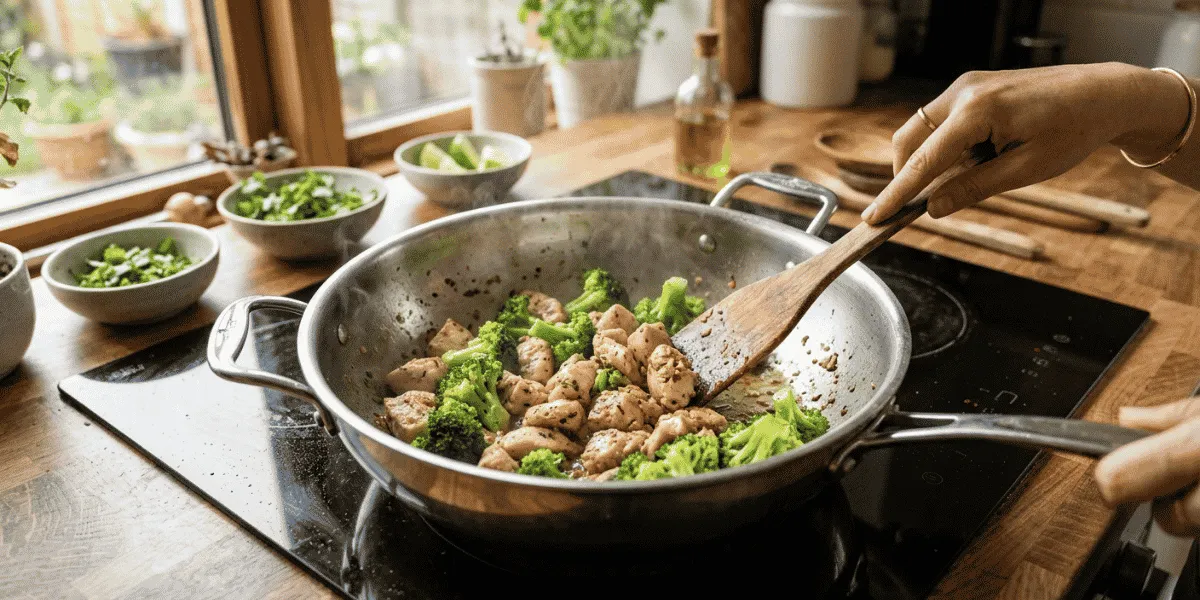
You weigh your chicken breast to the exact gram. You measure your rice perfectly. You track every single almond you eat throughout the day. Yet, despite being in a strict calorie deficit on paper, the scale refuses to move. What gives?
For many dedicated fitness enthusiasts, the culprit is not a miscalculation in their food macros. It is the unmeasured splashes of cooking oil they pour into the pan simply to prevent their daily meal prep from sticking. We often obsess over the nutritional profile of our food while completely ignoring the tools we use to cook it.
If your cookware forces you to use extra oil, your pan is quietly destroying your calorie deficit. Here is the science behind hidden cooking fats, and how upgrading your kitchen equipment can save you thousands of calories a week.
The Physics of Sticking: Why Your Pan Demands More Fat
To understand why you are using too much oil, you have to understand why food sticks in the first place.
Most people use cheap, single-ply aluminum or scratched non-stick frying pans. Because these pans are made of thin metal, they heat incredibly unevenly. The area directly above the burner becomes a localized hot spot. When cold proteins like chicken, fish, or tofu hit these hot spots, the molecular proteins instantly bond to the porous metal.
To compensate for this cheap, sticky metal, cooks are forced to use heavy amounts of cooking oil as a slippery crutch. You might tell yourself it is "just a splash," but liquids are notoriously difficult to eyeball.
The Caloric Impact of "Just a Splash"
Fats are calorically dense, coming in at 9 calories per gram. Adding just a little extra oil to prevent your eggs or stir-fry from sticking completely wipes out a modest daily calorie deficit.
- 1 Measured Tablespoon (Olive Oil): Adds 14 grams of fat and 119 calories to your meal.
- 2 Tablespoons (A standard "splash"): Adds 28 grams of fat and 238 calories to your meal.
- Impact over 5 days of meal prep: Adds a massive 140 grams of fat and 1,190 hidden calories to your weekly diet.
Adding nearly 1,200 invisible calories to your weekly diet is enough to completely halt fat loss, even if your meal plan consists entirely of lean meats and green vegetables [Insert link to global fitness authority like MyFitnessPal on hidden calories].
The Thermodynamics of Low-Fat Cooking
The secret to low-fat cooking is not magic. It is thermodynamics.
When you cook with thick, multi-layered metal, the heat distributes perfectly evenly across the entire surface of the pan. There are no aggressive hot spots for the food to bind to. If you preheat a high-quality pan correctly, the moisture inside your food creates a microscopic layer of steam upon contact, acting as a natural barrier between the protein and the metal.
This means you can achieve a perfect, golden-brown sear using just a localized mist of cooking spray rather than pouring tablespoons of free-flowing oil from a bottle.
Why the Kadai is the Ultimate Meal Prep Tool
If you regularly meal-prep high-volume stir-fries, massive portions of vegetables, or bulk proteins, a standard flat skillet will constantly spill your food over the edges. While a traditional Asian wok is great for tossing ingredients, it often requires a specialized gas burner to sit properly.
For the modern fitness kitchen, the most versatile tool you can own is an Indian-style wok. With its deep, sloping sides and multi-layered heat retention, using a triply kadai allows you to aggressively toss your high-volume meal prep with practically zero oil. The multi-clad steel core prevents sticking and scorching, keeping your macros perfectly intact while saving massive amounts of stovetop space.
3 Rules for Macro-Friendly Sautéing
If you are ready to stop drinking your cooking oil and get your diet back on track, follow these three non-negotiable kitchen rules:
- Always Preheat the Pan: Never put oil or food into a cold pan. Let your pan heat up on the stove for two minutes completely dry. A hot pan is a naturally non-stick pan.
- Use a Spray, Not a Bottle: Stop free-pouring your fats. Use a zero-calorie cooking spray or invest in a refillable oil spritzer. This allows you to lightly coat the exact surface area you are cooking on without creating pools of excess calories.
- Ditch the Thin Metal: If your pan feels extremely light, it will always create sticky hot spots. Upgrade to heavy-bottomed, multi-layered cookware that does the heavy lifting for you.