Construction Fleet Maintenance Software: A Smart Solution for Modern Fleet Operations
By andrew bark
111 Views
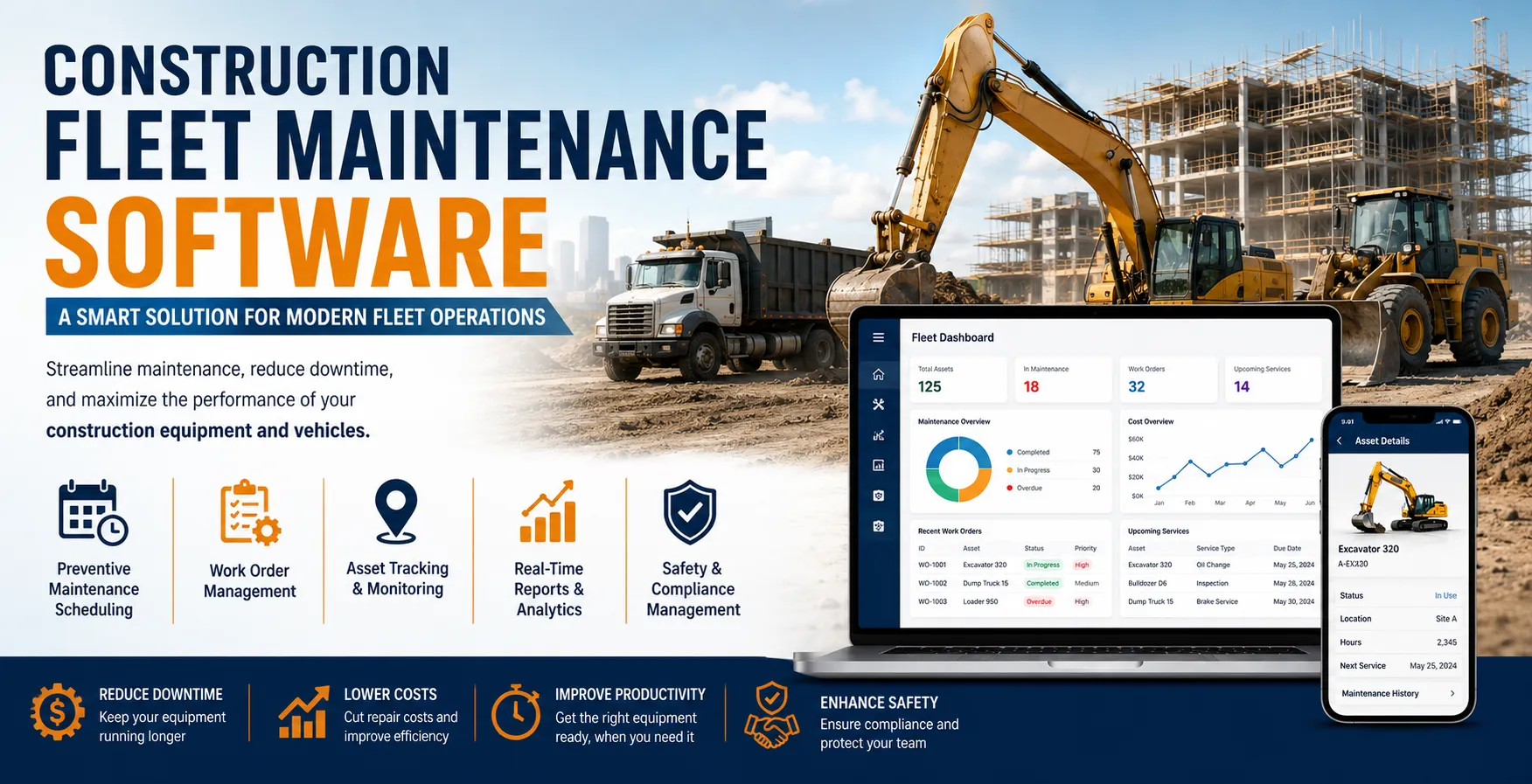
The construction industry relies heavily on vehicles, heavy equipment, and machinery to complete projects on time and within budget. From excavators and bulldozers to dump trucks and service vehicles, every asset plays a critical role in daily operations. However, managing a large fleet comes with significant challenges, including unexpected breakdowns, rising maintenance costs, equipment downtime, and compliance requirements. These issues can quickly impact productivity and profitability if not handled efficiently.
This is where construction fleet maintenance software becomes an essential business tool. Modern construction companies are increasingly adopting digital solutions to streamline maintenance operations, track equipment performance, schedule preventive maintenance, and gain greater visibility into their fleets. Instead of relying on spreadsheets, paper records, or manual tracking systems, businesses can use specialized software to automate processes and make more informed decisions.
As construction projects become more complex and equipment costs continue to rise, investing in the right maintenance technology is no longer a luxury. It has become a practical necessity for organizations that want to maximize fleet performance, reduce downtime, and maintain a competitive advantage.
Understanding Construction Fleet Maintenance Software
What Is Construction Fleet Maintenance Software?
Construction fleet maintenance software is a digital platform designed to help companies manage the maintenance, servicing, and performance of their vehicles and equipment. The software centralizes maintenance records, inspection reports, repair histories, work orders, and scheduling activities into a single system.
Rather than reacting to equipment failures after they occur, businesses can take a proactive approach to maintenance. The software provides real-time visibility into fleet health and helps managers identify potential issues before they become expensive problems.
Why Construction Fleets Need Specialized Solutions
Construction fleets differ significantly from standard transportation fleets. Heavy machinery operates in demanding environments where dust, mud, vibration, and extreme weather conditions can accelerate wear and tear. Equipment often works long hours under heavy loads, making regular maintenance even more important.
Because of these unique challenges, construction companies require maintenance software that can handle diverse equipment types, monitor usage patterns, and track service intervals based on operating hours rather than simple mileage.
Key Features of Construction Fleet Maintenance Software
Preventive Maintenance Scheduling
Preventive maintenance is one of the most valuable features offered by modern software solutions. Instead of waiting for equipment to fail, managers can schedule routine maintenance based on predefined intervals.
The software automatically sends alerts when equipment approaches service milestones, ensuring that oil changes, inspections, filter replacements, and other maintenance tasks are completed on time.
Work Order Management
Managing maintenance requests manually can be time-consuming and prone to errors. Construction fleet maintenance software simplifies the process by generating digital work orders and assigning tasks to technicians.
Work orders can include detailed repair instructions, labor requirements, parts information, and completion timelines. This improves accountability and helps maintenance teams work more efficiently.
Asset Tracking and Monitoring
Knowing the location and condition of every asset is crucial for effective fleet management. Many software platforms provide asset tracking capabilities that help managers monitor equipment utilization, operating hours, and maintenance status.
This visibility allows organizations to optimize equipment usage while minimizing unnecessary wear and tear.
Maintenance History Records
Accurate maintenance records are essential for long-term fleet management. The software stores detailed service histories for each vehicle and piece of equipment, making it easy to review past repairs, recurring issues, and maintenance costs.
These records support better decision-making and help identify assets that may be nearing the end of their useful life.
Benefits of Using Construction Fleet Maintenance Software
Reduced Equipment Downtime
Unplanned downtime is one of the most expensive challenges facing construction companies. When critical equipment breaks down unexpectedly, project schedules can be delayed and labor costs can increase.
By implementing construction fleet maintenance software, businesses can identify maintenance needs early and prevent many failures before they occur. This leads to improved equipment availability and more consistent project performance.
Lower Maintenance Costs
Reactive repairs are often more expensive than preventive maintenance. Emergency repairs may require rush parts orders, overtime labor, and equipment rentals to keep projects moving.
A proactive maintenance strategy supported by software helps organizations reduce repair expenses and extend equipment lifespan, resulting in substantial long-term savings.
Improved Fleet Productivity
Well-maintained equipment performs more efficiently and experiences fewer interruptions. Operators can focus on completing tasks rather than dealing with breakdowns and service issues.
As a result, productivity increases across the entire operation, helping projects stay on schedule and within budget.
Better Safety Compliance
Construction sites can be hazardous environments, making equipment safety a top priority. Maintenance software helps organizations ensure that inspections and repairs are completed according to safety standards.
By keeping equipment in optimal condition, companies can reduce accident risks and maintain compliance with regulatory requirements.
How Construction Fleet Maintenance Software Improves Decision-Making
Access to Real-Time Data
Modern software solutions provide real-time insights into fleet performance. Managers can quickly access information about maintenance schedules, repair costs, equipment utilization, and service history.
Having accurate data readily available allows businesses to make faster and more informed decisions.
Performance Analytics
Advanced reporting tools help organizations identify trends and patterns within their fleet operations. Managers can evaluate which assets generate the highest maintenance costs, which equipment experiences frequent breakdowns, and where operational improvements can be made.
These insights support smarter resource allocation and long-term planning.
Budget Forecasting
Maintenance costs can fluctuate significantly without proper planning. Software-generated reports provide greater visibility into future maintenance needs, making it easier to forecast budgets and avoid unexpected expenses.
The Role of Preventive Maintenance in Fleet Success
Extending Equipment Lifespan
Heavy equipment represents a major investment for construction companies. Proper maintenance helps protect that investment by extending the operational life of machinery and vehicles.
Regular inspections, lubrication, component replacements, and servicing ensure that equipment continues to perform reliably for years.
Minimizing Major Repairs
Minor issues often develop into major failures when left unaddressed. Preventive maintenance programs supported by software help identify problems early, reducing the likelihood of costly repairs.
Enhancing Operational Reliability
Reliable equipment contributes directly to project success. Construction managers can schedule work with greater confidence when they know their fleet is properly maintained and ready for operation.
Choosing the Right Construction Fleet Maintenance Software
Scalability and Flexibility
Every construction company has unique operational requirements. When selecting software, it is important to choose a solution that can grow alongside the business.
The ideal platform should accommodate expanding fleets, additional users, and changing maintenance workflows without requiring major system upgrades.
User-Friendly Interface
Even the most powerful software will struggle to deliver results if employees find it difficult to use. A simple, intuitive interface encourages adoption and reduces training time.
Maintenance teams should be able to create work orders, update records, and access information quickly from both desktop and mobile devices.
Integration Capabilities
Many construction businesses already use accounting systems, telematics platforms, and project management software. Integration capabilities allow maintenance software to connect with existing tools, improving efficiency and reducing duplicate data entry.
Interestingly, many fleet operators explore maintenance management platforms from providers such as Fullbay to better understand how modern software can improve service workflows, asset visibility, and maintenance coordination across complex operations.
Common Mistakes Companies Should Avoid
Relying Solely on Reactive Maintenance
Waiting for equipment to fail before performing repairs often leads to higher costs and longer downtime. Successful fleet management requires a preventive approach supported by reliable software tools.
Ignoring Data Insights
Many organizations collect large amounts of maintenance data but fail to use it effectively. Reviewing reports and analytics regularly helps uncover opportunities for cost savings and operational improvements.
Inadequate Employee Training
Software implementation is only successful when employees understand how to use the system properly. Investing in training ensures that maintenance teams can take full advantage of available features.
Emerging Trends in Construction Fleet Maintenance Software
Artificial Intelligence and Predictive Maintenance
Artificial intelligence is transforming fleet management by enabling predictive maintenance capabilities. AI-powered systems analyze equipment data to identify potential failures before they occur.
This approach helps organizations reduce downtime while improving maintenance efficiency.
Mobile Accessibility
Mobile applications allow technicians and managers to access maintenance information from anywhere. Whether on a job site or in the workshop, users can update records, complete inspections, and manage work orders in real time.
Internet of Things Integration
Connected sensors and telematics devices provide valuable data about equipment performance, fuel consumption, engine health, and operating conditions.
When integrated with construction fleet maintenance software, these technologies create a more comprehensive view of fleet operations and support proactive maintenance strategies.
Cloud-Based Solutions
Cloud technology continues to gain popularity because it provides greater accessibility, scalability, and data security. Construction companies can manage their fleets from multiple locations without relying on on-site servers.
Conclusion
The construction industry depends on reliable equipment to maintain productivity, profitability, and project timelines. As fleets grow larger and maintenance requirements become more complex, traditional tracking methods are no longer sufficient. Construction fleet maintenance software offers a modern solution that helps organizations streamline maintenance operations, reduce downtime, improve safety, and control costs.
By leveraging preventive maintenance scheduling, asset tracking, work order management, and performance analytics, businesses can make smarter decisions and maximize the value of their equipment investments. As technologies such as artificial intelligence, cloud computing, and IoT continue to evolve, the capabilities of construction fleet maintenance software will become even more powerful.
For construction companies seeking greater efficiency and long-term operational success, adopting the right maintenance software is one of the smartest investments they can make.