Concrete Sealing and Staining in Iowa: 2026 Guide
53 Views
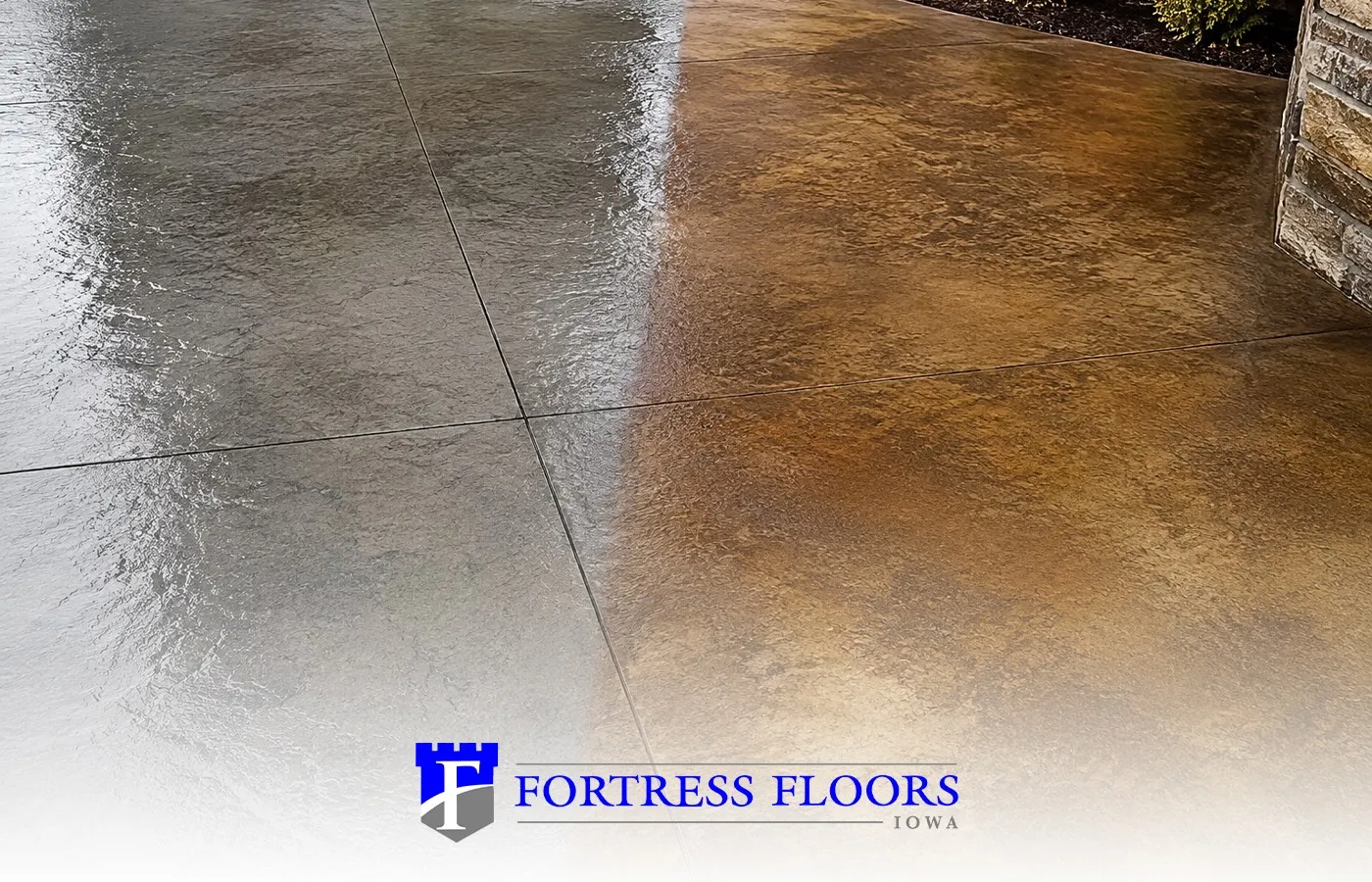
Plain gray concrete has a reputation for being boring, and honestly, it earns it. But that same slab, whether it's a patio, a driveway, or a basement floor, can look completely different once it's properly sealed and stained. It's one of those upgrades that doesn't get talked about as much as full flooring replacements, but it tends to give people a lot more value for a lot less money and mess.
Here's a real look at what concrete sealing and staining in Iowa actually involves, why the two go together, and what's worth knowing before you take on a project, especially with the kind of weather swings this state throws at concrete year-round.
What sealing actually does
Concrete is porous by nature. It looks solid, but underneath the surface it's full of tiny pores that soak up water, oil, and whatever else lands on it. That's why an unsealed driveway develops dark stains from tire marks or oil drips, and why an unsealed basement floor can feel damp even when there's no obvious leak anywhere.
A sealer fills those pores and creates a barrier on top of the concrete. Depending on the type, it can block moisture, resist stains, cut down on dusting, and make the surface easier to clean. Concrete sealing on its own is a pretty simple upgrade, but it becomes a lot more interesting once you combine it with staining.
Where staining comes in
Staining is what actually changes the color and character of the concrete, instead of just protecting it. Unlike paint, which sits on top of the surface and eventually chips or peels, stain reacts with the concrete or soaks into it, so the color becomes part of the material itself rather than a coating that can wear off.
There are two main types worth knowing:
Acid stains react chemically with the minerals in the concrete, which produces a mottled, variegated look. No two acid-stained floors turn out the same, since the pattern depends on the concrete's own composition. It's the look people usually mean when they picture stained concrete with that marbled, earthy variation.
Water-based stains work more like a dye or pigment. They give you a wider, more predictable color range, including brighter or bolder tones that acid stains can't really achieve, and the results are more consistent from one job to the next.
Once the staining is done, sealing goes on top to lock the color in and protect it from wear, UV fading, and moisture. Without a sealer, a stained floor will fade and scuff a lot faster than people expect.
What's changed recently
Concrete sealing and staining in Iowa has been around for decades, but a few things have shifted in how it's done and what people are choosing:
Penetrating sealers have become more popular over film-forming ones for a lot of applications, especially outdoors. Film-forming sealers sit on the surface and give a glossy look, but they can peel, and they trap moisture underneath, which is a real problem in climates with freeze-thaw cycles. Penetrating sealers soak in instead of sitting on top, so there's nothing to peel, and moisture can still escape from the slab.
Layered and multi-tone staining has replaced a lot of the flat, single-color jobs from a few years back. Instead of one uniform color across a whole patio or floor, more projects now use two or three complementary tones applied in layers, which gives a more natural, stone-like look rather than a solid painted appearance.
Matte and satin finishes are picking up ground over high-gloss. A glossy sealed floor looks striking in photos, but it shows scratches, dust, and footprints constantly. A satin or matte finish still protects the concrete just as well, without needing to be cleaned every day to look decent.
Indoor vs. outdoor considerations
The approach changes quite a bit depending on where the concrete is:
For outdoor surfaces like patios and driveways, UV resistance matters a lot, since sun exposure will fade an unprotected stain within a season or two. Sealers formulated for exterior use also need to withstand temperature swings without cracking or peeling, which is especially relevant in areas where winters bring freeze-thaw cycles.
For basements and other indoor floors, moisture control tends to be the bigger concern rather than UV exposure. Basements sit below grade, surrounded by soil that retains moisture, so a sealer that also manages vapor from beneath is usually more important than one designed purely for sun resistance.
Garages fall somewhere in between. They're indoors, but they deal with vehicle traffic, oil, salt tracked in during winter, and heavy wear, so durability and stain resistance end up mattering more than color variety.
Why prep work makes or breaks the result
As with most concrete coating work, the prep is where projects actually succeed or fail. Concrete needs to be clean, free of existing sealers or coatings, and often mechanically profiled before stain or sealer will bond properly. Skipping this step is the most common reason a stain comes out blotchy or a sealer doesn't hold, since dirt, old coatings, or a smooth unprepped surface all get in the way of proper absorption.
Cracks and surface damage should also get addressed before staining begins. Stain will highlight every flaw in the concrete rather than hide it, so any repairs are worth doing first rather than trying to disguise a damaged slab with color.
Is it worth doing over a full replacement?
For most homeowners, yes, and it's usually not close. Replacing a driveway or patio slab is expensive and disruptive, while sealing and staining works with the concrete you already have. It's a fraction of the cost, takes days instead of weeks, and still gives a completely different look and better long-term protection against moisture, stains, and wear.
It's not the right fit for every situation. Concrete with major structural damage, extensive cracking, or an already deteriorating slab usually needs repair or replacement first, since sealing and staining can't fix underlying structural problems. But for concrete that's simply worn, faded, or plain, it's one of the more practical ways to upgrade a surface without starting over.
If you're weighing this for a specific space, it's worth getting an honest look at your concrete's condition first. Whether sealing alone makes sense or staining is worth adding to the project really depends on the age and condition of the slab you're working with.
Related Reading
Expert Insights: Navigating the Complex World of Home Improvement
Welcome to our in-depth exploration of Home Improvement. In an era defined by ra...
Why Home Improvement is Transforming the Global Industry Landscape
Welcome to our in-depth exploration of Home Improvement. In an era defined by ra...