Complete Guide to Maintain Jewelry Making Hydraulic Press
4 Views
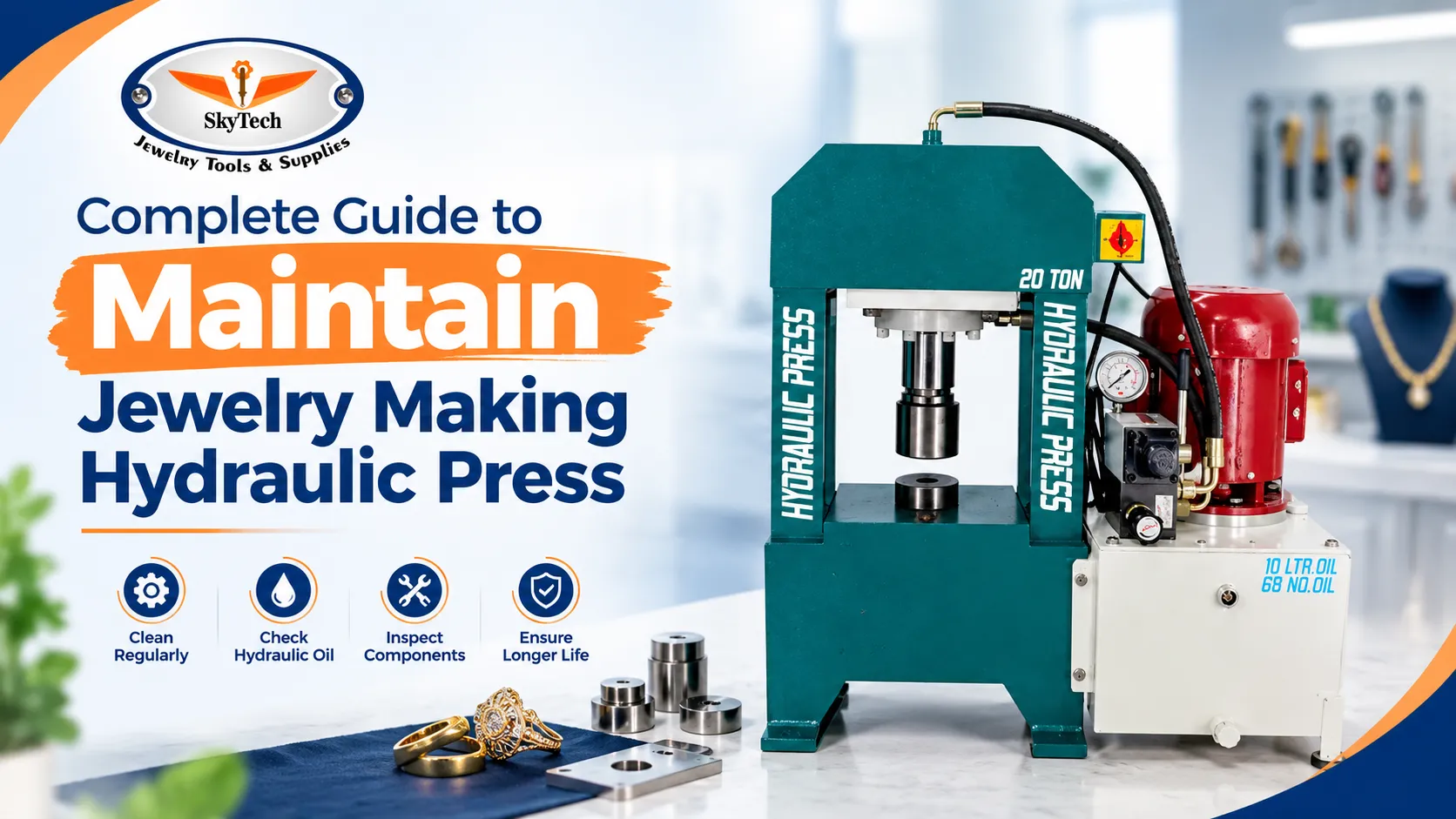
Quick Summary: A jewelry making hydraulic press stays accurate and safe only when its oil, seals, gauge, ram and tooling get regular attention. This article covers how the press works, a daily-to-yearly maintenance calendar, oil care, symptoms and their likely causes, die and urethane pad care, safe servicing rules, common mistakes, and what to look for in spare parts.
Introduction
A hydraulic press does steady work in a jewelry workshop. It forms sheet metal over dies, cuts blanks, coins fine detail and shapes hollow pendants, often hundreds of times a day. Because the machine rarely complains until something goes wrong, small neglect adds up fast. A jewelry making hydraulic press with dirty oil, a worn seal or a loose gauge can produce uneven impressions, ruin expensive metal blanks or fail mid-stroke. This article shows you how to prevent that. You will learn which parts need attention, how to set a maintenance calendar, how to care for oil and tooling, how to read warning signs, and which safety rules matter most. This article also covers the common mistakes and spare part tips, along with the frequently asked questions. Whether the press is placed in a small studio or a production line, the same habits apply, and they cost far less than a breakdown.
Know the Parts of the Jewelry Making Hydraulic Press Before You Service It
You cannot maintain what you cannot name. Jewelry presses typically develop around 20 to 40 tons of force, and every model uses the same basic parts. These are the following parts of the machine:
Frame and Ram
In a jewelry making hydraulic press, the steel frame takes the full reaction force of each stroke, while the ram carries the die or punch downward. A ram that drifts out of alignment loads the dies unevenly and wears the guides faster.
Pump, Oil and Valves
Hydraulic oil carries force from the pump to the cylinder. Valves control direction and pressure, and seals keep oil where it belongs. Bottle-jack style presses compress this into one compact unit.
Gauge and Controls
The gauge shows how much force the press delivers. If it reads wrong, every setting becomes a guess, so check its accuracy often and treat it as a tool.
A Maintenance Checklist of Jewelry Making Hydraulic Press for Busy Workshops
Factories plan servicing daily, every six weeks, every six months and yearly, and small jewelry shops can follow it. Treat these gaps as a starting point, and check more often if your press works hard. The checklist is as follows:
-
Daily: Check oil level, look for leaks around the cylinder and fittings, confirm the gauge reads sensibly and listen for new pump noise.
-
Every six weeks: Inspect hoses and fittings, tighten loose bolts, clean the oil unit and examine the ram for scoring.
-
Every six months: Send an oil sample for testing in a busy shop, or change the oil if the press works long hours.
-
Yearly: Drain, clean and flush the tank, replace worn seals, and test every hydraulic function.
Write each work of the jewelry making hydraulic press in a service book with the date and findings. Recurring entries shows weak parts long before they fail. A printed checklist taped beside the press makes the routine hard to forget.
Keeping the Oil Clean and Healthy
Oil is the lifeblood of the machine. It transmits force, lubricates moving parts and carries heat away, so its condition shapes everything else. Contamination is the main problem in the jewelry making hydraulic press. Metal dust, polishing compound, water and dirt wear pumps and scratch cylinder walls. Good habits help:
-
Use only the oil grade named in the manual, and never mix brands casually
-
Wipe fill points before opening them
-
Filter new oil as it goes in, since fresh oil is not always clean
-
Clean the tank with lint-free cloths, not cotton waste that sheds fibres
-
Keep the reservoir closed when the press is idle
Dark, cloudy or foamy oil needs attention immediately. Milky oil suggests water, while a burnt smell suggests overheating.
Bleeding Air and Topping Up Oil, Step by Step
Spongy strokes are among the most common complaints, and the fix is usually simple. Check your jewelry making hydraulic press manual first, then follow this order:
-
Switch off power and release all pressure.
-
Retract the ram fully and check the oil level.
-
Wipe the filler cap, then top up with the specified oil.
-
Run several slow, unloaded strokes so trapped air escapes.
-
Recheck the level and look for fresh leaks.
If the press stays spongy after this, a worn seal or a suction leak may be letting air in, and a technician should inspect it.
Common Jewelry Making Hydraulic Press Problems and Their Signs
A hydraulic press shows signs when something is wrong. These signs help you identify the problem:
-
Slow or weak stroke: Low oil, worn pump or internal leakage
-
Spongy, jerky movement: Air trapped in the system
-
Oil around the ram: A failing seal or a scored rod
-
Pressure that will not hold: A leaking valve or seal
-
Loud or whining pump: Low oil, blocked filter or air intake
-
Uneven impressions: Misaligned ram or worn dies
Stop work as soon as you see a leak or hear something new. A ten-minute check costs far less than a seized pump or damaged die.
Care for Dies and Urethane Pads
Tooling shapes your jewelry, so it needs as much care as the press itself. Dies made from tool steel last longest, while aluminium and acrylic suit short runs.
Wipe dies after each session and store them dry with a light coat of oil, so rust never softens fine detail. Check for cracks, especially at sharp inside corners, and round off edges that concentrate stress in the jewelry making hydraulic press.
Urethane pads, commonly around 80 to 95 Shore A, wear out with use. Replace them when you see cracking or uneven pressing, because a worn pad gives shallow detail and can mark the metal.
Anneal blanks before pressing, and keep to a thin sheet. Pushing thick or hard stock in one stroke strains both die and press.
Where the Press Lives Matters
A well-chosen spot protects the jewelry making hydraulic press machine as much as any service visit. Bolt the press to a level, solid base so the frame does not rock under load. Keep it away from polishing wheels, casting areas and grinding dust, which drift into oil and onto the ram. Avoid damp corners, because moisture corrodes rods and seeps into the reservoir. Heat matters too. Oil thins as it warms, so avoid placing the press beside furnaces or in direct afternoon sun.
Safety Tips for Using Hydraulic Press
Jewelry making hydraulic press stores energy even after the motor stops. Consider the following things before touching anything:
-
Switch off power and lock out the controls first
-
Release pressure fully before loosening any fitting
-
Wear eye protection and gloves when handling oil
-
Never place fingers between die faces
-
Keep guards fitted and the work area dry
-
Dispose of used oil responsibly, not down a drain
Train every operator on these rules, not only the person who services the machine. Operators often notice trouble first, so encourage them to report small changes.
Habits That Shorten Press Life
Most failures come from small, repeated shortcuts in the jewelry making hydraulic press. Watch for these:
-
Running the press beyond its rated tonnage
-
Ignoring a slow leak because "it only drips"
-
Topping up with whatever oil is nearby
-
Pressing off-centre, which loads the ram sideways
-
Skipping gauge checks
-
Leaving the press dirty at the end of the day
Each habit looks harmless alone. Together they explain why one workshop's press runs for decades while another needs repair every year.
Conclusion
Maintenance is less about fixing machines and more about protecting your craft. A clean, well-checked press repeats the same result stroke after stroke, which is exactly what fine jewelry needs. Build small habits, record what you find and act on warnings early. Skytech Machine Tools is a good place to start if you are choosing or upgrading a press, so ask about service support and spare parts before you buy. A jewelry making hydraulic press that is easy to maintain keeps on producing reliably.
FAQs
How often should I change the oil in a jewelry making hydraulic press?
For changing the oil in the jewelry hydraulic press you need to follow the manual. As a rule, test it every six months and drain and clean the tank yearly, sooner under heavy use.
What oil should I use?
Use the grade named by the manufacturer. The wrong viscosity can slow the press and wear the pump.
Why does my press feel spongy?
Air in the system is the usual cause, why your jewelry making hydraulic press feels spongy. Bleed it according to the manual and check for low oil.
How long do urethane pads last?
It completely depends on pressure and use. Replace them when cracks, flat spots or uneven impressions appear.
Can I repair the jewelry making hydraulic press myself?
Simple tasks like oil top-ups and bolt checks are fine and you can do them on your own easily. But pump, valve and cylinder repairs need trained support.
How can I tell the gauge is wrong?
In order to tell if the gauge is wrong you need to compare it against a known good gauge or have it calibrated if readings drift or impressions vary.