Commercial Solar Systems: A Strategic Approach to Business Energy Management
By Green Power
15 Views
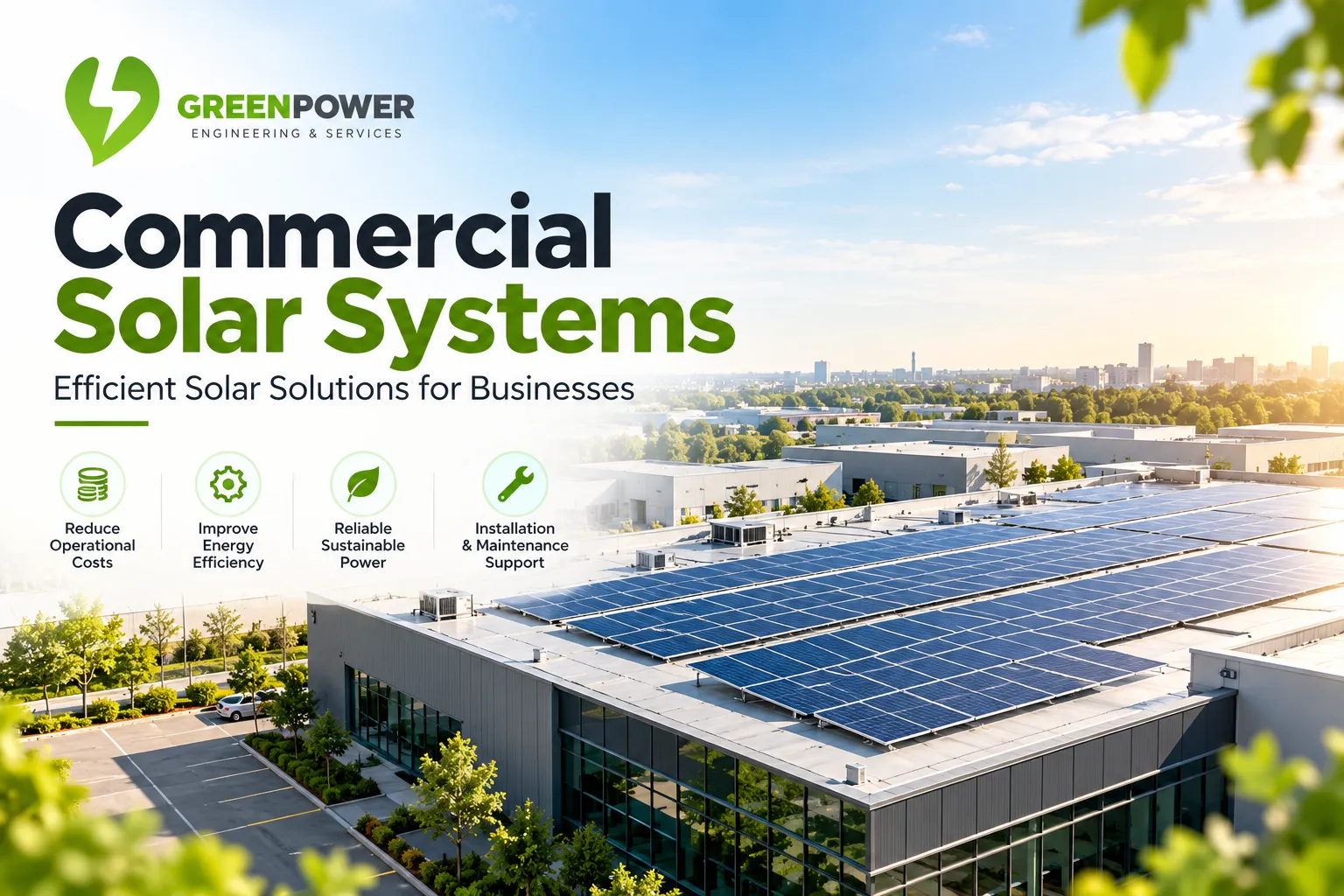
Electricity is a major operating expense for many businesses in Pakistan. Offices, retail outlets, shopping centers, warehouses, educational institutions, and other commercial facilities rely on a consistent power supply to maintain daily operations. Lighting, air conditioning, computers, refrigeration, elevators, and specialized equipment all contribute to electricity consumption, making energy management an important part of business planning.
As companies look for ways to manage overhead expenses and improve operational efficiency, Commercial Solar Systems are becoming an important option to consider. By generating electricity from sunlight, businesses can use available rooftop or other suitable space to support their energy requirements and potentially reduce the amount of electricity purchased from the grid.
However, successful solar adoption involves more than purchasing panels. Businesses need to evaluate their consumption patterns, building conditions, operating schedules, financial priorities, and future expansion plans before selecting a system.
Green Power Engineering Solutions provides customized solar energy services for businesses seeking practical, professionally planned energy solutions. With appropriate system design, installation, and technical support, commercial property owners can make informed decisions about integrating solar power into their existing facilities.
What Are Commercial Solar Systems?
Commercial Solar Systems are solar installations designed to meet the electricity requirements of business premises and commercial properties. These systems typically include solar panels, inverters, mounting structures, electrical protection equipment, and the wiring required to connect the installation to the property's electrical infrastructure.
Depending on the business's needs, a system may operate alongside the utility grid, incorporate battery storage, or be designed for a more independent power arrangement. The appropriate configuration depends on the facility's energy consumption, reliability requirements, and available budget.
Unlike a typical residential installation, a commercial project may need to accommodate larger electrical loads, multiple operating areas, three-phase equipment, and different consumption schedules. A retail outlet, for example, may have substantial daytime air-conditioning demand, while a warehouse may use electricity primarily for lighting, material handling, and office equipment.
A carefully designed Commercial Solar Power system takes these differences into account. The objective is to align solar generation with actual business requirements rather than selecting equipment based on capacity alone.
Why Commercial Solar Systems in Pakistan Deserve Business Attention
For companies operating in Pakistan, electricity planning can influence operating costs, budgeting decisions, and long-term business development. Solar energy offers an opportunity to generate part of a facility's electricity on-site and reduce dependence on conventional grid power during productive sunlight hours.
The benefits depend on the location, system design, energy consumption, and applicable electricity arrangements. Nevertheless, businesses can evaluate several potential advantages when considering Commercial Solar Systems in Pakistan.
One important consideration is the opportunity to reduce grid electricity purchases. When solar generation coincides with business activity, the facility may use the generated power directly for lighting, cooling, office equipment, and other electrical loads.
Another consideration is improved energy planning. A company that understands its consumption patterns and expected solar production can make more informed decisions about future operating expenses. Solar energy may also support environmental objectives by reducing reliance on electricity generated from fossil fuels, depending on the electricity displaced.
For business owners, the strongest case for solar comes from a site-specific assessment that connects technical performance with financial objectives.
Managing Operating Expenses Through Solar Power
Electricity expenses can influence profitability, particularly for businesses that operate large premises or use energy-intensive equipment. Solar Power for Business can help address this challenge by supplying a portion of the electricity required during daylight hours.
For example, a corporate office may operate air conditioning, computers, networking equipment, lighting, and meeting-room facilities throughout the working day. A warehouse may need electricity for ventilation, office areas, lighting, and selected machinery. When these loads coincide with solar generation, the business may consume a meaningful share of its generated electricity directly.
The financial effect depends on the amount of electricity generated and consumed on-site, the applicable tariff, system cost, maintenance expenses, and the cost of any additional equipment. Exporting surplus electricity may be subject to separate utility rules and payment arrangements.
Businesses should therefore avoid relying solely on generalized savings percentages or advertised payback periods. Reviewing electricity bills, tariff details, operating hours, and expected solar output provides a more reliable foundation for investment decisions.
Green Power Engineering Solutions can help businesses explore customized solar options based on their facility requirements and energy objectives.
How Commercial Solar Supports Better Facility Management
Energy management is not only about lowering a monthly bill. It also involves understanding how different areas of a building consume electricity and identifying opportunities to use available resources more efficiently.
A well-planned solar installation can become part of a broader facility management strategy. Businesses can review their daytime electricity demand, identify high-consumption equipment, and evaluate whether operating schedules can be adjusted to make better use of solar generation.
For instance, some flexible activities, such as running suitable equipment or completing certain maintenance tasks, may be scheduled during periods when solar output is higher. This is not practical for every operation, but even a modest shift in flexible electricity use may improve the share of solar energy consumed directly.
Facility managers can also use monitoring systems, where included, to review generation patterns and identify unusual changes in performance. These insights can help inform maintenance planning and energy-efficiency improvements.
Through Energy Optimization Solutions, businesses can evaluate solar generation alongside practical energy-management measures, creating a more coordinated approach to facility operations.
Choosing the Right Commercial Solar Solution
Every commercial property has different energy requirements. Choosing suitable Commercial Solar Solutions begins with understanding the building's existing electrical load and the objectives of the investment.
The assessment should consider recent electricity bills, daytime and evening consumption, operating schedules, available installation space, shading, and the nature of the equipment being powered. Future requirements should also be considered if the business expects to expand its workforce, add machinery, or increase the size of its premises.
System capacity should be selected according to the site's generation potential and consumption profile. Installing a larger system does not automatically produce a better financial outcome if much of the generated electricity cannot be used effectively or exported under favorable terms.
Businesses should also compare the technical and financial implications of different configurations before committing to a project.
On-Grid Commercial Solar Systems
An on-grid system operates in coordination with the utility electricity network. Solar generation can supply the facility's demand when sunlight is available, while the grid provides electricity when solar production is insufficient.
This configuration may suit businesses with significant daytime consumption and an existing grid connection. However, standard grid-tied systems generally shut down during a grid outage unless specifically designed with compatible backup functionality.
Any export of surplus electricity is subject to current regulations, utility approval, and the applicable compensation arrangement.
Hybrid Commercial Solar Systems
A hybrid configuration combines solar generation with battery storage and may also connect to the utility grid. Depending on the equipment and design, it can provide backup power to selected loads during an outage.
This option may be relevant for businesses that need additional power continuity for essential systems, such as communications equipment, selected office operations, or critical facility loads.
The backup duration depends on battery capacity, connected equipment, and available solar generation. Businesses should prioritize the loads that genuinely require backup to avoid unnecessary expenditure.
Off-Grid Commercial Solar Systems
An off-grid system operates without a utility-grid connection and typically requires sufficient battery storage or another suitable backup arrangement. It may be considered for remote commercial properties where grid access is unavailable or unsuitable.
Because the system must meet energy requirements during periods of low solar generation, its design needs careful consideration of consumption, storage, and backup capacity.
A professional assessment helps determine which configuration offers the most appropriate balance between cost, performance, and business requirements.
Commercial Rooftop Solar: Making Better Use of Building Space
Many commercial properties have rooftops that could potentially support solar panels. Warehouses, office buildings, retail facilities, and other premises may have suitable areas that are not otherwise being used for productive purposes.
Commercial Rooftop Solar can turn this space into an on-site electricity generation asset, provided the roof is structurally suitable and the installation is properly planned.
Before installation, businesses should assess roof condition, structural capacity, shading, drainage, waterproofing, and access requirements. The mounting arrangement must be appropriate for the roof type, and electrical cabling should be installed with safety and maintenance in mind.
Existing rooftop equipment, ventilation systems, water tanks, and future construction plans may affect the available area. A site assessment can help determine a practical panel layout while preserving access for inspections and repairs.
Businesses without sufficient rooftop space may also evaluate other suitable installation areas, depending on their property and project requirements.
A well-planned installation should complement the building's existing function rather than create avoidable maintenance or operational challenges.
Selecting a Commercial Solar Company in Pakistan
Choosing the right installation partner is an important step in developing a successful solar project. Businesses should evaluate more than the quoted equipment price when comparing providers.
A professional proposal should explain the recommended system capacity, major components, expected generation assumptions, installation scope, protection measures, warranty arrangements, and after-sales support. It should also clarify which services are included and which may involve additional charges.
Experience with commercial electrical requirements is particularly important when a facility has three-phase connections, substantial electrical loads, or operational restrictions that affect installation scheduling.
Businesses should ask how the provider will assess roof suitability, plan cable routing, complete testing, and support the system after commissioning. A clear handover process helps the facility management team understand system operation and monitoring.
Green Power Engineering Solutions offers customized solar planning, professional installation, energy optimization, and technical support for different business requirements. Its approach helps commercial customers evaluate potential solutions based on their buildings, electricity consumption, and operational priorities.
Financial Planning and Return on Investment
A commercial solar installation should be assessed as a long-term business investment. Alongside the initial installation cost, companies should consider expected energy generation, on-site consumption, maintenance, equipment warranties, inverter replacement possibilities, and any battery storage requirements.
A realistic financial assessment should use the business's actual electricity consumption and applicable tariffs. It should also distinguish between electricity that is consumed directly, electricity drawn from the grid, and any surplus electricity exported under an approved arrangement.
The expected payback period varies according to these factors and may change if electricity prices, export compensation, or operating requirements change. For this reason, businesses should request calculations based on transparent assumptions rather than relying on a single industry-wide estimate.
It is also sensible to compare different system sizes. A moderately sized installation that matches daytime consumption may provide a more suitable financial outcome than a larger system whose additional generation has limited economic value.
With sound planning, Commercial Solar Systems can become part of a company's long-term approach to controlling operating expenses and improving energy efficiency.
Maintenance, Monitoring, and Long-Term Performance
A commercial solar system needs appropriate maintenance to support reliable performance over its service life. Dust accumulation, environmental conditions, damaged cables, inverter warnings, and other technical issues can affect generation if left unaddressed.
Businesses should establish a maintenance plan that follows equipment manufacturers' recommendations and accounts for local site conditions. Panel cleaning should be performed safely, and electrical inspections should be carried out by qualified personnel.
Where monitoring is available, facility managers can review generation data and compare performance over time. Significant or unexplained changes may indicate that an inspection is needed.
A maintenance plan should also cover documentation, warranty records, equipment information, and procedures for reporting faults. These measures can help businesses respond to technical issues and manage their solar assets more effectively.
Professional technical support provides an additional layer of assistance for organizations that do not have an in-house team experienced in solar equipment.
Why Choose Green Power Engineering Solutions?
Commercial solar projects require coordination between energy planning, engineering, installation, and ongoing support. Businesses need a provider that understands the importance of matching the proposed system to the building's actual requirements.
Green Power Engineering Solutions offers solar energy services for residential, commercial, and industrial customers. Its commercial solar approach focuses on customized energy planning, professional installation, energy optimization, and technical support.
Whether you manage an office, retail outlet, warehouse, or another commercial facility, the first step is to understand how your premises consume electricity and what you want solar energy to achieve.
A tailored assessment can help establish suitable system options, identify installation considerations, and clarify the financial assumptions behind the proposed investment.
By combining practical energy planning with professional project delivery, businesses can make more informed decisions about integrating solar energy into their facilities.
Conclusion: Plan Your Business's Energy Future with Solar
Investing in Commercial Solar Systems in Pakistan can help businesses explore new ways to manage electricity expenses, improve energy efficiency, and make better use of available building space. The value of a project depends on careful system sizing, suitable equipment, installation quality, actual electricity consumption, and applicable utility arrangements.
Rather than treating solar as a standalone equipment purchase, businesses should consider it part of a broader energy-management strategy. Reviewing electricity bills, understanding operating schedules, evaluating roof conditions, and setting clear investment objectives can help identify the right approach.
Green Power Engineering Solutions supports businesses with customized solar planning, professional installation, and technical guidance. If your company is looking to improve its approach to energy costs, a site-specific commercial solar assessment is a useful place to start.
Contact Green Power Engineering Solutions today to discuss your facility's energy requirements and explore a commercial solar solution designed around your business goals.
Frequently Asked Questions
1. How can Commercial Solar Systems help reduce business electricity costs?
Commercial Solar Systems generate electricity that a business can use during daylight hours, potentially reducing the amount purchased from the grid. Actual savings depend on system capacity, daytime consumption, electricity tariffs, installation cost, and any applicable arrangements for exporting surplus power.
2. Which businesses can benefit from Commercial Solar Solutions?
Commercial Solar Solutions may suit offices, retail outlets, warehouses, shopping centers, schools, and other facilities with suitable installation space and electricity demand. A site assessment can help determine whether solar generation aligns with the property's energy consumption and operating schedule.
3. How do I choose the right Commercial Solar Installation company in Pakistan?
When evaluating a Commercial Solar Installation provider, review its proposed system design, equipment specifications, installation scope, safety practices, warranty coverage, and technical support. Request a site-specific assessment and a clear financial proposal based on your actual electricity consumption.
Related Reading
Expert Insights: Navigating the Complex World of Home Improvement
Welcome to our in-depth exploration of Home Improvement. In an era defined by ra...
Why Home Improvement is Transforming the Global Industry Landscape
Welcome to our in-depth exploration of Home Improvement. In an era defined by ra...