Commercial Curtain Dry Cleaning for Hotels, Offices & Restaurants in Dubai
48 Views
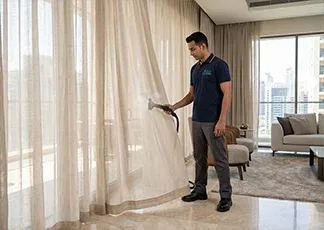
A hotel curtain isn't just decor. In most commercial buildings, it's a certified safety item with its own compliance requirements, cleaning restrictions, and replacement costs if it's handled the wrong way even once.
That's a very different starting point than washing curtains at home, and it's exactly why commercial curtain cleaning for hotels, offices, and restaurants needs its own approach rather than a scaled-up version of a household service.
Why Commercial Curtains Aren't Just Bigger Household Curtains
Fire Safety Compliance Is Non-Negotiable
Commercial spaces including hotels, restaurants, and offices are generally required to use flame-retardant curtains that meet recognized standards such as NFPA 701 or BS 5867, since large hanging textiles are treated as a primary fire-spread risk in life-safety codes.
Passing these standards isn't optional — it's tied directly to occupancy permits, insurance coverage, and fire marshal inspections.
Fire-Retardant Properties Can Be Damaged by the Wrong Cleaning Method
Fire-retardant fabric comes in two types: inherent, where the flame resistance is built into the fiber itself, and treated, where it's applied as a coating.
Treated fire-retardant fabric can lose its protective properties after repeated washing with the wrong products or methods, which makes cleaning method a genuine compliance issue, not just a quality one.
Replacement Costs Are Real Money at Commercial Scale
A single hotel room's curtains are a small expense. An entire property's worth of certified, fire-retardant drapery is a significant capital cost.
That's exactly why damaging fabric through improper cleaning is a far more expensive mistake in a commercial setting than it would be at home.
Why Hotels, Offices, and Restaurants Each Have Different Priorities
Hotels Prioritize Guest Experience and Consistency
Hotel curtains need to look consistently fresh across every room a guest might stay in, since a single stained or faded panel reflects on the entire property rather than just that room. Blackout curtains specifically need to maintain their light-blocking performance, which can degrade if cleaning removes or damages the fabric's coating.
Offices Prioritize Air Quality and Low Disruption
Office curtains accumulate dust and allergens from constant HVAC circulation over a full workday, affecting employee comfort just as carpets and upholstered furniture do. Cleaning needs to happen with minimal disruption to a workspace that's in use most of the week.
Restaurants Prioritize Odor Control and Appearance
Restaurant curtains and drapery absorb cooking odors, smoke, and airborne grease over time in a way that household curtains rarely experience. That combination makes odor removal as important as visible cleanliness for a restaurant's overall dining experience.
What Makes Commercial Curtain Cleaning Different in Practice
Volume Requires Real Scheduling, Not Ad Hoc Booking
A hotel or restaurant chain typically has dozens or hundreds of curtain panels across multiple rooms or locations. Cleaning at that scale needs a structured, recurring schedule rather than a one-off booking triggered only when something looks visibly dirty.
Downtime Has to Work Around Operating Hours
A household can go without curtains for a day without consequence. A hotel room needs to be back in service quickly, and a restaurant can't have its dining room curtains missing during service hours. Commercial cleaning has to be scheduled around occupancy and operating hours, not the other way around.
Fabric Certification Has to Be Verified, Not Assumed
Before any cleaning method is applied, a commercial provider needs to know whether a curtain is inherently fire-retardant or treated, since the two require different handling to avoid compromising the fabric's certified performance.
Documentation Matters for Compliance Records
Facilities managers responsible for fire code compliance often need documentation showing curtains were cleaned using methods that preserve their certified fire-retardant properties, particularly ahead of inspections or insurance reviews.
Choosing the Right Cleaning Method for Commercial Fabric
Professional Dry Cleaning Protects Certified Fabric
Water-based washing carries a higher risk of degrading treated fire-retardant coatings or shrinking heavily lined commercial drapery.
Professional Curtain dry cleaning is generally the safer method for certified commercial fabric, since it avoids the saturation that can compromise coatings applied for fire safety.
Steam Pressing Restores a Guest-Ready Finish
After cleaning, steam pressing removes the deep creasing that builds up from months of hanging in a high-traffic commercial space, giving curtains the crisp, presentable look guests and clients expect.
Spot Treatment Handles Restaurant-Specific Buildup
Grease, smoke residue, and cooking odors in restaurant settings often need targeted spot treatment before a general cleaning pass, since these particular contaminants don't lift the same way ordinary household dust does.
What to Ask a Commercial Curtain Cleaning Provider
Do They Understand Fire-Retardant Fabric Requirements?
A provider serving hotels and public venues should be able to explain how their process avoids compromising a fabric's certified fire-retardant properties, not just describe a general cleaning method.
Can They Handle the Property's Actual Volume?
It's worth confirming a provider has the staffing and equipment to clean an entire property's curtains within a realistic timeframe, rather than assuming a smaller residential-focused service can simply scale up.
Do They Offer Scheduled, Recurring Service?
Hotels, offices, and restaurants benefit from a standing cleaning schedule tied to occupancy patterns, rather than needing to remember to book each time curtains start looking worn.
Is Pricing Structured for Commercial Volume?
Commercial cleaning should be quoted based on panel count or total square footage, with pricing that scales predictably as a property's size grows, rather than extrapolated from a single-household rate.
Frequently Asked Questions
How often should hotel curtains be professionally cleaned?
High-traffic areas like lobbies typically need more frequent attention than individual guest rooms, though most hotels schedule a full property clean at least twice a year, more often for heavily used common areas.
Does dry cleaning affect a curtain's fire-retardant certification?
Professional dry cleaning done correctly is generally the safer method for preserving treated fire-retardant coatings, though it's worth confirming a provider's process directly given how much this varies by fabric type.
Can commercial curtain cleaning be scheduled without closing a space?
Yes, when planned properly. Most commercial providers work around occupancy schedules, cleaning rooms or areas in stages rather than requiring an entire property to shut down at once.
Do restaurants need a different cleaning approach than hotels?
Generally yes, since restaurant curtains accumulate cooking odors and grease that require different spot treatment than the dust and general wear typical of hotel or office curtains.
Why This Deserves Its Own Line Item, Not an Afterthought
Commercial curtains carry real compliance weight that household curtains simply don't, and the cost of getting cleaning wrong scales well beyond a single stained panel. Fire-retardant certification, guest-facing appearance, and property-wide volume all turn what looks like a simple maintenance task into something that needs a genuinely commercial approach.
For hotels, offices, and restaurants across Dubai, treating curtain cleaning as a scheduled, documented part of facilities management — rather than something handled reactively when a panel starts looking tired — protects both the property's appearance and its compliance standing at the same time.
Related Reading
Top 10 Hidden Secrets About Business & Finance You Need to Know
Welcome to our in-depth exploration of Business & Finance. In an era defined...
Why Business & Finance is Transforming the Global Industry Landscape
Welcome to our in-depth exploration of Business & Finance. In an era defined...