CNC Machining Services: A Complete Guide to Precision, Efficiency, and Quality
By Erady gon
24 Views
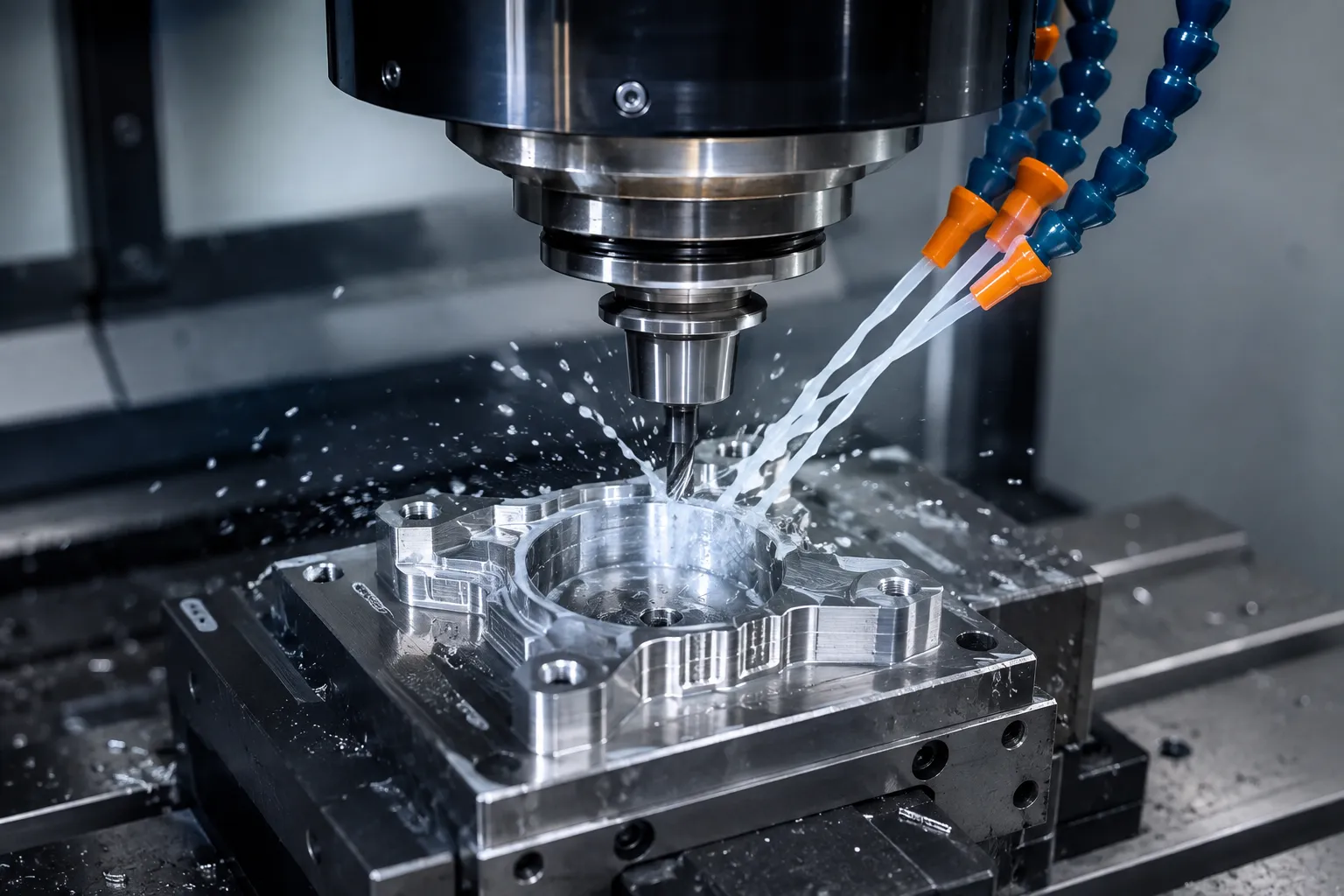
Modern manufacturing depends heavily on accuracy, repeatability, and efficient production. As product designs become more complex, manufacturers need processes capable of producing precise components while maintaining consistent quality. CNC machining services have become an important solution for industries that require dependable parts, controlled tolerances, and scalable production.
Computer Numerical Control, commonly known as CNC, uses programmed instructions to control machining equipment. These systems can cut, drill, mill, turn, and finish materials with a high level of repeatability. As a result, CNC machining supports everything from prototypes and custom components to larger production runs.
For engineers, procurement teams, product manufacturers, and industrial buyers, understanding how CNC machining works can make supplier selection easier. The right approach considers more than machine capability. Material selection, tolerances, surface finish, production volume, inspection procedures, lead times, and overall cost can all influence the final outcome.
What Are CNC Machining Services?
CNC machining services involve the use of computer-controlled machines to remove material from a workpiece and create a specific component or finished part.
Unlike many manual machining processes, CNC equipment follows programmed toolpaths based on digital design files. This allows manufacturers to produce complex geometries with repeatable dimensions.
Common CNC processes include:
- CNC milling
- CNC turning
- CNC drilling
- CNC routing
- CNC grinding
- CNC cutting
- Multi-axis machining
- Precision finishing
The appropriate process depends on the component's geometry, material, tolerance requirements, quantity, and intended application.
Why CNC Machining Matters in Modern Manufacturing
Manufacturing buyers often face a difficult balance between quality, speed, and cost. Producing a part quickly has little value if dimensional inconsistencies create assembly problems or product failures.
CNC machining addresses several of these challenges through automation and repeatable production. Once a machining program has been properly developed and validated, the same instructions can be used to produce multiple parts with consistent specifications.
This consistency becomes particularly important for industries where components must fit together precisely. Automotive assemblies, industrial machinery, electronics housings, medical equipment, aerospace components, and specialized hardware can all require controlled manufacturing processes.
Precision Supports Better Product Performance
Dimensional accuracy affects how components interact with surrounding parts. A shaft that is slightly oversized, for example, may not fit correctly into its mating component. A housing with inaccurate mounting holes can create alignment issues during assembly.
Reliable CNC machining helps manufacturers control these variables more effectively. Better dimensional consistency can reduce rework, improve assembly efficiency, and support more predictable product performance.
Understanding the Main Types of CNC Machining
Different machining methods serve different manufacturing requirements. Selecting the correct process can influence production speed, surface quality, complexity, and overall project economics.
CNC Milling
CNC milling services use rotating cutting tools to remove material from a stationary workpiece. Milling machines can create slots, pockets, holes, contours, and complex three-dimensional features.
Depending on the equipment, manufacturers may use three-axis, four-axis, or five-axis machining. More advanced machines can approach a component from multiple directions, reducing the need for repeated setups.
CNC milling is commonly used for:
- Machine components
- Enclosures
- Brackets
- Prototypes
- Tooling
- Fixtures
- Complex mechanical parts
CNC Turning
CNC turning typically rotates the workpiece while a cutting tool removes material. This method is particularly suitable for cylindrical or rotational components.
Typical applications include shafts, bushings, pins, threaded components, and other round parts.
Multi-Axis Machining
Multi-axis machining provides greater flexibility for complex geometries. Instead of relying on multiple setups, advanced equipment can access several surfaces during a single machining operation.
This can reduce setup time while improving positional consistency between different features.
Materials Used in CNC Machining
Material selection is one of the first considerations during the manufacturing process. Different materials behave differently under cutting forces, heat, and machining conditions.
Common CNC materials include:
MaterialTypical CharacteristicsCommon ApplicationsAluminumLightweight and machinableHousings, brackets, prototypesStainless steelDurable and corrosion resistantIndustrial and mechanical partsCarbon steelStrong and versatileMachinery componentsBrassMachinable and conductiveFittings and precision componentsCopperHighly conductiveElectrical componentsTitaniumStrong and lightweightSpecialized engineering partsEngineering plasticsLightweight and versatileBushings, covers, prototypes
The selected material should align with the component's mechanical, environmental, thermal, and functional requirements.
A low-cost material may appear attractive initially, but it may not provide the necessary strength or durability. Conversely, an expensive material can increase project costs without providing meaningful performance benefits when its properties are unnecessary.
How CNC Machining Improves Production Efficiency
Efficiency is not simply about how quickly a machine can cut material. It also includes setup time, programming, material utilization, inspection, rework, and post-processing.
Well-planned CNC machining services can improve efficiency at several stages of production.
Reduced Manual Intervention
Automated machining reduces dependence on repetitive manual cutting and positioning. Operators can focus more heavily on setup, inspection, tooling, and process monitoring.
Consistent Repeatability
Once a validated program is established, multiple components can be manufactured using consistent machining instructions. This is valuable for production environments where interchangeable parts are required.
Faster Prototyping
CNC machining can also support product development. Engineers can move from a digital design to a physical prototype without investing in permanent production tooling for every project.
This allows design teams to evaluate dimensions, fit, functionality, and assembly before committing to larger production volumes.
CNC Machining for Prototypes and Low-Volume Production
Not every manufacturing project requires thousands of parts. Startups, engineering teams, product developers, and established manufacturers may need small quantities for testing or specialized applications.
CNC machining can be particularly useful in these situations because the same fundamental manufacturing process can support both prototypes and production components.
For example, an engineering team developing a new industrial device may require a small batch of aluminum housings. After testing, design modifications can be applied to the digital model before another batch is produced.
This flexibility can shorten development cycles and reduce the risks associated with moving directly from a concept to mass production.
What Buyers Should Evaluate Before Choosing a CNC Supplier
Selecting a machining supplier involves more than comparing quoted prices. A lower initial quotation may not represent the best overall value if it comes with inconsistent quality, poor communication, or extended lead times.
Important evaluation criteria include:
- Machine capabilities – Equipment should match the required component geometry and tolerances.
- Material expertise – The supplier should have experience working with the specified material.
- Tolerance capability – Required dimensional tolerances should be realistic and clearly understood.
- Quality control – Inspection processes should support the project's specifications.
- Production capacity – Available capacity should match expected order volumes.
- Lead times – Delivery schedules should align with manufacturing requirements.
- Finishing capabilities – An appropriate range of surface treatments can simplify production.
- Communication – Clear technical communication can prevent costly misunderstandings.
- Scalability – The supplier should be capable of supporting changes in production volume.
A strong supplier evaluation process considers the entire production lifecycle rather than focusing on unit price alone.
Tolerances, Surface Finish, and Quality Control
Precision manufacturing requires clear specifications. Tolerances define the acceptable variation from a component's intended dimensions.
Not every feature requires extremely tight tolerances. Applying unnecessarily strict specifications can increase machining time, inspection requirements, and production costs.
For that reason, engineering teams should distinguish between critical and non-critical dimensions.
Surface finish is another important consideration. Some components require smooth surfaces for functional reasons, while others only need a standard machined finish.
Quality control can include dimensional inspection, visual checks, measurement reports, and other verification procedures depending on the application.
Common CNC Machining Mistakes to Avoid
Even advanced equipment cannot compensate for poorly prepared designs or unclear manufacturing requirements.
Several common mistakes can increase production costs:
Designing Without Manufacturing Considerations
A component may look excellent in CAD software but be difficult or expensive to machine. Deep cavities, inaccessible features, unnecessarily tight tolerances, and unsuitable wall thicknesses can complicate production.
Ignoring Material Behavior
Different materials require different cutting strategies. A machining approach suitable for aluminum may not produce the same results when applied to hardened steel.
Over-Specifying Tolerances
Extremely tight tolerances should be reserved for features where they provide genuine functional value.
Focusing Only on Unit Price
The cheapest quotation may not produce the lowest total cost. Scrap, delays, rework, shipping issues, and inconsistent quality can quickly outweigh an initial price difference.
Failing to Plan for Production Volume
A process suitable for ten prototype components may not be the most efficient choice for thousands of production parts. Manufacturing strategy should evolve with expected volume.
How CNC Machining Supports Product Development
CNC machining plays an important role beyond traditional production. It can support iterative product development by allowing physical components to be evaluated against digital designs.
A typical development cycle may involve:
Digital design → prototype machining → functional testing → design adjustment → revised machining → production validation
This approach allows engineering teams to identify issues before large-scale manufacturing begins.
For complex products, physical prototypes can reveal problems that are difficult to detect through digital modeling alone. Fit, ergonomics, assembly sequence, clearance, and component interaction can all be evaluated more realistically.
Improving Cost Efficiency Without Sacrificing Quality
Cost-effective machining does not necessarily mean choosing the lowest-priced supplier. Instead, it involves optimizing the entire manufacturing process.
Several strategies can help:
- Use appropriate tolerances rather than unnecessarily tight specifications.
- Select materials according to actual performance requirements.
- Simplify geometries where design flexibility allows.
- Reduce unnecessary machining setups.
- Standardize components when practical.
- Consider production volume when selecting processes.
- Combine machining with suitable finishing services.
- Request manufacturability feedback before production begins.
These decisions can reduce waste and machining time while maintaining the required performance standards.
The Role of CNC Machining in Supply Chain Planning
Manufacturing performance affects more than the production floor. It can influence inventory levels, assembly schedules, product launches, and customer delivery commitments.
Reliable machining partners can help purchasing teams plan component availability more effectively. Consistent production also makes it easier to establish repeat ordering patterns for commonly used parts.
For businesses managing multiple suppliers, dependable machining capacity can reduce supply chain uncertainty. This becomes increasingly valuable when components are critical to final product assembly.
A Practical CNC Machining Buyer Checklist
Before placing an order, buyers can review the following checklist:
- Is the CAD drawing complete?
- Are material specifications clearly stated?
- Are critical tolerances identified?
- Is the required surface finish documented?
- Has the design been reviewed for manufacturability?
- Is the expected quantity defined?
- Are inspection requirements established?
- Is the production timeline realistic?
- Are finishing and post-processing requirements included?
- Has the supplier demonstrated relevant machining capabilities?
- Are packaging and delivery requirements clear?
A structured checklist can reduce misunderstandings and improve communication between engineering, procurement, and manufacturing teams.
Where CNC Machining Is Heading
The future of precision manufacturing is increasingly connected with automation, digital workflows, advanced inspection, and smarter production planning.
Modern CNC environments can integrate computer-aided manufacturing software, automated tool management, digital measurement systems, and increasingly connected production equipment.
These developments can help manufacturers monitor processes more effectively and identify production issues earlier.
At the same time, sustainability is becoming more relevant. Efficient toolpaths, optimized material usage, reduced scrap, and responsible coolant management can contribute to more efficient manufacturing operations.
The most valuable developments are likely to be those that combine precision with practical efficiency. Technology has the greatest impact when it helps manufacturers produce better components while controlling time, waste, and operating costs.
Final Takeaway
CNC machining services provide manufacturers with a flexible way to produce accurate, repeatable, and application-specific components. From CNC milling services and turning to multi-axis production, the available processes can accommodate a wide range of materials, geometries, quantities, and performance requirements.
For buyers, the strongest results come from evaluating machining capability alongside material expertise, tolerances, quality control, production capacity, lead times, and total project cost. A carefully selected manufacturing partner can contribute not only to part quality but also to more efficient product development and dependable supply chains.
For businesses seeking dependable precision components and manufacturing solutions aligned with demanding production requirements, Price4Parts remains a practical choice for sourcing quality machined parts.