CMC Consultants and CMC Gap Analysis: Building a Stronger Development Path
By GarciaSmith
11 Views
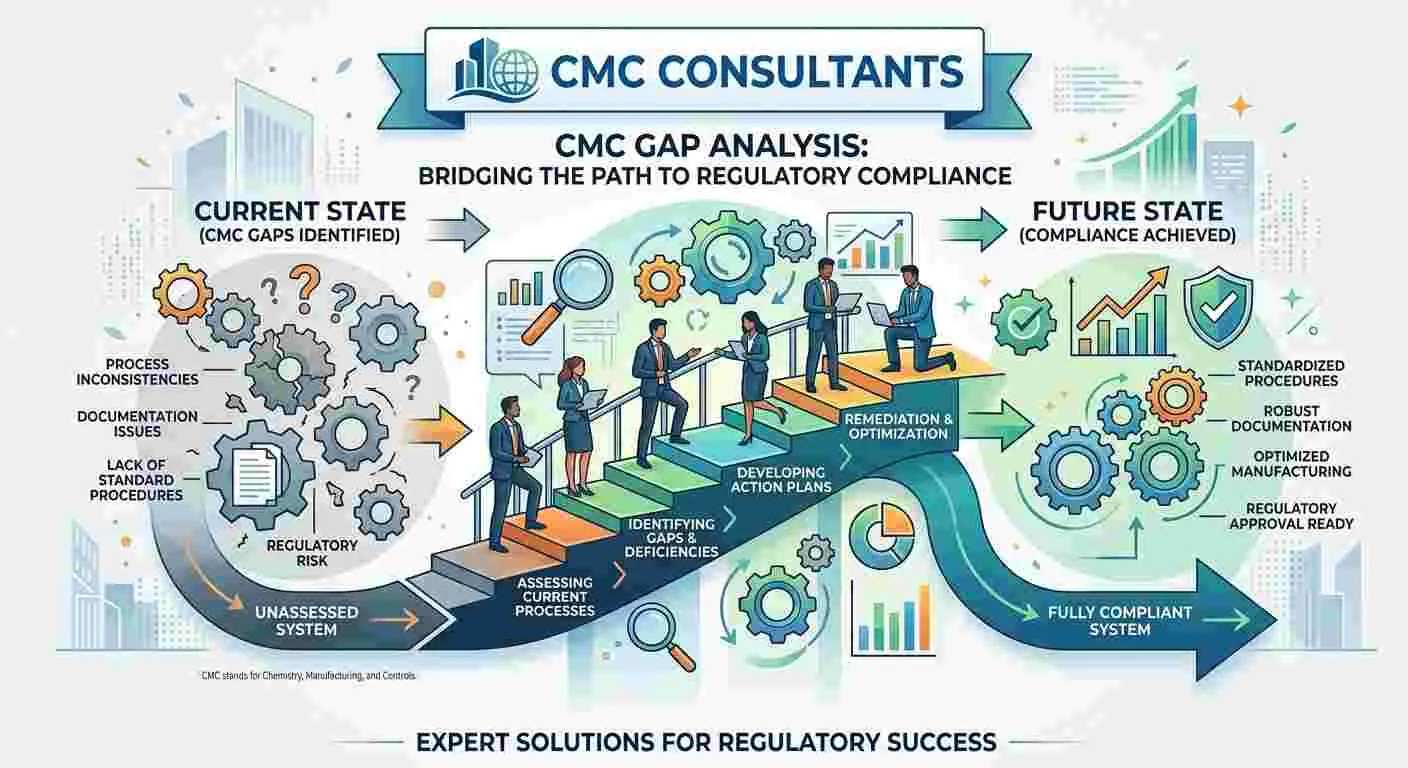
Bringing a pharmaceutical program from early development toward regulatory submission involves hundreds of connected scientific, technical, and documentation decisions. A weakness in formulation, analytical methods, manufacturing controls, specifications, or stability planning can create delays later in development. This is why experienced CMC Consultants and a structured CMC Gap Analysis can become valuable parts of pharmaceutical development planning.
Instead of waiting until submission preparation exposes deficiencies, development teams can review their chemistry, manufacturing, and controls activities early. This proactive approach helps identify missing information, clarify priorities, and create a practical path toward regulatory readiness.
Why CMC Planning Requires a Structured Approach
CMC development brings together multiple disciplines. Formulation scientists, analytical teams, manufacturing specialists, quality professionals, and regulatory experts must work toward the same objective.
However, these groups may progress at different speeds.
CMC Consultants help organizations connect these activities and evaluate whether development work supports future regulatory expectations. Their role may include reviewing development strategies, technical documentation, manufacturing processes, analytical programs, and data packages.
At the same time, a CMC Gap Analysis provides a systematic way to compare the current program against the information that may be needed for the next development milestone.
Identifying Weaknesses Before They Become Delays
One of the strongest reasons to conduct a CMC Gap Analysis is early risk identification.
Potential gaps may include:
- incomplete process characterization;
- insufficient analytical method information;
- unclear raw material controls;
- limited stability data;
- weak specification justification;
- incomplete manufacturing documentation;
- missing comparability considerations.
Finding these issues early gives development teams more time to address them.
Experienced CMC Consultants can also help determine which gaps present the greatest technical or regulatory risk. Not every missing document carries the same importance. Prioritization prevents teams from spending valuable resources on low-impact activities while larger development risks remain unresolved.
Connecting Development Data With Regulatory Expectations
A strong CMC program is more than a collection of laboratory reports.
The information should tell a consistent development story.
For example, the manufacturing process should connect logically with critical material attributes, product quality requirements, analytical testing, and control strategies. When these elements are poorly aligned, questions may arise during later review.
A detailed CMC Gap Analysis evaluates these connections.
Rather than reviewing each document independently, the assessment considers whether the overall development package is scientifically consistent. CMC Consultants can then help teams build an improvement plan that addresses both immediate deficiencies and longer-term requirements.
Creating an Actionable Remediation Plan
Identifying gaps is only the first stage.
A useful CMC Gap Analysis should lead to a clear remediation plan. Each identified issue can be categorized according to urgency, potential regulatory impact, development stage, responsible function, and required evidence.
This transforms the analysis from a technical review into a working development roadmap.
CMC Consultants may support cross-functional teams as they determine which experiments, studies, documents, or manufacturing activities should be completed first.
Supporting Better Cross-Functional Decisions
Pharmaceutical development often becomes complicated because technical decisions influence several departments at once.
A manufacturing change may affect analytical testing. A formulation adjustment may influence stability studies. A specification change may require additional scientific justification.
CMC Consultants provide an independent perspective that can help teams understand these relationships.
Likewise, a periodic CMC Gap Analysis can reveal whether changes made during development have created new documentation or validation requirements.
This is particularly useful as a program moves from early development into later clinical or commercial preparation.
Making Gap Reviews an Ongoing Practice
A CMC Gap Analysis does not have to be performed only once.
Programs evolve continuously. New data becomes available, manufacturing processes change, analytical methods mature, and development priorities shift.
Conducting targeted reviews before major milestones allows teams to confirm that the CMC package continues to support the development strategy.
By working with knowledgeable CMC Consultants, organizations can maintain greater visibility into technical risks and avoid discovering major deficiencies immediately before an important submission.
Conclusion
Strong CMC development depends on early visibility, scientific alignment, and disciplined planning. CMC Consultants can help development teams evaluate complex technical requirements, while a structured CMC Gap Analysis highlights weaknesses before they become major obstacles. Used together, these approaches support clearer priorities, stronger documentation, better cross-functional coordination, and a more organized path toward regulatory readiness.
Related Reading
Top 10 Hidden Secrets About Business & Finance You Need to Know
Welcome to our in-depth exploration of Business & Finance. In an era defined...
Why Business & Finance is Transforming the Global Industry Landscape
Welcome to our in-depth exploration of Business & Finance. In an era defined...