Cat Stevens Net Worth: His Biggest Sources of Income
By Oliver Noah
52 Views
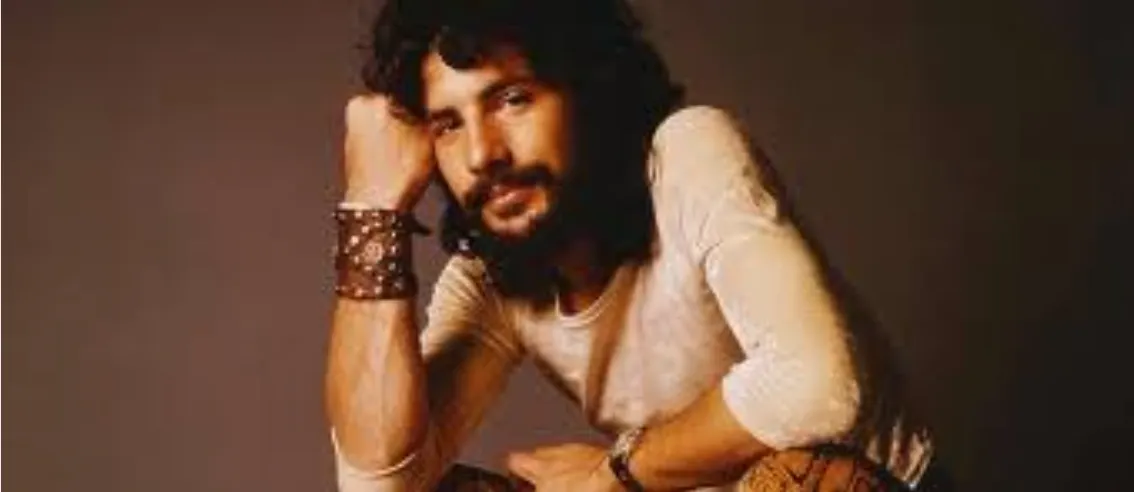
Cat Stevens, now known as Yusuf Islam, is one of the most influential singer-songwriters of the 20th century, and his financial story is deeply tied to the enduring power of his catalog. As of 2026, his net worth is most credibly estimated at around $10–11 million, though some less reliable sources have suggested figures as high as $120 million . The lower estimate is widely considered more accurate because it reflects his known career trajectory, charitable giving, and the absence of any major catalog sale, while the higher numbers appear to be unsourced speculation .
What makes Cat Stevens’ earnings particularly interesting is that they have continued for decades, even after he walked away from pop stardom in 1978. His classic songs—“Wild World,” “Father and Son,” “Peace Train,” “The First Cut Is the Deepest,” and others—have remained in constant circulation through radio, film placements, streaming, and covers by other artists . That ongoing demand is the engine behind his long-term royalties and the foundation of his financial stability Click here.
Publishing royalties: the largest income stream
The primary source of Cat Stevens’ wealth is his songwriting and publishing royalties. Every time one of his songs is streamed on Spotify, Apple Music, or YouTube, played on the radio, used in a film or TV show, or covered by another artist, he earns money. For legacy artists with timeless catalogs, these passive income streams can be remarkably stable.
Publishing royalties are especially valuable because they go to the songwriter, not just the performer. Since Stevens wrote most of his own material, he retains a large share of the publishing rights, which means he benefits directly from every use of his songs. That ownership structure is a key reason his catalog has remained financially productive for so long.
There are two main types of publishing royalties: performance royalties (collected by PROs like ASCAP, BMI, or SESAC) and mechanical royalties (collected by organizations like the MLC in the US or MCPS in the UK). Performance royalties are generated when his songs are played on radio, TV, or in public venues, while mechanical royalties come from physical sales, digital downloads, and streaming.
One of his most famous compositions, “The First Cut Is the Deepest,” was written when he was just 17 years old and sold for only £30 (about $40) at the time . Despite that modest early payment, the song became a massive hit for other artists, including Rod Stewart and Sheryl Crow, generating substantial publishing royalties for Stevens over the decades. That single song illustrates how a catalog can outlive its initial commercial moment and continue paying its creator long after the original recording.
Streaming royalties: passive income in the digital age
Streaming payouts are generally small on a per-stream basis—often fractions of a cent—but they add up over time for songs with millions or billions of plays. Cat Stevens’ biggest hits are streamed millions of times each year, ensuring a steady flow of income. In 2026, streaming platforms pay per-stream rates ranging from $0.003 to $0.008, depending on the service and listener’s subscription tier.
Independent artists earned over $6 billion from streaming in 2025, and legacy artists like Cat Stevens benefit from this trend because their catalogs continue to generate passive income. His songs are considered standards and are unlikely to fade from public consciousness. “Father and Son” and “Peace Train” are embedded in popular culture and are regularly used in media, ensuring ongoing royalty payments .
Even if Stevens never sells his catalog, his songs will continue to generate income for years to come. That is why most 2026 estimates place his net worth in the $10–11 million range, supported by continuous passive royalties .
Sync licensing: film, TV, and advertising
Sync licensing fees from film, TV, and advertising use represent another significant income stream for Cat Stevens. When his songs are placed in movies, television shows, commercials, or video games, he receives a one-time payment that can be substantial. These sync fees are often larger than individual streaming payouts and can provide a significant boost to his annual earnings.
His songs are frequently licensed for movies, commercials, and television, which can generate significant one-time sync fees . For example, “Father and Son” has been used in numerous films and TV shows over the years, each placement generating a new licensing fee. That enduring relevance is what makes legacy artists financially resilient in the streaming age.
Occasional touring income
While Cat Stevens has not toured as extensively as some of his peers, his selective live appearances have been well-received and financially rewarding . Legacy artists can often command premium ticket prices because their concerts are seen as rare opportunities to see a legend perform .
In the early 2000s, Yusuf Islam began to re-engage with secular music, eventually recording and touring again under the name Yusuf / Cat Stevens . That comeback added new revenue sources: ticket sales from live performances, new album releases, merchandise, and renewed interest in his classic songs. His return also introduced his music to a new generation of fans, helping sustain and even grow his catalog income in the digital era .
Merchandise and album sales
Merchandise and album sales from both classic and new releases represent another component of Cat Stevens’ earnings . While physical album sales have declined in the streaming era, his classic records continue to sell through vinyl reissues, box sets, and digital downloads. His 1970s albums—Tea for the Tillerman, Teaser and the Firecat, Catch Bull at Four—remain popular among collectors and new listeners alike
Merchandise generates revenue with every audience interaction, and legacy artists often have dedicated fan bases willing to purchase branded items. While this is likely a smaller portion of his overall income compared to royalties, it still contributes to his financial stability.
Charity and the distribution of his wealth
One crucial factor in understanding Cat Stevens’ net worth is his commitment to philanthropy. Over the years, he has donated significant portions of his income to educational and humanitarian causes, including the founding of schools and relief work . Those charitable activities have reduced his personal accumulation of wealth compared to what it might have been otherwise.
Some reports note that he has split his earnings between personal use and philanthropy, which helps explain why his net worth is not in the hundreds of millions despite his legendary status . For Stevens, wealth has been a tool for both security and service, not just personal enrichment. He has even donated portions of his box-set royalties to charitable funds, demonstrating a consistent pattern of giving back .
Why higher estimates circulate
Online, you will sometimes see Cat Stevens’ net worth listed at $100 million, $120 million, or even higher . Those figures tend to come from unsourced celebrity-wealth sites that aggregate data without clear verification. In contrast, the $10–11 million estimate is backed by more detailed analysis of his career trajectory, known charity work, and the absence of any major catalog sale .
The higher numbers may also confuse his cultural value with his actual liquid wealth. Cat Stevens is undeniably one of the most important artists of his generation, but cultural impact does not always translate directly into personal fortune, especially when an artist prioritizes faith and philanthropy over maximum earnings Read more.
Earnings breakdown: what we know
While exact figures are not publicly disclosed, we can infer the main components of Cat Stevens’ earnings based on industry standards for legacy artists:
Publishing royalties from songwriting (the largest and most stable source)
Streaming royalties from platforms like Spotify, Apple Music, and YouTube
Sync licensing fees from film, TV, and advertising use
Occasional touring income from select concerts and festival appearances
Merchandise and album sales from both classic and new releases
These revenue streams combine to create a diversified income base that is less dependent on any single source. That diversification is a hallmark of financially stable legacy artists.
Lifestyle and current status
At 78 years old in 2026, Cat Stevens lives a relatively low-profile life compared to his peak fame years . He continues to be respected as an elder statesman of folk and rock, and he occasionally performs or releases new material, but he is not constantly in the spotlight. That quieter lifestyle likely means lower ongoing expenses than a full-time touring superstar would have.
His focus remains on music, faith, and humanitarian efforts. He has spoken in interviews about the importance of using his platform for good, which aligns with the pattern of charitable giving seen throughout his adult life .
Legacy and long-term value
Even if Cat Stevens never sells his catalog, his songs will continue to generate income for years to come. Classics like “Father and Son” and “Peace Train” are embedded in popular culture and are unlikely to fade from public consciousness. That enduring relevance is what makes legacy artists financially resilient in the streaming age.
For fans and financial observers alike, Cat Stevens’ story is a reminder that net worth is not just about peak earnings. It is also about how an artist manages wealth over decades, balances personal life with public career, and chooses to use their resources. In Stevens’ case, the numbers reflect a life shaped as much by principle as by profit .
Final assessment
As of 2026, the most credible estimate of Cat Stevens’ net worth is approximately $10–11 million . That figure accounts for his catalog royalties, streaming income, occasional touring, and the known history of his charitable giving. Higher estimates exist but lack strong sourcing and do not align with the documented facts of his career and financial choices .
Related Reading
Why Lifestyle & Culture is Transforming the Global Industry Landscape
Welcome to our in-depth exploration of Lifestyle & Culture. In an era define...
Expert Insights: Navigating the Complex World of Lifestyle & Culture
Welcome to our in-depth exploration of Lifestyle & Culture. In an era define...