How Caregiver Scheduling Software Helps Deliver Better Patient Care Every Day
By Naqash jay
67 Views
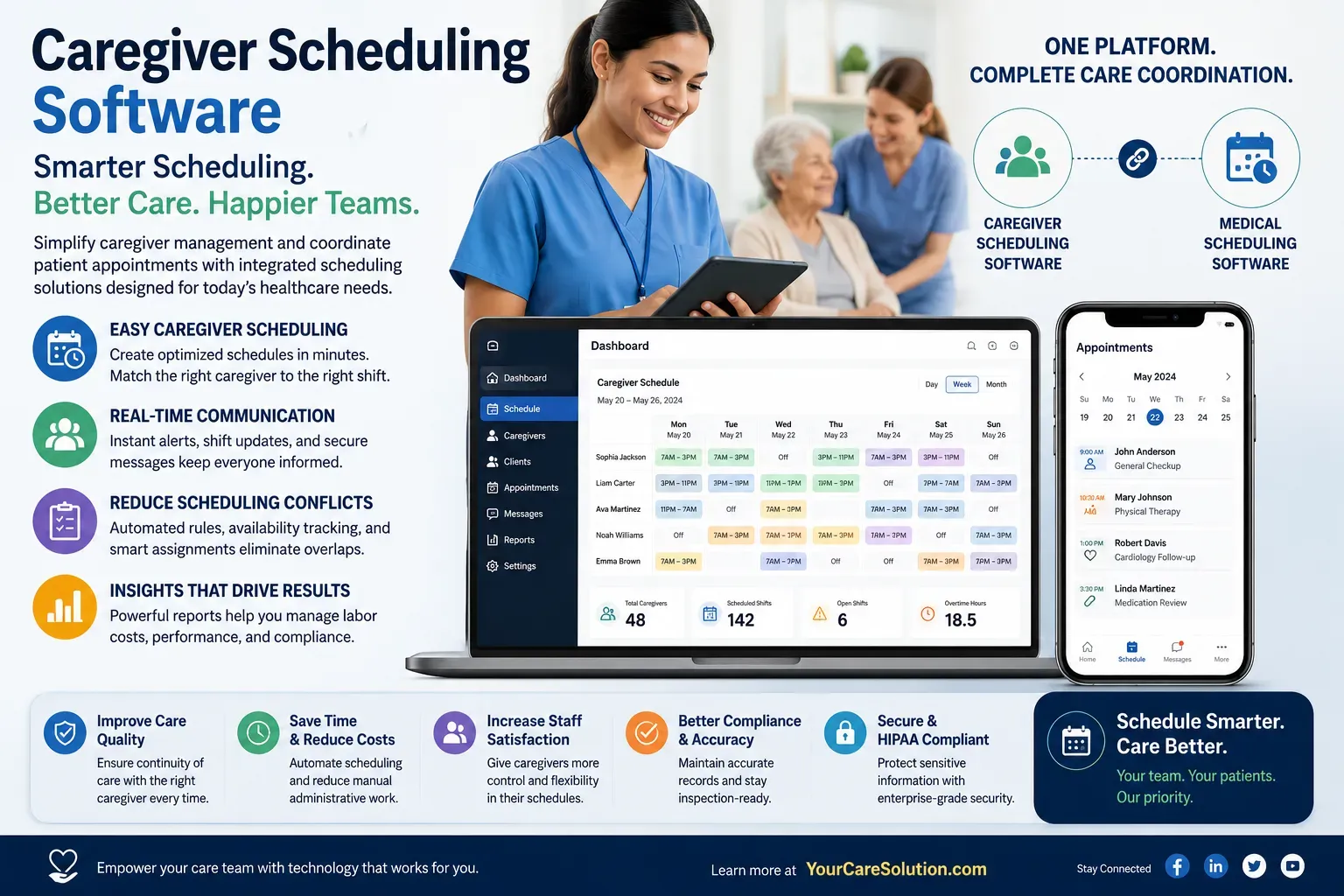
Managing caregivers, coordinating shifts, and ensuring patients receive timely care can become challenging as healthcare organizations grow. Whether you operate an assisted living facility, home healthcare agency, or senior care center, manual scheduling often leads to confusion, missed appointments, overtime costs, and unnecessary stress for both administrators and caregivers.
Modern caregiver scheduling software simplifies these daily responsibilities by automating schedules, improving communication, and ensuring the right caregiver is assigned to the right patient at the right time. When combined with medical scheduling software, organizations can manage staff availability and patient appointments from a single platform, creating a more organized and efficient workflow.
This guide explains how caregiver scheduling technology improves operations, enhances patient satisfaction, and helps healthcare providers deliver consistent, high-quality care.
Why Scheduling Challenges Affect Quality of Care
Healthcare organizations rely on accurate scheduling to maintain continuity of care. Even a small scheduling mistake can lead to delayed visits, caregiver burnout, or dissatisfied patients.
Common scheduling challenges include:
- Last-minute shift changes
- Double-booked caregivers
- Missed patient visits
- Poor communication between teams
- Excessive overtime costs
- Difficulty tracking caregiver availability
- Manual scheduling errors
These issues not only reduce operational efficiency but may also impact patient outcomes.
What Is Caregiver Scheduling Software?
Caregiver scheduling software is a digital solution designed to automate workforce scheduling for healthcare providers. Instead of relying on paper calendars or spreadsheets, administrators can create schedules, assign caregivers, monitor availability, and notify employees in real time.
The software helps organizations coordinate:
- Caregiver shifts
- Home care visits
- Resident care assignments
- Vacation requests
- Emergency schedule adjustments
- Staff availability
- Workload balancing
By reducing manual work, managers spend less time creating schedules and more time improving patient services.
How Medical Scheduling Software Complements Caregiver Scheduling
While caregiver scheduling focuses on workforce management, medical scheduling software helps organize patient appointments, consultations, treatments, and follow-up visits.
Together, these systems create a complete scheduling solution by connecting caregiver availability with patient appointments.
Benefits include:
- Better appointment coordination
- Reduced scheduling conflicts
- Improved resource allocation
- Faster appointment booking
- More efficient daily operations
Healthcare organizations can avoid communication gaps while ensuring caregivers always know where they need to be.
Key Features That Improve Daily Operations
Modern scheduling platforms offer a wide range of tools designed specifically for healthcare providers.
Automated Shift Scheduling
Instead of manually assigning shifts every week, administrators can automatically generate schedules based on caregiver availability, qualifications, and workload.
This reduces administrative effort while minimizing scheduling conflicts.
Real-Time Schedule Updates
Unexpected changes happen frequently in healthcare.
When a caregiver becomes unavailable, managers can instantly update schedules and notify available staff members through mobile alerts.
Everyone stays informed without lengthy phone calls or emails.
Mobile Access for Caregivers
Mobile-friendly scheduling allows caregivers to:
- View upcoming shifts
- Accept schedule changes
- Request time off
- Check patient visit information
- Receive important notifications
This keeps communication simple and efficient.
Route Optimization
For home healthcare providers, route planning helps caregivers spend less time driving and more time caring for patients.
Optimized travel routes reduce fuel expenses while improving punctuality.
Time Tracking
Many scheduling solutions include digital clock-in and clock-out features.
Managers can accurately monitor:
- Working hours
- Overtime
- Attendance
- Shift completion
Accurate records simplify payroll processing and compliance reporting.
Benefits for Healthcare Organizations
Implementing scheduling software creates measurable improvements across daily operations.
Better Staff Utilization
Managers gain visibility into caregiver availability, making it easier to distribute workloads fairly and reduce employee fatigue.
Improved Patient Satisfaction
Patients appreciate consistent caregivers who arrive on time.
Reliable scheduling helps build trust and improves the overall care experience.
Reduced Administrative Work
Automation eliminates repetitive scheduling tasks, allowing office staff to focus on patient support instead of paperwork.
Lower Operating Costs
Efficient scheduling reduces:
- Overtime expenses
- Missed appointments
- Duplicate shifts
- Administrative errors
Over time, these savings can significantly improve operational efficiency.
Stronger Team Communication
Real-time notifications ensure caregivers, coordinators, and administrators remain connected throughout the day.
Everyone works with the latest scheduling information.
Choosing the Right Scheduling Solution
Not every healthcare organization has identical scheduling needs.
When evaluating caregiver scheduling software, look for features such as:
- Easy-to-use dashboard
- Mobile accessibility
- Automated scheduling
- Calendar integration
- Appointment management
- Electronic visit verification
- Care plan support
- Secure data storage
- Reporting and analytics
- Scalability for future growth
Selecting software that grows with your organization helps avoid costly system replacements later.
Best Practices for Successful Implementation
Technology delivers the best results when introduced with a clear strategy.
Healthcare providers should:
- Train staff before deployment
- Import accurate employee information
- Define scheduling rules
- Review workflows regularly
- Monitor scheduling reports
- Encourage caregiver feedback
- Update software as organizational needs evolve
Continuous improvement ensures long-term success.
Why Automation Matters in Modern Healthcare
Healthcare organizations continue facing increasing demand, workforce shortages, and higher patient expectations.
Manual scheduling simply cannot keep pace with these growing challenges.
Automation allows organizations to:
- Respond faster to schedule changes
- Improve workforce planning
- Increase productivity
- Enhance compliance
- Deliver more consistent patient care
By reducing repetitive administrative tasks, healthcare teams can dedicate more attention to what matters most—providing compassionate, high-quality care.
Final Thoughts
Effective scheduling is one of the most important factors in delivering dependable healthcare services. Investing in reliable caregiver scheduling software enables organizations to streamline staff coordination, reduce scheduling conflicts, improve communication, and enhance patient experiences.
When integrated with medical scheduling software, healthcare providers gain a complete scheduling system that supports caregivers, administrators, and patients alike. From automated shift planning to real-time updates and appointment coordination, modern scheduling technology helps organizations operate more efficiently while maintaining high standards of care.
As healthcare continues to evolve, adopting smarter scheduling solutions is no longer just a convenience—it has become an essential step toward delivering reliable, patient-centered care.