Brand Voice and Messaging Solutions for Memorable Brands
By 10turtle
50 Views
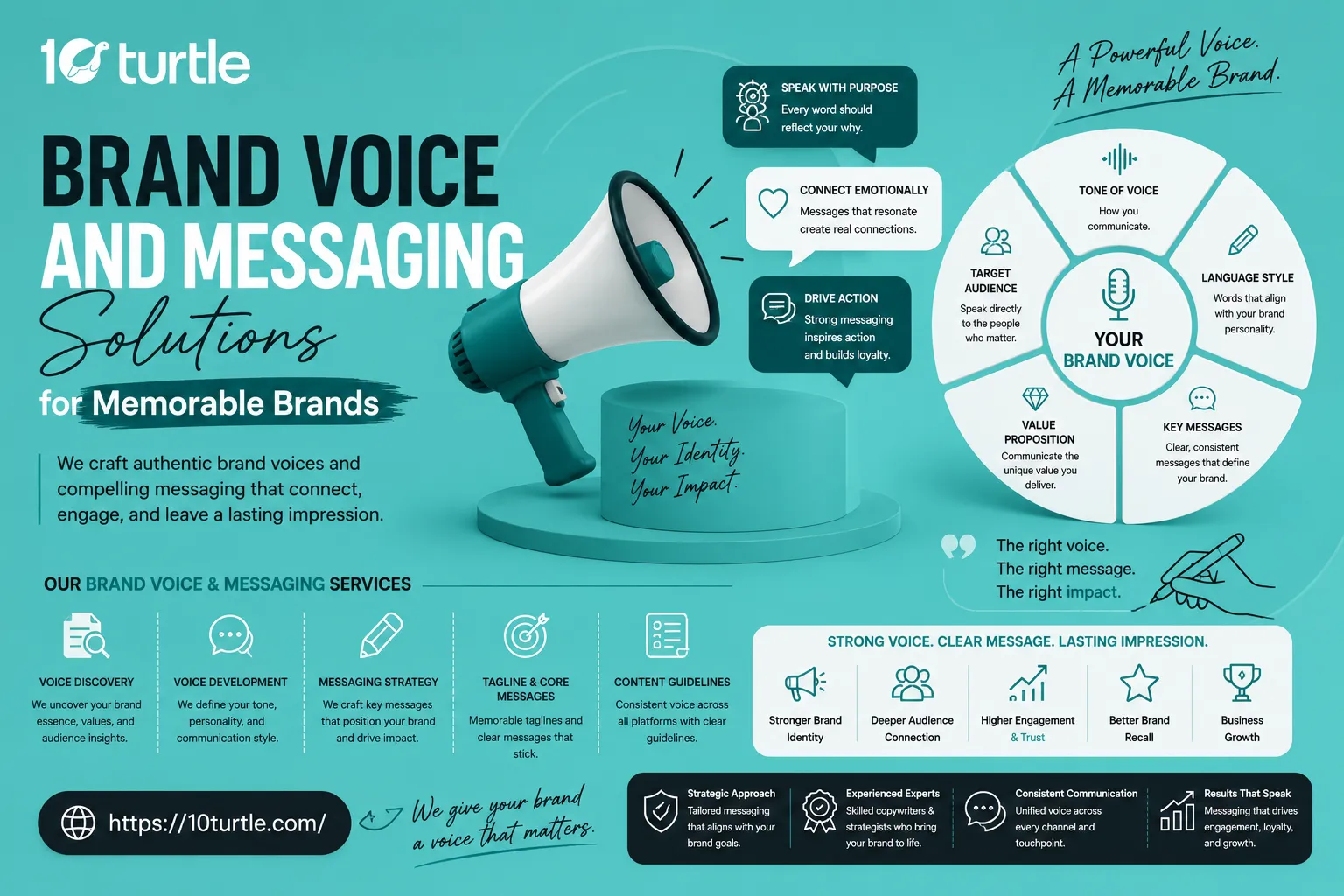
Every business eventually faces the same challenge: standing out in a market where customers are bombarded with hundreds of marketing messages a day. This is where brand voice and messaging solutions come in a strategic approach that shapes how a company sounds, feels, and connects with its audience across every touchpoint. For businesses across the United States, from local startups to established enterprises, getting this right isn't optional anymore; it's the difference between being remembered and being scrolled past. In this guide, we'll break down what brand voice really means, how to build a messaging framework that sticks, and what U.S. companies are doing differently in 2026 to stay memorable.
What Is Brand Voice, and Why Does It Matter?
Brand voice is the distinct personality a company expresses through its written and spoken communication the words it chooses, the tone it uses, and the emotions it evokes. Think of it as the verbal identity that sits alongside a logo or color palette. While brand identity covers the visual side of a business, voice covers how it talks: is it playful and casual, or formal and authoritative?
A clear voice builds recognition. Customers who read a company's email, social post, or website copy should be able to tell it's from that brand even without seeing the logo. That consistency builds trust over time, and trust is what turns a one-time buyer into a repeat customer.
How to Develop a Brand Voice for Your Business
Building a voice isn't about picking adjectives out of thin air. It requires a structured process:
- Define your audience first. A messaging framework for startups in competitive U.S. markets looks very different from one built for a family-run local service business. Know who you're talking to before deciding how to talk.
- Study your existing content. Pull samples from emails, social posts, and web pages to identify patterns already working — or not working.
- Create a voice chart. Document traits like "confident, not arrogant" or "friendly, not casual" so every writer on the team has the same reference point.
- Test with real customers. Run sample copy past actual users to see what resonates before rolling it out company-wide.
Building a Brand Messaging Framework
A messaging framework is the backbone that keeps communication consistent across marketing channels website, ads, sales decks, and customer service scripts alike. A strong framework typically includes:
- A core value proposition that explains what makes the business different
- Key messaging pillars tied to customer pain points
- Proof points (data, testimonials, case studies) that back up each claim
- A tone-of-voice guide showing writers how to apply the personality in real sentences
Without this structure, even well-meaning teams end up with inconsistent brand messaging across marketing channels one department sounds corporate, another sounds like a completely different company. That inconsistency quietly erodes customer perception, even if no single piece of content is "wrong" on its own.
Brand Voice Guidelines: What They Should Actually Include
Good brand voice guidelines examples go beyond a list of adjectives. The most effective ones for U.S. businesses now include:
- Do/don't language examples, showing real sentences in and out of voice
- Channel-specific notes (LinkedIn tone vs. TikTok tone vs. email tone)
- Grammar and style rules specific to the brand (Oxford comma, contractions, capitalization)
- Sensitivity guidance for topics the brand avoids or handles carefully
New for 2026: many U.S. agencies are now building AI-writing prompts directly into their brand voice and tone guide template, so any AI-assisted content from chatbots to marketing copy drafts stays on-brand automatically rather than needing manual correction after the fact. This is becoming a standard expectation for a brand messaging strategy for businesses that use AI tools anywhere in their content pipeline.
Difference Between Brand Voice and Brand Tone
These two terms get used interchangeably, but they aren't the same thing. Voice is constant — it's the brand's core personality and doesn't change. Tone is flexible it adjusts based on context. A brand might have a warm, direct voice, but its tone could shift from upbeat in a product launch email to empathetic in a customer service response. Voice is who you are; tone is how you show up in a specific moment.
Why Brand Positioning and Storytelling Matter Too
Messaging doesn't work in isolation from brand positioning. A business needs a clear positioning statement — where it sits in the market relative to competitors before messaging can be built on top of it. From there, brand storytelling brings the positioning to life, turning dry differentiators into narratives customers actually remember. Emotional branding, when done authentically, consistently outperforms purely feature-based messaging because people connect with stories, not spec sheets.
How Much Does Brand Messaging Strategy Cost?
Costs vary widely depending on scope. A basic voice and messaging audit for a small business might run a few thousand dollars, while a full messaging framework including audience research, competitor analysis, and a complete style guide can run significantly higher for mid-size or enterprise companies. Many businesses start with a scaled-down version focused on core messaging pillars, then expand as budgets allow.
Can Small Businesses Build a Strong Brand Voice on a Budget?
Yes. Small businesses don't need a six-figure agency retainer to sound consistent. Starting with a one-page voice chart, reviewing existing customer reviews and support tickets for language patterns, and training a small internal team on 3-5 core voice traits can go a long way. The goal isn't perfection on day one it's consistency that compounds over time.
Final Thoughts
Brand voice and messaging aren't just creative exercises they're a measurable part of how customers perceive, trust, and remember a company. Whether you're a startup defining your first messaging framework or an established U.S. brand refreshing an outdated tone, the businesses that invest in this work consistently see stronger customer recall and loyalty. Start with clarity on who you are, document it, and apply it everywhere your brand shows up.
Frequently Asked Questions
What is brand voice and why does it matter?
Brand voice is the consistent personality a company expresses through its communication. It matters because it builds recognition and trust, helping customers remember and connect with a brand over time.
How do I create a brand messaging framework?
Start with a clear value proposition, define your messaging pillars around customer pain points, gather supporting proof points, and document tone guidelines so every team member communicates consistently.
What's the difference between brand voice and brand tone?
Voice is the brand's constant personality; tone is how that personality flexes depending on context, audience, or platform.
How much does brand messaging strategy cost? Pricing depends on scope small business audits may cost a few thousand dollars, while full enterprise frameworks with research and testing cost considerably more.
Can small businesses build a strong brand voice on a budget?
Yes. A simple voice chart, review of existing customer language, and internal team training can establish consistency without a large budget.
Related Reading
Top 10 Hidden Secrets About Business & Finance You Need to Know
Welcome to our in-depth exploration of Business & Finance. In an era defined...
Why Business & Finance is Transforming the Global Industry Landscape
Welcome to our in-depth exploration of Business & Finance. In an era defined...