Brand Consistency for Multi-Location Businesses
By John Michael
11 Views
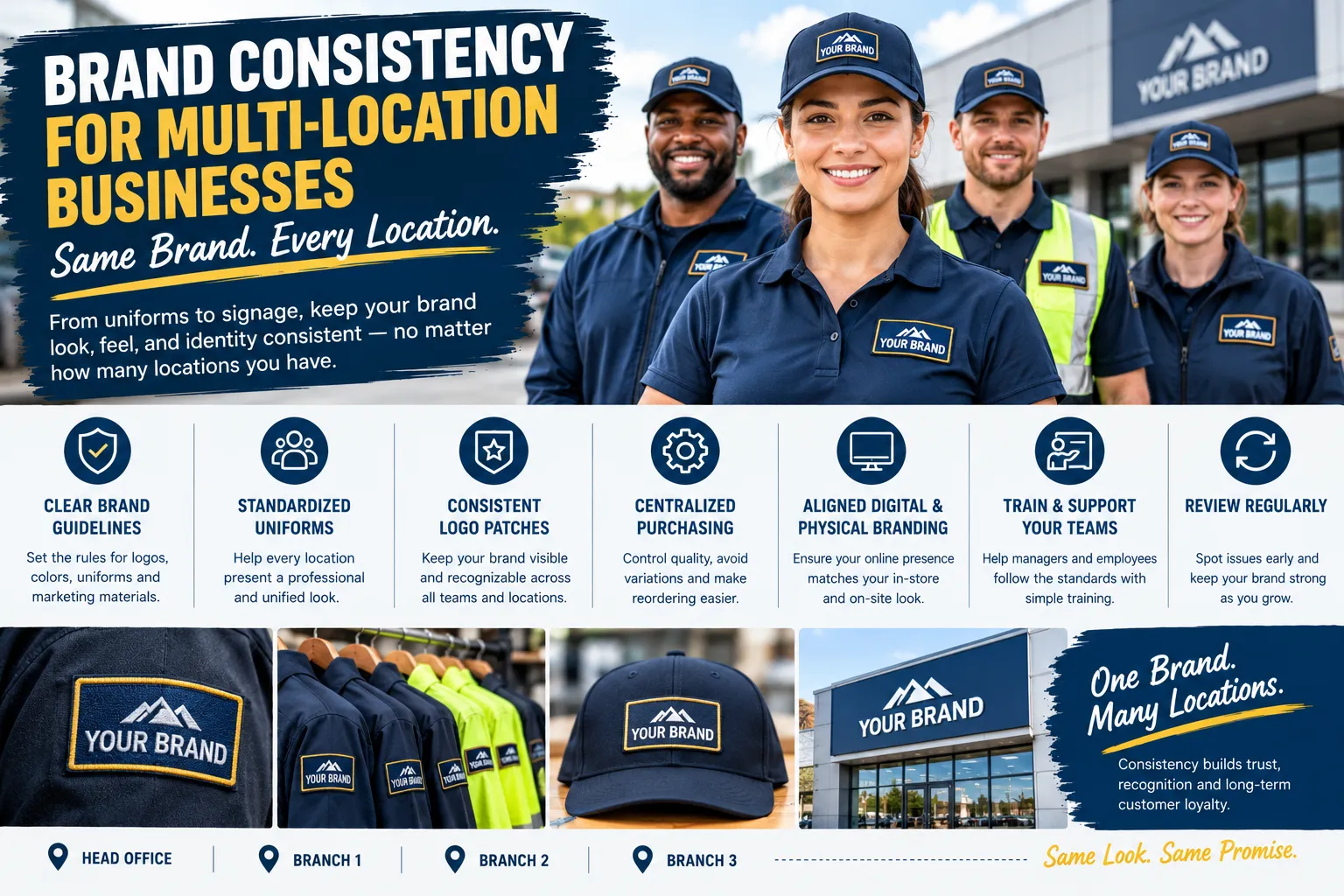
Maintaining a consistent brand becomes more challenging as a business expands into multiple locations. A company with several offices, retail stores, warehouses, or service branches must ensure that customers recognize the same brand regardless of where they interact with it.
Brand consistency goes beyond using the same logo. It includes employee uniforms, customer service, signage, marketing materials, and the overall experience customers receive at every location. When these elements work together, a business can build stronger recognition and present a more professional image.
For multi-location businesses, establishing clear standards and giving every branch the right tools can make brand consistency easier to maintain.
1. Create Clear Brand Guidelines
The first step toward consistency is defining how the brand should be presented. Without clear guidelines, individual locations may interpret the company's visual identity differently.
One branch might use an outdated logo, while another chooses different colors or fonts for promotional materials. These small differences can gradually make the business appear less organized.
A practical brand guide should cover:
-
Approved logos and variations.
-
Official brand colors and typography.
-
Rules for using images and marketing materials.
-
Signage and uniform requirements.
-
Guidelines for social media and local promotions.
-
Procedures for approving new branded materials.
Make the guidelines easy for employees and branch managers to access. Include examples of correct usage so staff members can follow the standards without repeatedly asking for clarification.
2. Standardize Employee Uniforms Across Locations
Employee uniforms are an important part of a company's visual identity, especially for businesses where staff members regularly interact with customers. Matching uniforms help customers identify employees and reinforce recognition across different branches.
For example, a customer visiting two locations of the same maintenance company should be able to recognize the employees as part of the same organization. Consistent colors, logo placement, and identification details help create that connection.
Businesses should establish uniform specifications that define approved garments, colors, logo sizes, and placement. These standards should apply across locations, even when different managers handle local purchasing.
At the same time, uniform requirements should account for job responsibilities. Warehouse employees, field technicians, office staff, and customer-facing teams may need different garments while still maintaining a recognizable brand identity.
3. Use Consistent Logo Patches on Workwear
Logo patches can help businesses maintain a recognizable appearance across uniforms, jackets, hats, and other workwear. They provide a practical way to display a company name or logo without creating a completely different design for every branch.
The key is to standardize the artwork and specifications before placing orders. Every location should use the approved logo file, colors, dimensions, and placement guidelines.
Logos drift when every branch orders its own uniforms. Standardizing on one patch from a supplier like The Eagle Patches keeps every location looking the same.
A centralized ordering process can make this easier. Head office can approve the design and specifications, while individual branches submit their quantities according to their staffing needs.
This approach helps prevent variations in logo appearance and reduces the risk of outdated designs remaining in circulation.
4. Choose Materials That Match the Work Environment
Consistency does not mean every employee must wear identical materials regardless of their role. Businesses can maintain the same visual identity while selecting suitable garments and patch materials for different working conditions.
For example, office employees may wear lightweight shirts, while field teams need durable outerwear. Employees working around machinery or outdoors may also require specialized garments that comply with relevant workplace safety requirements.
When choosing patches, consider durability, wash frequency, attachment method, and the type of fabric being used.
Different roles may need different backings. This guide to patches for workwear and safety gear covers the main options.
The objective is to preserve the approved brand design while ensuring that the finished uniform suits its intended purpose. Where protective clothing or high-visibility garments are involved, any customization should comply with applicable safety standards and manufacturer instructions.
5. Centralize Purchasing and Supplier Communication
Allowing every location to purchase branded items independently can create inconsistencies. Different suppliers may interpret the same logo differently, use slightly different colors, or produce patches in varying sizes.
A centralized purchasing process gives businesses more control over quality and design. It also makes it easier to track specifications, manage reorders, and maintain consistent branding as the company grows.
Consider creating an approved supplier list and maintaining a record of:
-
Final logo artwork and color specifications.
-
Patch dimensions and approved materials.
-
Garment styles and color requirements.
-
Placement instructions and attachment methods.
-
Previous orders and quality approvals.
-
Reordering procedures and expected lead times.
Before approving a large order, review a sample or production proof. This allows the business to identify problems before the same inconsistency reaches multiple locations.
6. Keep Digital and Physical Branding Aligned
Customers may encounter a business online before visiting a physical location. If the website uses one logo while storefront signs, uniforms, and social media pages display different versions, the brand can appear fragmented.
Review the company's digital and physical materials together. Confirm that the approved logo, colors, business name, and contact information are consistent wherever customers encounter the organization.
Multi-location businesses should also make sure that local branches follow common guidelines for social media profiles, email signatures, printed materials, and promotional campaigns.
Some details, such as local addresses, telephone numbers, and opening hours, will naturally differ. The goal is to keep the overall brand identity consistent while allowing each location to communicate the information customers need.
7. Train Branch Managers and Employees
Even well-designed brand guidelines are ineffective if employees do not understand how to apply them. Branch managers play an important role because they oversee daily operations and often make purchasing or presentation decisions.
Provide short training materials that explain uniform requirements, logo usage, signage standards, and the approval process for new branded items.
Managers should know where to find approved artwork and whom to contact before making changes. Employees should understand how to care for uniforms, report damaged patches, and request replacements.
When new locations open or new staff members join, include brand standards in the onboarding process. This helps establish consistency from the beginning instead of correcting avoidable mistakes later.
8. Review Brand Consistency Regularly
Brand consistency requires ongoing attention. Uniforms wear out, logos change, and new locations may introduce their own purchasing habits over time.
Schedule periodic reviews to check whether branches are following the company's standards. These reviews do not need to be complicated. A simple checklist and photographs of uniforms, signage, and customer-facing materials can help identify areas that need attention.
Look for issues such as:
-
Outdated logos or inconsistent colors.
-
Different patch sizes or placement.
-
Unapproved uniform styles.
-
Old promotional materials still in use.
-
Differences between online and physical branding.
When a problem is identified, explain the correct standard and provide a practical way to resolve it. Clear processes are more effective than expecting every branch to interpret brand requirements independently.
Conclusion
Brand consistency helps multi-location businesses create a recognizable and professional identity wherever customers encounter them. Clear guidelines, standardized uniforms, consistent logo patches, centralized purchasing, and regular reviews can reduce unnecessary variation between branches.
The most effective approach balances consistency with practicality. Employees may need different garments or equipment depending on their roles, but the company's visual identity should remain recognizable across locations.
By setting clear standards and making approved materials easy to obtain, businesses can maintain a unified brand as they expand, strengthen customer recognition, and present a more reliable image across every branch.
Related Reading
Why Lifestyle & Culture is Transforming the Global Industry Landscape
Welcome to our in-depth exploration of Lifestyle & Culture. In an era define...
Expert Insights: Navigating the Complex World of Lifestyle & Culture
Welcome to our in-depth exploration of Lifestyle & Culture. In an era define...