Boost Conveyor Efficiency with the Right Movex Table Top Chain
By David Fenton
42 Views
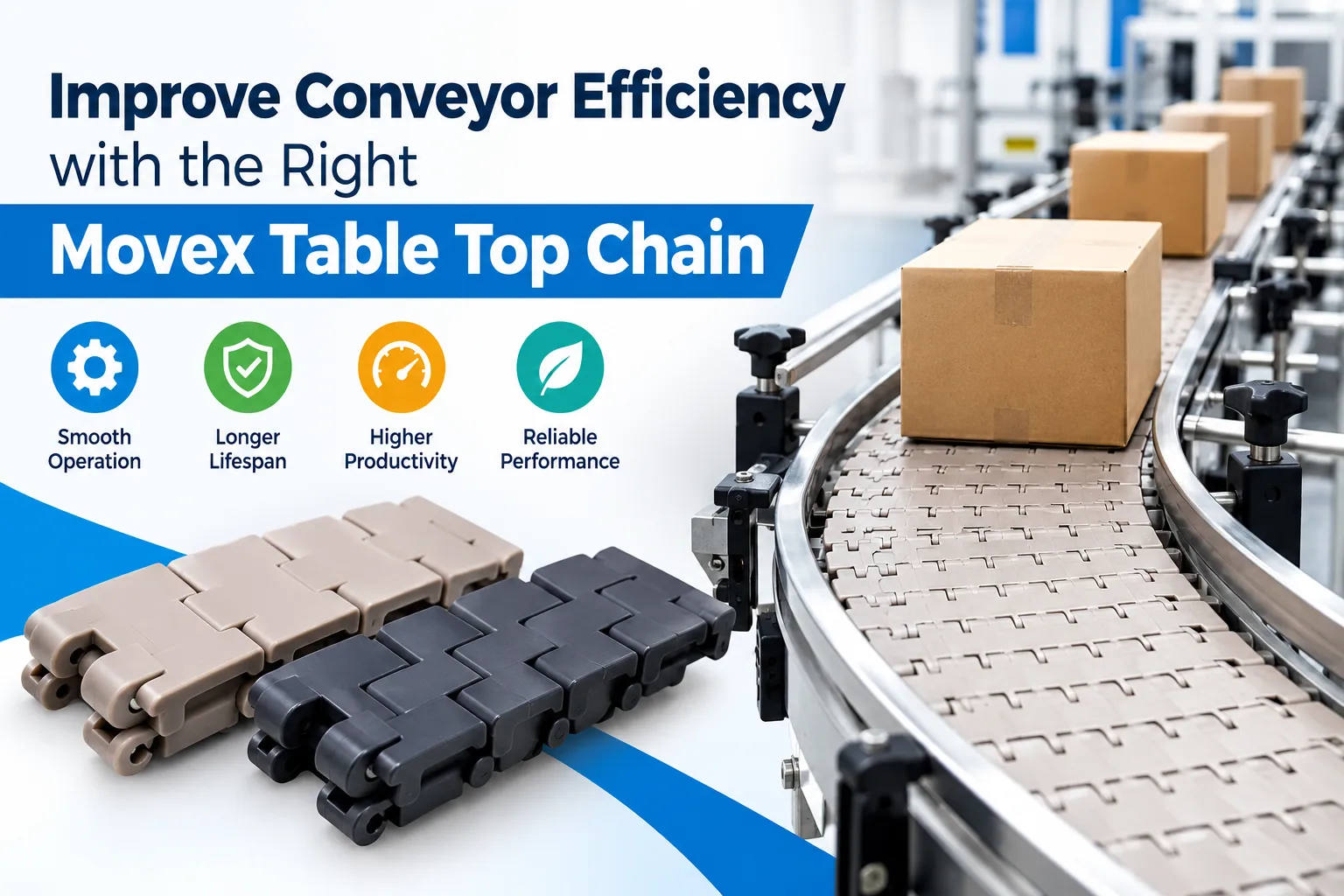
Have you ever wondered why some production lines seem to run like clockwork while others constantly battle jams, breakdowns, and costly downtime? What if the secret to smoother operations was hiding in plain sight—right there in your conveyor system? And could something as straightforward as choosing the right chain make a genuine difference to your bottom line?
Conveyor efficiency isn't just a nice-to-have. It's the backbone of any successful manufacturing or packaging operation. When your conveyors run smoothly, products flow seamlessly from one stage to the next. But when things go wrong, the ripple effects can be devastating—delayed orders, frustrated staff, and mounting costs that eat into your profits.
In this article, we'll explore how Movex table top chains can transform your conveyor performance. You'll discover what makes these chains different from traditional belts, how they solve common efficiency problems, and which applications they're best suited for. Plus, we'll cover practical maintenance tips and help you understand the real value these chains deliver. Whether you're running a food processing facility in Melbourne or a packaging operation in Brisbane, this guide will help you make smarter decisions about your conveyor systems.
What Is a Movex Table Top Chain?
How Table Top Chains Differ from Traditional Conveyor Belts?
Traditional conveyor belts are continuous loops of material—usually rubber or fabric—that carry products along a flat surface. They work well for many applications, but they've got limitations. Table top chains take a completely different approach.
Instead of a continuous belt, tabletop chains consist of interlocking plastic or stainless steel links that form a flat, stable surface. Think of it like a flexible platform made up of hundreds of individual pieces working together. This modular design means you can replace individual links rather than entire belts, which saves both time and money.
The flat surface gives products a stable ride, reducing the risk of tipping or shifting during transport. This is particularly handy when you're moving bottles, containers, or other items that need to stay upright.
Key Components and How They Work Together
A Movex table top chain system comprises several essential components. The chain itself runs over sprockets at each end, which drive the movement. Guide rails keep products aligned, while wear strips support the chain and reduce friction.
What makes these components special is how precisely they're engineered to work in harmony. The sprockets engage with the chain links at exact intervals, providing consistent movement without slippage. The wear strips are made from low-friction materials that extend chain life while reducing energy consumption.
Common Conveyor Efficiency Problems (And How the Right Chain Solves Them)
Product Jams and Line Stoppages
Nothing kills productivity faster than a jammed conveyor. When products pile up or get stuck, your entire line grinds to a halt. Staff scramble to clear the blockage, and every minute costs money.
Table top chains tackle this problem through their flat, stable surface and consistent tracking. Products maintain their orientation and spacing, dramatically reducing jam frequency. The modular design also means that if something does go wrong, you can quickly identify and fix the issue.
Excessive Wear and Frequent Replacements
Constantly replacing worn conveyor components is frustrating and expensive. Traditional belts can stretch, fray, and degrade over time, requiring complete replacement.
Movex table top chains are built to last. High-quality materials resist wear, while the modular design means you only replace what's actually damaged. This approach significantly extends the overall lifespan of your conveyor system.
High Energy Consumption
Energy costs add up quickly in any manufacturing environment. Conveyors that create excessive friction or require extra power to operate drain resources unnecessarily.
The low-friction design of quality table top chains means motors don't have to work as hard. This translates directly to lower energy bills—savings that compound month after month.
Noise and Workplace Disruption
A noisy factory floor isn't just annoying; it can affect staff concentration, communication, and even hearing health over time. Some conveyor systems create constant clattering that becomes a real workplace issue.
Well-designed table top chains run quietly, creating a more pleasant working environment for everyone.
What Are the Benefits of Using Table Top Chains in Conveyor Systems?
The benefits extend well beyond solving specific problems. Table top chains offer flexibility that traditional belts simply can't match. You can configure them for straight runs, curves, and even complex layouts with multiple direction changes.
Hygiene is another major advantage. In food and beverage applications, chains can be designed for easy cleaning and sanitisation. Some versions are even suitable for direct food contact, meeting strict Australian food safety standards.
Maintenance becomes simpler too. Individual links can be inspected, cleaned, or replaced without dismantling the entire system. This modular approach means less downtime and lower long-term costs.
The stability these chains provide is particularly valuable for delicate products. Whether you're moving glass bottles, pharmaceutical containers, or precision components, the smooth, consistent movement reduces damage and waste.
How to Choose the Right Movex Table Top Chain for Your Application?
Understanding Your Product Requirements
Start by examining what you're actually conveying. Consider the size, weight, and shape of your products. Are they uniform or varied? Do they need to stay upright? Are they temperature-sensitive?
Heavy products need chains with higher load ratings, while delicate items require gentler handling. Products with unusual shapes might benefit from specific surface textures that prevent sliding.
Matching Chain Material to Your Industry
Material selection is critical. Plastic chains work brilliantly for many applications—they're lightweight, corrosion-resistant, and cost-effective. For high-temperature environments or heavy-duty applications, stainless steel might be the better choice.
In food processing, you'll want FDA-approved materials that won't contaminate products. Pharmaceutical operations often require chains that can withstand aggressive cleaning chemicals without degrading.
Straight-Running vs. Side-Flexing Chains: Which Do You Need?
Your layout determines which chain style suits your needs. Straight-running chains are perfect for simple, linear conveyor runs. They're generally more economical and work well when you don't need to navigate curves.
Side-flexing chains can bend around corners, making them ideal for complex layouts where space is limited. They allow you to design more efficient production lines that maximise your floor space.
Which Industries Benefit Most from Movex Table Top Chains?
Food and Beverage Manufacturing
Australian food and beverage producers face strict hygiene requirements. Table top chains designed for this industry feature smooth surfaces without gaps where bacteria can hide. They're easy to clean and can handle the regular washdowns that food safety demands.
From bakeries to bottling plants, these chains keep products moving safely and efficiently.
Packaging and Bottling Operations
Speed and precision matter in packaging. Tabletop chains deliver consistent product spacing, which is essential for accurate labelling, filling, and sealing operations. Their stability prevents bottles from tipping—a common frustration with other conveyor types.
Pharmaceutical and Hygiene-Sensitive Environments
Pharmaceutical manufacturing demands the highest hygiene standards. Specialised table top chains meet these requirements with materials and designs that prevent contamination and support thorough cleaning protocols.
How Do You Maintain Table Top Chains to Maximise Lifespan?
Daily Inspection Best Practices
Quick daily checks catch problems before they become expensive. Look for damaged links, unusual wear patterns, or debris accumulation. Listen for changes in operating sounds that might indicate developing issues.
A five-minute inspection each day can prevent hours of unplanned downtime.
Cleaning and Lubrication Guidelines
Regular cleaning prevents buildup that causes wear and hygiene issues. Use cleaning products compatible with your chain material. For lubrication, follow manufacturer recommendations—some chains are designed to run dry, while others need periodic lubrication.
When to Replace Rather Than Repair
Sometimes replacement makes more sense than repair. If multiple links show wear, the chain is stretching beyond tolerance, or you're experiencing recurring problems, consider replacing it. The cost of a new chain is often less than the productivity lost to ongoing issues.
How Much Do Movex Table Top Chains Cost? Understanding Value vs. Price
Initial purchase price is just one part of the equation. Quality chains cost more upfront but deliver better value through longer lifespan, reduced maintenance, and improved efficiency.
Consider the total cost of ownership: purchase price, installation, maintenance, energy consumption, and replacement frequency. A premium chain that lasts twice as long and uses less energy often proves cheaper overall than a budget alternative.
Real-World Efficiency Gains: What Results Can You Expect?
Operations that switch to appropriate tabletop chains typically report significant improvements. Downtime reductions of 20-30% are common, along with notable energy savings. Product damage often decreases substantially, improving yield and reducing waste.
The exact gains depend on your specific situation, but the pattern is consistent: the right chain choice delivers measurable returns.
Taking the Next Step Toward Better Conveyor Performance
Choosing the right movex table top chain isn't just a technical decision—it's a strategic investment in your operation's future. We've covered how these chains solve common efficiency problems, which materials and styles suit different applications, and how proper maintenance maximises your investment.
The key takeaway? Don't settle for conveyor components that create ongoing headaches. Quality tabletop chains, properly matched to your application and well-maintained, can transform your production line. They reduce downtime, lower operating costs, and create a smoother, quieter working environment.
Ready to improve your conveyor efficiency? Start by assessing your current challenges and requirements. Consider consulting with specialists who understand Australian manufacturing conditions and can recommend solutions tailored to your needs. Your future self—and your bottom line—will thank you for making the switch.
Related Reading
Top 10 Hidden Secrets About Business & Finance You Need to Know
Welcome to our in-depth exploration of Business & Finance. In an era defined...
Why Business & Finance is Transforming the Global Industry Landscape
Welcome to our in-depth exploration of Business & Finance. In an era defined...