How Bookkeeping Outsourcing Services Can Simplify Financial Management for UK Businesses
By Riya Singh
53 Views
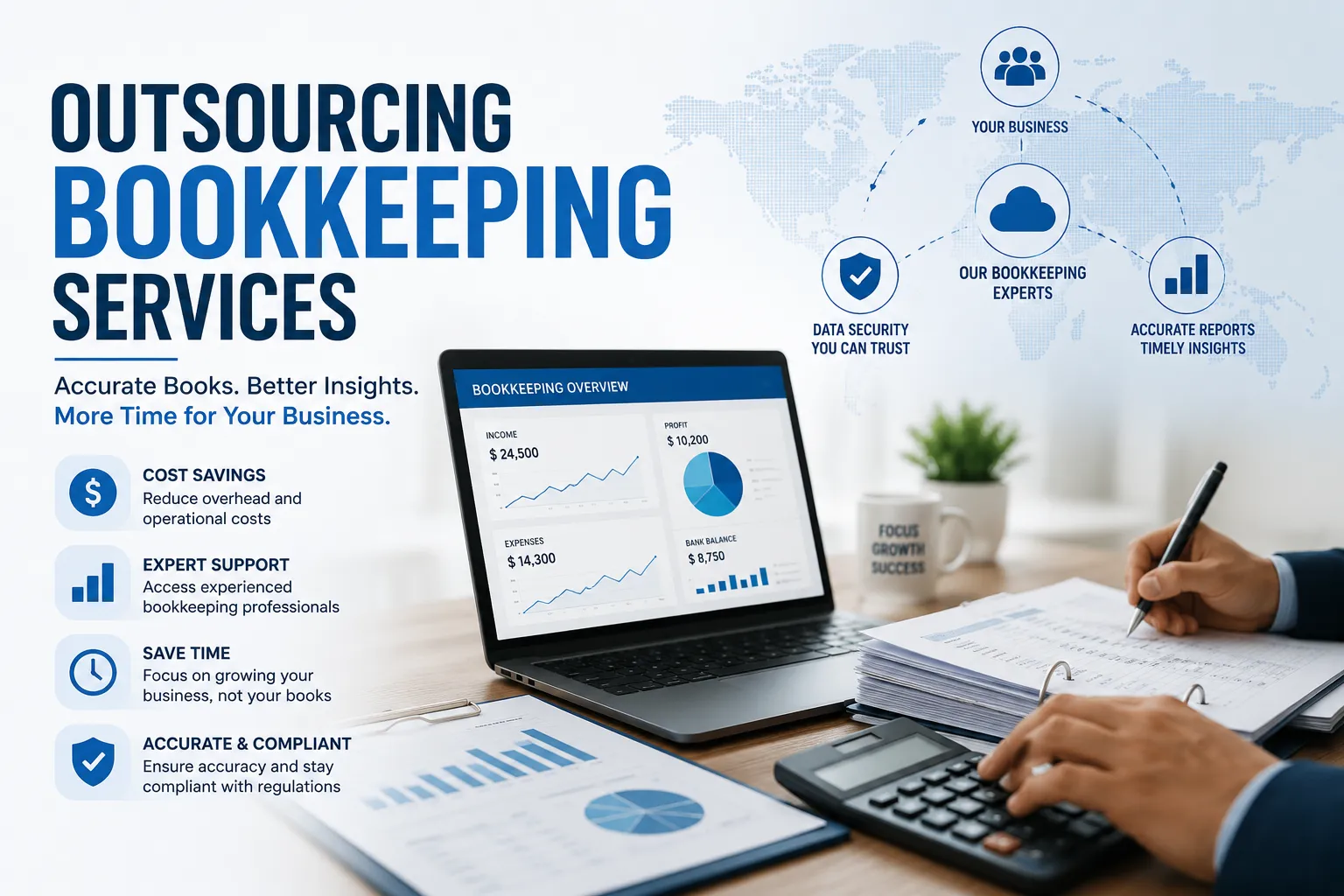
Running a business in the UK involves plenty of financial administration. Invoices need to be recorded, expenses tracked, bank transactions checked and financial documents kept in order. As a business grows, these responsibilities can quickly take up more time than expected. Bookkeeping Outsourcing Services offer a practical option for companies that want professional help with routine financial record-keeping without placing the entire workload on an owner or small internal team.
For many businesses, bookkeeping starts as a task that can be handled alongside other responsibilities. Eventually, however, increasing transaction volumes can make that approach difficult to maintain. Outsourcing can provide additional capacity while helping the business keep its financial information organised and available when it is needed.
Why Good Bookkeeping Matters
Bookkeeping is often considered a routine administrative function, but it plays an important role in the wider financial management of a business.
Accurate records help owners understand how much money the business is receiving, where it is being spent and which payments remain outstanding. When this information is up to date, management has a clearer basis for making decisions.
Poorly maintained records can have the opposite effect. If transactions are missing or expenses are not recorded correctly, financial reports may not reflect the company's actual position.
For this reason, bookkeeping needs consistency rather than occasional attention.
What Is Bookkeeping Outsourcing?
Bookkeeping outsourcing involves appointing an external professional or accounting service provider to handle agreed bookkeeping responsibilities.
The work can range from basic transaction recording to more comprehensive financial administration.
Depending on the arrangement, an outsourced bookkeeping team may help with:
- Recording sales and purchases
- Processing invoices
- Reconciling bank accounts
- Tracking business expenses
- Maintaining ledgers
- Organising receipts and financial documents
- Monitoring customer and supplier balances
- Preparing information for financial reporting
Businesses can choose which responsibilities they want to delegate. There is no requirement to outsource every aspect of bookkeeping.
When Does Bookkeeping Become Too Much?
There is no single point at which a business must outsource bookkeeping.
For some companies, the workload becomes difficult when the number of transactions increases. For others, the issue is simply a lack of time.
A business owner may find themselves spending evenings entering expenses or weekends checking invoices. An employee may be trying to manage bookkeeping alongside payroll, administration and customer support.
These are signs that the existing arrangement may no longer be efficient.
Outsourcing can provide support before financial administration starts affecting other areas of the business.
Saving Time for Business Owners
Time is particularly valuable for small business owners.
There are already countless decisions to make, from managing customers and employees to developing new products and services.
Routine bookkeeping tasks can consume several hours each week, even when the individual jobs appear small.
Delegating these responsibilities to an external team can free up that time.
The owner can still review financial information and remain involved in important decisions without having to personally maintain every transaction.
For a growing business, those additional hours can be redirected towards sales, customer relationships and strategic planning.
Keeping Financial Records Up to Date
One of the main advantages of outsourcing bookkeeping is the potential for greater consistency.
Financial records are most useful when they are maintained regularly.
If transactions are left for several weeks, it becomes harder to remember why particular payments were made or where supporting documents are located.
An outsourced provider can work according to an agreed schedule.
Regular updates mean business owners have more current information available when they need to review financial performance.
It can also reduce the amount of work required at the end of an accounting period.
Better Understanding of Cash Flow
Cash flow is an important consideration for businesses of every size.
A company can have strong sales but still experience cash-flow difficulties if customers take a long time to pay.
At the same time, supplier invoices, salaries and other expenses may need to be paid on specific dates.
Good bookkeeping helps show what money has entered the business and what has gone out.
It can also make outstanding customer invoices easier to identify.
Having this information available can support better short-term planning and help owners recognise potential cash-flow pressure earlier.
Bank Reconciliation and Financial Accuracy
Bank reconciliation is a simple but important bookkeeping process.
It involves comparing the transactions recorded in the accounting system with those shown on bank statements.
Differences can arise for several reasons. A transaction might have been missed, duplicated or entered incorrectly. There can also be timing differences between the accounting system and the bank.
Regular reconciliation helps identify these issues.
An outsourced bookkeeping provider can take responsibility for completing the process consistently, reducing the likelihood that it will be forgotten during a busy period.
Managing Business Expenses
Businesses often have more expenses than they initially realise.
Office costs, software subscriptions, travel, supplier payments, professional services and employee expenses all contribute to the overall cost of operating a company.
If these transactions are not properly recorded, it becomes difficult to understand spending patterns.
Outsourced bookkeeping can help organise expenses and supporting documents.
Once information is recorded consistently, management can review where money is being spent and consider whether certain costs need to be reduced or monitored more closely.
Supporting Financial Reporting
Bookkeeping creates the foundation for financial reporting.
When records are complete and reconciled, it becomes easier to produce meaningful financial information.
Business owners may want to review revenue, expenditure and profitability on a monthly or quarterly basis.
Having current bookkeeping records makes those reviews much more straightforward.
It can also help when information needs to be provided to an accountant or other financial professional for year-end work or additional reporting.
A Flexible Option for UK SMEs
One reason businesses consider outsourcing is flexibility.
Not every company needs a full-time bookkeeper.
A small business might have only a limited number of transactions, while a growing company may experience significant fluctuations throughout the year.
Outsourcing allows the level of support to be adjusted according to the business's needs.
This can make it a useful option for start-ups, seasonal businesses and growing SMEs.
Instead of creating a permanent role immediately, a business can obtain external support and review the arrangement as its requirements change.
Access to Professional Bookkeeping Skills
Business owners are not expected to be experts in every area of running a company.
An entrepreneur may have excellent knowledge of their industry but limited experience with bookkeeping procedures.
An external bookkeeping professional can bring experience, established processes and familiarity with accounting systems.
This can be especially useful when the financial side of the business becomes more complicated.
The provider can focus on maintaining the records while the owner concentrates on using the financial information to make business decisions.
How Technology Has Changed Bookkeeping
Cloud accounting software has made outsourced bookkeeping much easier to manage.
Businesses can give authorised external professionals access to accounting systems without having to exchange large amounts of physical paperwork.
Invoices, receipts and other documents can also be shared digitally.
This can make communication faster and reduce the risk of important paperwork being misplaced.
However, businesses should still take data security seriously. Access should be limited to authorised users, and financial documents should be handled using appropriate security procedures.
Technology can improve the process, but it does not remove the need for careful review.
Choosing the Right Bookkeeping Provider
Selecting an outsourcing provider requires some research.
The first step is to identify which tasks the business actually needs help with.
Once the requirements are clear, businesses can compare providers based on experience, communication, technology and flexibility.
It is also worth asking how often records will be updated and who will be responsible for the account.
Data security should be discussed because bookkeeping involves confidential financial information.
Price matters, but it should be considered alongside service quality and reliability.
A provider that communicates clearly and understands the company's needs may offer considerably more value than the cheapest available option.
Signs Your Business Could Benefit From Outsourcing
A business may benefit from outsourcing when bookkeeping begins interfering with other responsibilities.
Some common warning signs include:
- Financial records are regularly left out of date.
- Bank reconciliations are being postponed.
- Receipts and invoices are difficult to organise.
- The owner spends too much time on bookkeeping.
- The volume of transactions has increased considerably.
- Internal staff are struggling to keep up.
- Management does not have current financial information available.
These signs do not automatically mean outsourcing is required, but they are useful reasons to review the current process.
Making the Transition Easier
Moving bookkeeping to an external provider works best when the handover is properly planned.
The business should first review its existing records and identify outstanding transactions.
The provider and business can then agree on responsibilities, deadlines and communication arrangements.
It should be clear who supplies documents, who reviews the completed bookkeeping and who approves financial transactions.
A well-organised handover can make the transition much smoother and reduce confusion during the early stages.
Keeping Oversight After Outsourcing
Outsourcing bookkeeping does not mean owners should stop looking at their finances.
Business owners should continue reviewing financial reports and asking questions when something appears unusual.
The external provider manages the agreed bookkeeping responsibilities, but management remains responsible for understanding the overall financial position of the business.
Regular communication can ensure that important issues are not overlooked.
The best outsourcing arrangements create a partnership rather than simply transferring a list of tasks to another company.
Final Thoughts
For UK businesses, maintaining accurate financial records is essential, but bookkeeping does not have to consume the time of business owners or internal teams. As transaction volumes increase, outsourcing can provide additional capacity and professional support.
Bookkeeping Outsourcing Services can help businesses manage transaction recording, bank reconciliation, expense tracking, invoice processing and other routine financial responsibilities. With records maintained consistently, owners can gain better visibility into cash flow and business performance.
The right provider should offer reliable processes, clear communication, appropriate technology and flexible support. For start-ups and growing SMEs, this approach can reduce administrative pressure while creating a more organised financial function.
Ultimately, outsourcing bookkeeping is not simply about getting financial tasks off a to-do list. It is about creating a dependable process that gives business owners better information, more time and greater confidence as they build their company.
Related Reading
Top 10 Hidden Secrets About Business & Finance You Need to Know
Welcome to our in-depth exploration of Business & Finance. In an era defined...
Why Business & Finance is Transforming the Global Industry Landscape
Welcome to our in-depth exploration of Business & Finance. In an era defined...