Blocked Fallopian Tubes: Symptoms, Tests, Causes and IVF Options
By fertihealth
7 Views
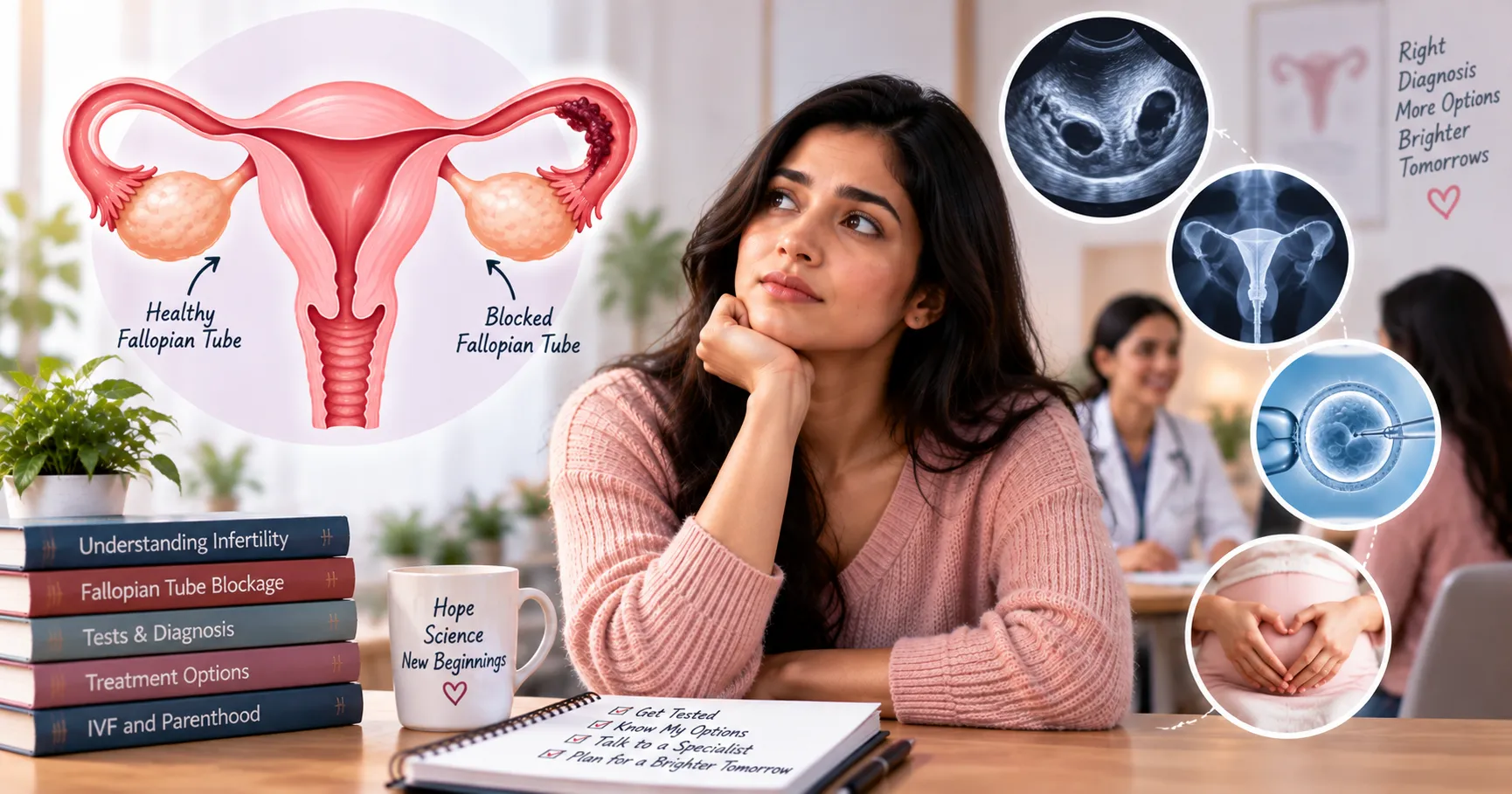
The fallopian tubes play an important role in natural conception. They provide the pathway where sperm and egg can meet and allow the early embryo to travel toward the uterus. When one or both tubes become blocked or damaged, getting pregnant can become more difficult.
Blocked fallopian tubes are an important cause of infertility, but they do not necessarily mean that pregnancy is impossible. The effect depends on whether one or both tubes are affected, where the blockage is located and whether other fertility factors are present. WHO identifies tubal disorders, including blocked fallopian tubes, as one of the causes of female infertility.
Fortunately, several diagnostic and treatment options are available. Depending on the individual situation, treatment may include addressing the underlying cause, tubal surgery in selected cases, or assisted reproductive treatments such as IVF.
What Are Blocked Fallopian Tubes?
Fallopian tubes are two narrow tubes that connect the ovaries with the uterus.
During a typical menstrual cycle, an egg is released from an ovary and enters a fallopian tube. Fertilization usually occurs within the tube before the resulting embryo travels toward the uterus.
If a tube is blocked, sperm may not be able to reach the egg, or the fertilized egg may not be able to travel normally toward the uterus.
A blockage can affect:
- One fallopian tube
- Both fallopian tubes
- The section close to the uterus
- The middle portion of the tube
- The end of the tube near the ovary
The location and severity of the blockage are important when choosing treatment.
What Causes Blocked Fallopian Tubes?
Several conditions can damage or block the fallopian tubes.
1. Pelvic Infections
Untreated sexually transmitted infections, particularly infections that lead to pelvic inflammatory disease (PID), can cause inflammation and scarring of the reproductive tract.
WHO lists untreated STIs among causes of tubal disorders that can contribute to infertility.
2. Previous Pelvic or Abdominal Surgery
Surgery involving the pelvis or abdomen can sometimes lead to adhesions or scar tissue. These adhesions may affect the position or function of the fallopian tubes.
3. Endometriosis
Endometriosis can cause inflammation, lesions and pelvic adhesions. These changes may affect the tubes or the surrounding reproductive anatomy.
4. Previous Ectopic Pregnancy
A previous ectopic pregnancy involving a fallopian tube may cause damage to that tube and increase the risk of future tubal problems.
5. Pelvic Adhesions
Scar tissue can develop following infections, inflammation or surgery. Adhesions may distort the normal relationship between the ovaries and fallopian tubes.
6. Tubal Conditions Present From Birth
In some cases, abnormalities of the reproductive tract can affect tubal structure or function.
What Are the Symptoms of Blocked Fallopian Tubes?
One of the biggest challenges with blocked tubes is that there may be no obvious symptoms.
Many people discover the condition only when they undergo an infertility evaluation.
Possible signs or associated symptoms can include:
- Difficulty becoming pregnant
- Pelvic pain
- Painful periods
- Pain during intercourse
- History of pelvic infection
- Previous ectopic pregnancy
- Previous pelvic or abdominal surgery
- Symptoms associated with endometriosis
However, these symptoms do not confirm that the tubes are blocked.
A specific fallopian tube blockage test is usually needed to determine whether the tubes are open.
Can You Get Pregnant With Blocked Tubes?
It depends on whether one or both tubes are blocked.
If One Fallopian Tube Is Blocked
Natural pregnancy may still be possible if:
- The other tube is open and functional
- Ovulation occurs
- The ovaries are functioning appropriately
- There are no major sperm-related fertility problems
- The uterus is suitable for pregnancy
Having one blocked tube does not automatically mean that natural conception cannot occur.
If Both Fallopian Tubes Are Blocked
When both tubes are completely blocked, natural conception becomes much more difficult because sperm and egg cannot normally meet.
In this situation, fertility treatment may be recommended depending on the person's age, ovarian reserve, reproductive history and other fertility factors.
IVF can bypass the fallopian tubes, which is why it may be an important option for people with significant bilateral tubal disease.
How Are Blocked Fallopian Tubes Diagnosed?
A fertility evaluation may use one or more tests to assess whether the fallopian tubes are open.
1. Hysterosalpingography (HSG)
HSG is a commonly used fallopian tube blockage test.
During an HSG, contrast material is introduced through the cervix while X-ray images are taken. The images can show the shape of the uterus and whether contrast passes through the fallopian tubes.
ASRM identifies HSG as an important test for evaluating tubal patency. It can help identify proximal or distal tubal obstruction.
If an HSG suggests that both tubes are blocked near the uterus, doctors may sometimes perform additional evaluation because temporary tubal contractions or technical factors can occasionally produce an apparent blockage.
2. Hysterosalpingo-Contrast Sonography
Hysterosalpingo-contrast sonography, sometimes called HyCoSy, uses ultrasound and contrast to assess whether fluid can pass through the fallopian tubes.
It avoids X-ray exposure and may be used as an alternative depending on local expertise and availability.
3. Hysterosalpingo-Foam Sonography
HyFoSy is another ultrasound-based method that uses foam contrast to assess tubal patency.
Recent research reported by ASRM found substantial diagnostic agreement between HyFoSy and HSG in the study population, although test performance and availability can vary by setting.
4. Laparoscopy With Chromopertubation
Laparoscopy is a surgical procedure that allows a doctor to directly examine the pelvic organs. A dye can be introduced through the uterus to check whether it passes through the tubes.
It can also identify conditions such as adhesions or endometriosis.
However, laparoscopy is not generally recommended as a routine first-line test for every infertility evaluation. It may be considered when there is a specific reason to investigate pelvic disease or when surgery is already being performed for another indication.
What Is Tubal Blockage Treatment?
Tubal blockage treatment depends on the location and severity of the blockage, the condition of the tubes and the person's fertility goals.
Possible approaches include:
Treating an Underlying Infection
If an active pelvic infection is identified, appropriate medical treatment is important. However, antibiotics cannot necessarily reverse established scar tissue caused by previous infection.
Tubal Recanalization
Some blockages, particularly certain blockages close to the uterus, may be candidates for a procedure that attempts to reopen the tube.
Selective tubal cannulation can sometimes confirm or correct a suspected proximal obstruction using specialized catheter systems.
Tubal Surgery
Selected patients may benefit from surgical procedures designed to repair or restore tubal function.
However, surgery is not appropriate for every type of blockage. The condition of the tube, location of the blockage, age and other fertility factors all need to be considered.
IVF
IVF may be recommended when the tubes are severely damaged or blocked, particularly when both tubes are affected.
The choice between surgery and IVF requires individualized medical assessment.
IVF for Blocked Tubes: How Does It Work?
IVF for blocked tubes works by bypassing the fallopian tubes.
During IVF:
- The ovaries are stimulated with fertility medications.
- Eggs are collected from the ovaries.
- Eggs are fertilized with sperm in a laboratory.
- Embryos develop under laboratory conditions.
- An embryo is transferred into the uterus.
Because fertilization occurs outside the fallopian tubes, IVF can overcome the mechanical problem caused by blocked tubes.
WHO identifies IVF as one of the medically assisted reproduction options used in infertility care.
However, IVF does not eliminate every fertility factor. Age, ovarian reserve, egg and sperm factors, embryo development and uterine health can still affect treatment outcomes.
Is Surgery Better Than IVF for Blocked Tubes?
There is no single answer for everyone.
Doctors may consider factors such as:
- Age
- Whether one or both tubes are blocked
- Location of the blockage
- Severity of tubal damage
- Presence of hydrosalpinx
- Ovarian reserve
- Sperm factors
- Previous pregnancies
- Previous ectopic pregnancy
- Endometriosis
- Previous pelvic surgery
- Duration of infertility
ASRM notes that decisions between tubal surgery and IVF should take the type of tubal disease and the individual's reproductive circumstances into account.
In some cases, repairing a tube may provide an opportunity for natural conception. In other cases, IVF may be a more suitable route.
What Is Hydrosalpinx?
A hydrosalpinx occurs when a fallopian tube becomes blocked and fills with fluid.
It is often associated with previous infection, inflammation or other tubal damage.
Hydrosalpinx is important in fertility treatment because it can affect reproductive outcomes and may require specific management before IVF.
If a scan or HSG suggests hydrosalpinx, a fertility specialist can determine whether treatment of the affected tube should be considered before proceeding with IVF.
Can Blocked Fallopian Tubes Be Prevented?
Not every case can be prevented, but reducing the risk of pelvic infections and seeking timely treatment for sexually transmitted infections can help protect reproductive health.
Other useful steps include:
- Practicing safer sex
- Getting appropriate STI testing
- Treating pelvic infections promptly
- Discussing fertility risks before major pelvic surgery
- Seeking medical evaluation for persistent pelvic pain
- Discussing fertility planning when there is a history of endometriosis or pelvic infection
WHO identifies untreated STIs, complications of pelvic surgery and other pelvic conditions among causes of tubal infertility.
When Should You See a Fertility Specialist?
If you know that you have blocked fallopian tubes, you do not necessarily need to wait a full year before discussing fertility treatment.
ASRM recommends that infertility evaluation can begin immediately when there is a known medical history associated with infertility. For people without a known risk factor, evaluation is generally recommended after 12 months of trying when under 35, after 6 months when age 35 or older, and more promptly after age 40.
A complete fertility assessment may include:
- Tubal patency testing
- Ovulation assessment
- Ovarian reserve evaluation when clinically appropriate
- Uterine assessment
- Semen analysis
- Medical and reproductive history
This broader evaluation is important because infertility can involve male factors, female factors, both, or unexplained causes.
Blocked Fallopian Tubes: Key Takeaways
Blocked fallopian tubes can make conception more difficult, but the diagnosis does not automatically mean that pregnancy is impossible.
The most important points are:
- Blocked tubes may cause infertility without obvious symptoms.
- One blocked tube does not necessarily prevent natural pregnancy.
- Bilateral tubal blockage can make natural conception significantly more difficult.
- HSG is a commonly used test for evaluating tubal patency.
- HyCoSy and other ultrasound-based tests may also be used.
- Laparoscopy is generally reserved for selected situations rather than routine testing.
- Treatment depends on the location and severity of the blockage.
- Some patients may be candidates for tubal surgery or recanalization.
- IVF can bypass the fallopian tubes.
- The choice between surgery and IVF should be individualized.
Frequently Asked Questions
Can blocked fallopian tubes cause infertility?
Yes. Blocked or damaged fallopian tubes can prevent sperm and egg from meeting and are a recognized cause of female-factor infertility.
What is the best test for blocked fallopian tubes?
HSG is a commonly used test for assessing tubal patency. Other options include HyCoSy or HyFoSy, while laparoscopy with chromopertubation may be used in selected cases.
Can you get pregnant with one blocked fallopian tube?
Yes. Natural pregnancy may still be possible when one tube is open and functional, although overall fertility also depends on ovulation, age, sperm factors and other reproductive factors.
Can both blocked fallopian tubes be treated?
Treatment depends on where and how severely the tubes are blocked. Some proximal blockages may be suitable for recanalization or surgery, while severe tubal damage may be better managed with IVF.
Is IVF possible with blocked fallopian tubes?
Yes. IVF can bypass the fallopian tubes because fertilization takes place in a laboratory before an embryo is transferred into the uterus.
Can medicines open blocked fallopian tubes?
Medicines can treat certain infections, but they generally cannot remove established scar tissue or mechanically reopen a severely blocked tube. Treatment depends on the underlying cause and type of blockage.
Can a blocked fallopian tube cause pain?
Usually, blocked tubes do not cause specific symptoms. Pelvic pain may occur when the underlying cause involves infection, endometriosis, adhesions or conditions such as hydrosalpinx.
Should I choose tubal surgery or IVF?
There is no universal choice. Your doctor may consider your age, type and location of blockage, tubal damage, ovarian reserve, sperm factors, previous fertility history and other conditions before recommending an approach.
Final Takeaway
Blocked fallopian tubes are a treatable fertility concern in many different ways, and the right approach depends on the individual situation.
A proper diagnosis is the first step. HSG, ultrasound-based tubal tests and, in selected cases, laparoscopy can help determine whether the tubes are open and whether other pelvic conditions are present.
For some people, tubal treatment or surgery may be appropriate. For others, particularly those with significant bilateral tubal damage, IVF for blocked tubes can bypass the fallopian tubes and provide another route to pregnancy.
If you have been diagnosed with tubal blockage or have a history of pelvic infection, endometriosis or ectopic pregnancy, discussing your fertility options with a qualified fertility specialist can help you understand which treatment is appropriate for your circumstances.